
Semiconductor Engineering Plastics & CNC Parts
Custom parts for your wafer-handling, process-support and electrical assemblies. Great Plastics combines PEEK, PPS, PEI, PI and PAI material options with CNC milling and turning, from prototype to repeat production.
solutions
Custom Plastic Components for Semiconductor Equipment
Source plastics for semiconductor manufacturing equipment as finished parts matched to your assembly. Great Plastics machines handling supports, process-support blocks and insulating components from five engineering plastic families.
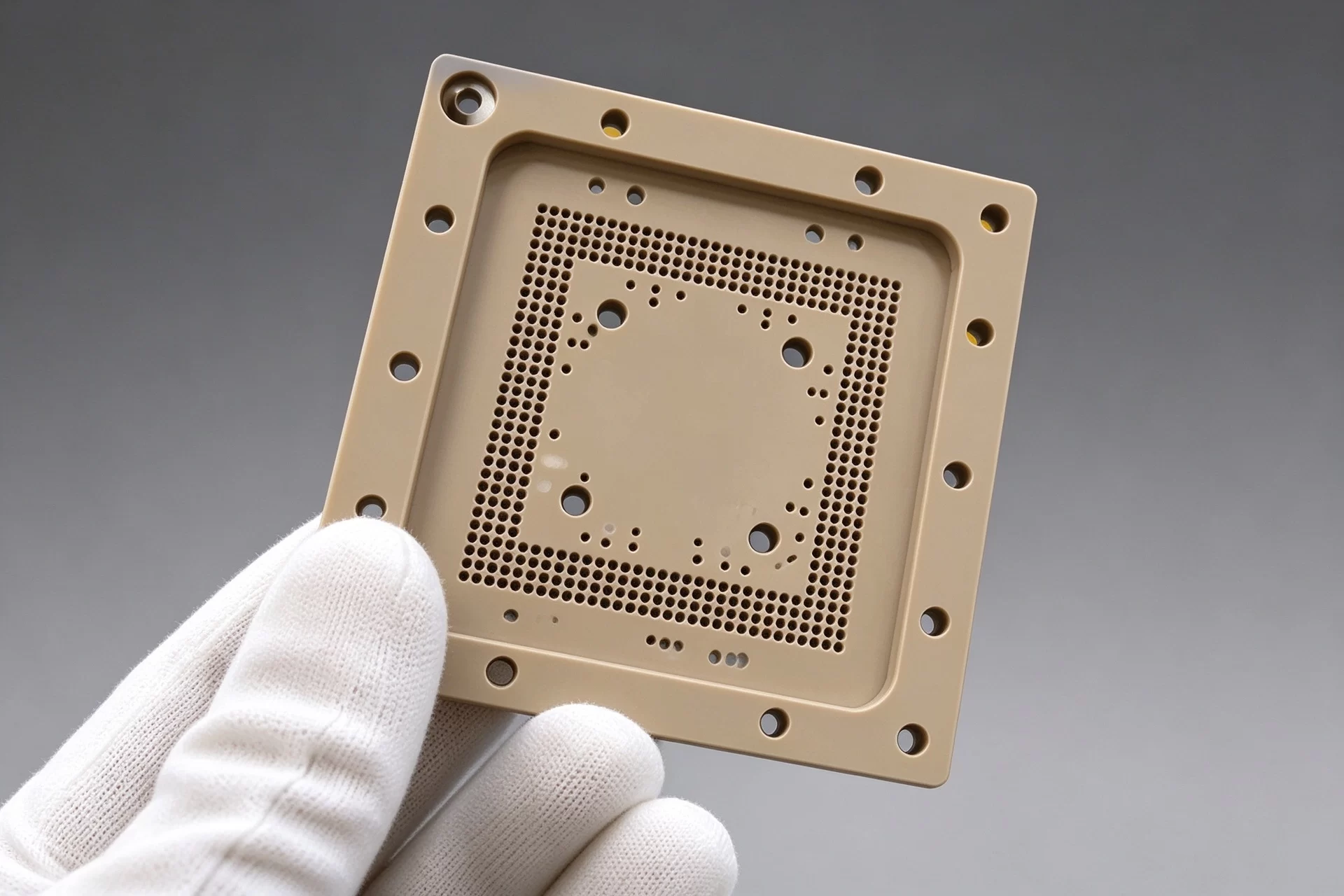
Wafer-Handling Supports & Fixtures
Pocketed fixtures, carrier supports and locating plates position parts during handling. PEEK suits loaded supports, while PEI offers an alternative for dry-side fixtures. Features are machined to drawing.

Ported Blocks & Process Supports
Custom PEEK or PPS blocks integrate mounting faces, threaded ports and fluid passages. Material selection depends on chemical compatibility, concentration and operating temperature.
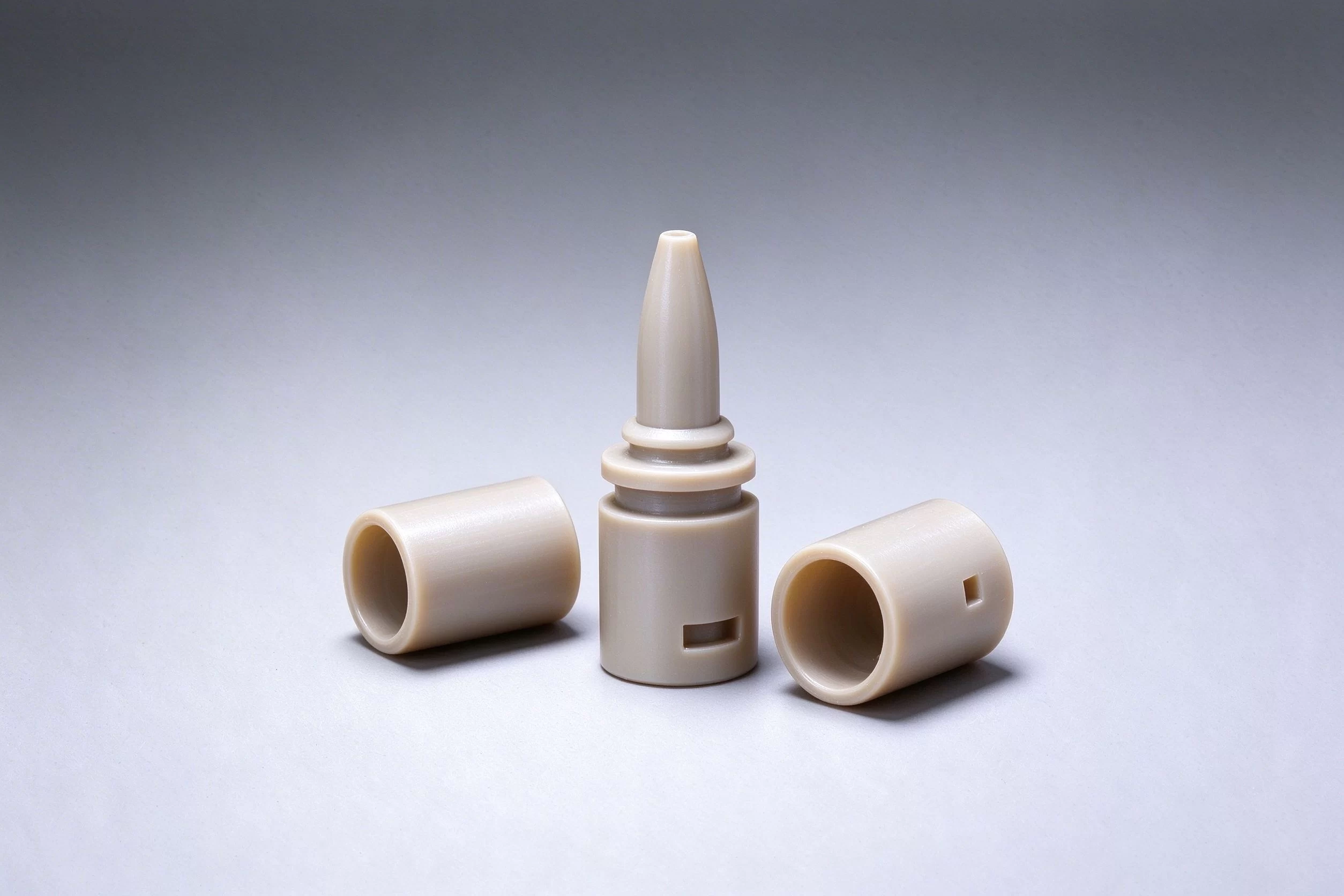
Insulators, Sleeves & Spacers
PEI, PEEK, PPS and PI suit insulating mounts and spacers, while PAI supports loaded wear interfaces. Electrical insulation and static dissipation require different material formulations.
capability
CNC Milling, Turning & Equipment Capacity
Great Plastics combines vertical machining and dual-spindle turn-mill capability to produce prismatic fixtures, ported blocks and rotational components. The route follows the features that must fit together.
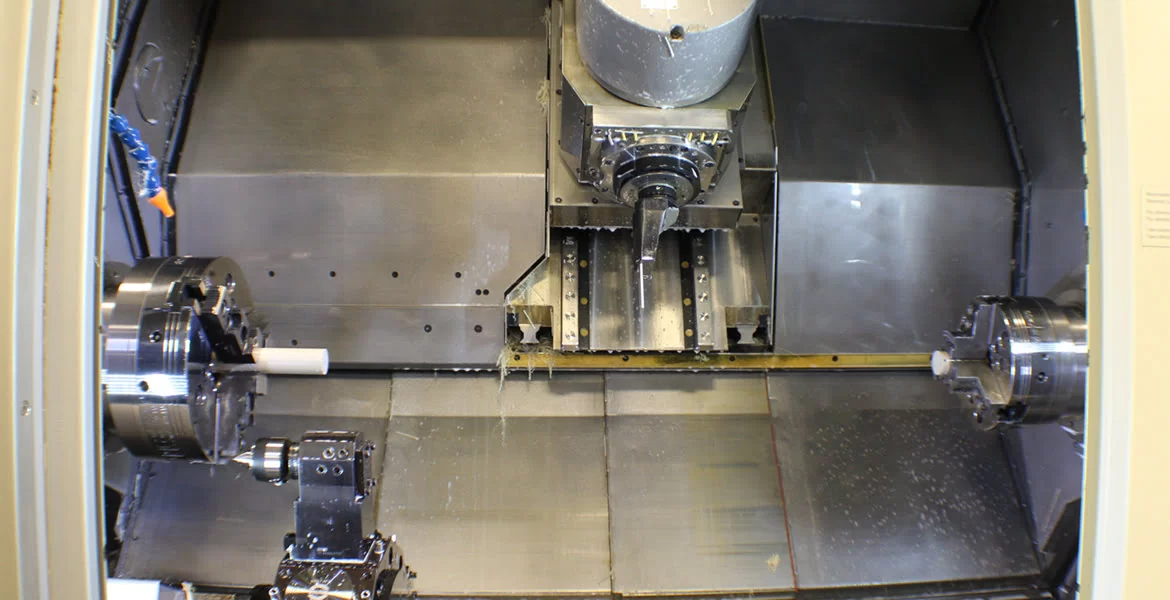
CNC Milling
We mill pockets, locating faces, hole patterns and ports in plates and blocks. Travel reaches 1500 × 800 × 500 mm, subject to fixture clearance and cutter access. Machining strategies help control movement in thin sections.
CNC Turning
Turning produces stepped bores, concentric diameters, grooves and threads. Capacity reaches Ø431 × 990 mm, depending on stock and workholding. Slender parts require careful clamping to limit distortion.
Turn-Mill Features
Dual-spindle turn-mill equipment combines turning with radial holes, flats and off-axis features, reducing setup transfers and helping maintain relationships between critical features.
Machine envelopes are not guaranteed finished-part sizes. Feature-specific tolerances are agreed against your drawing, exact grade, wall section and measurement conditions. CNC Plastic Machining Capabilities
Feature Analysis
Complex Semiconductor Parts & Critical Features
From a pocketed support to a ported block, Great Plastics connects the part’s functional features to its machining setup and dimensional acceptance.

Pocketed Fixture: Face to Hole Pattern
PEEK fixtures are machined with pockets and locating holes referenced to the mounting face. Datum planning, flatness checks and cutter-radius review help maintain alignment and dimensional accuracy.

Sleeve: Bore, Groove & Common Axis
PEEK and PAI sleeves require precise bore alignment and groove dimensions for proper fit and sealing.Turning and inspection focus on concentricity, critical dimensions and sealing-face finish.

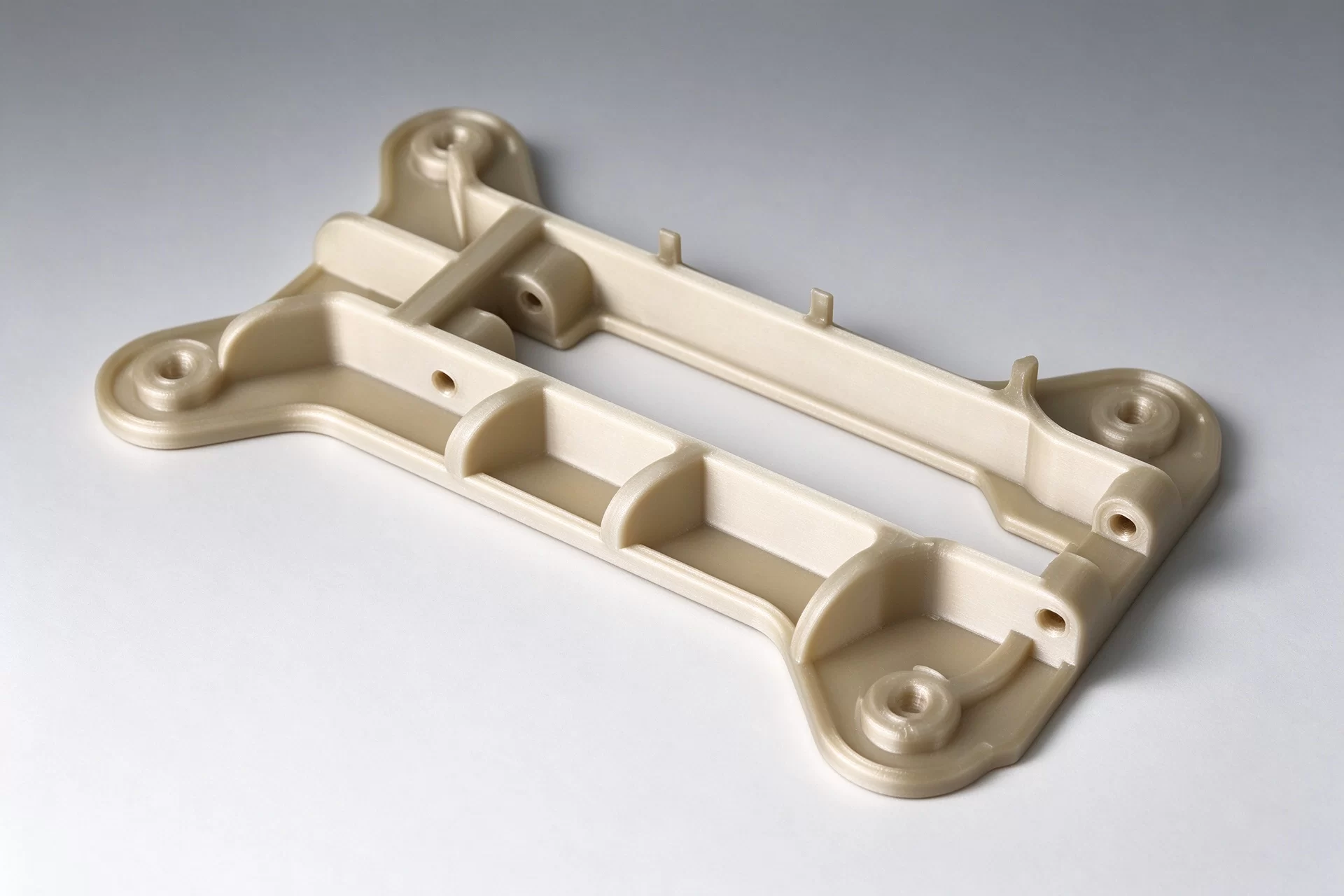
Ported Block: Passage & Burr Access
PEEK and PPS blocks require careful review of intersecting passages, tool access and chip removal. We assess deburring feasibility and critical dimensions before machining.
| Acceptance | Evidence for your component |
|---|---|
| Dimensional acceptance | Agreed datums, critical dimensions and measurement conditions; dimensional reports available on request. |
| Process qualification | Wafer-contact particle limits, ionic or extractable contamination, ESD performance and outgassing require separate exact-grade, test-method and acceptance evidence. Dimensional reports do not establish internal cleanliness. |
Material Selection
Engineering Plastics for Your Process Zone
Material selection starts with chemical exposure, temperature, load and electrical duty. Great Plastics reviews the formulation alongside the part geometry, so material fit and machining feasibility develop together.
| Material | Component fit | Grade choice & limits |
|---|---|---|
| PEEK | Handling supports, ported components and loaded locating parts. | Unfilled grades and glass-filled, carbon-filled or bearing grades offer different stiffness, wear and electrical behavior. Reinforcement for a loaded support may change its contact suitability. Strong oxidizers need specific compatibility evidence. |
| PPS | Process supports, guides and dimensionally stable mounts. | Unfilled, glass-filled, carbon-filled and wear-modified grades serve different duties. Reinforcement can support stiffness, while thin edges and notches remain design limits. Compatibility depends on formulation and exposure. |
| PEI | Electrical housings, pin carriers and dry-side fixtures. | Unfilled and glass-filled grades offer different stiffness and electrical behavior. Cleaner compatibility and stress cracking can limit exposed parts, making the cleaning cycle part of the material decision. |
| PI | Thermal-zone supports, insulating spacers and wear interfaces. | Thermal duty must be considered with atmosphere and contact conditions. Moisture and hot-water exposure can change behavior and fit; a dry thermal position and a wet position need different review. |
| PAI | Loaded locating parts, bushings and wear components. | Moisture conditioning affects dimensions and therefore the machining/measurement basis. Specify filler and conditioning state. Hot water, steam and amines need particular review. |
ESD plastic materials need a defined electrical target and test method; carbon filler alone does not establish ESD compliance. Low outgassing plastics need exact-grade test evidence relevant to the vacuum and temperature conditions.
Services
Manufacturing Services for Semiconductor Products
| Leverage the same speed, precision, and reliability in machining that you’re accustomed to at Great plastics but unlock advanced machining capabilities like tighter tolerances and volume pricing through our manufacturing network. Learn more→ |
|
 |
| Get affordable, high-quality molded parts and bridge tooling within days. With our free moldability consultation, the design and molding process is rapidly accelerated to save you time and money. Learn more→ |
|
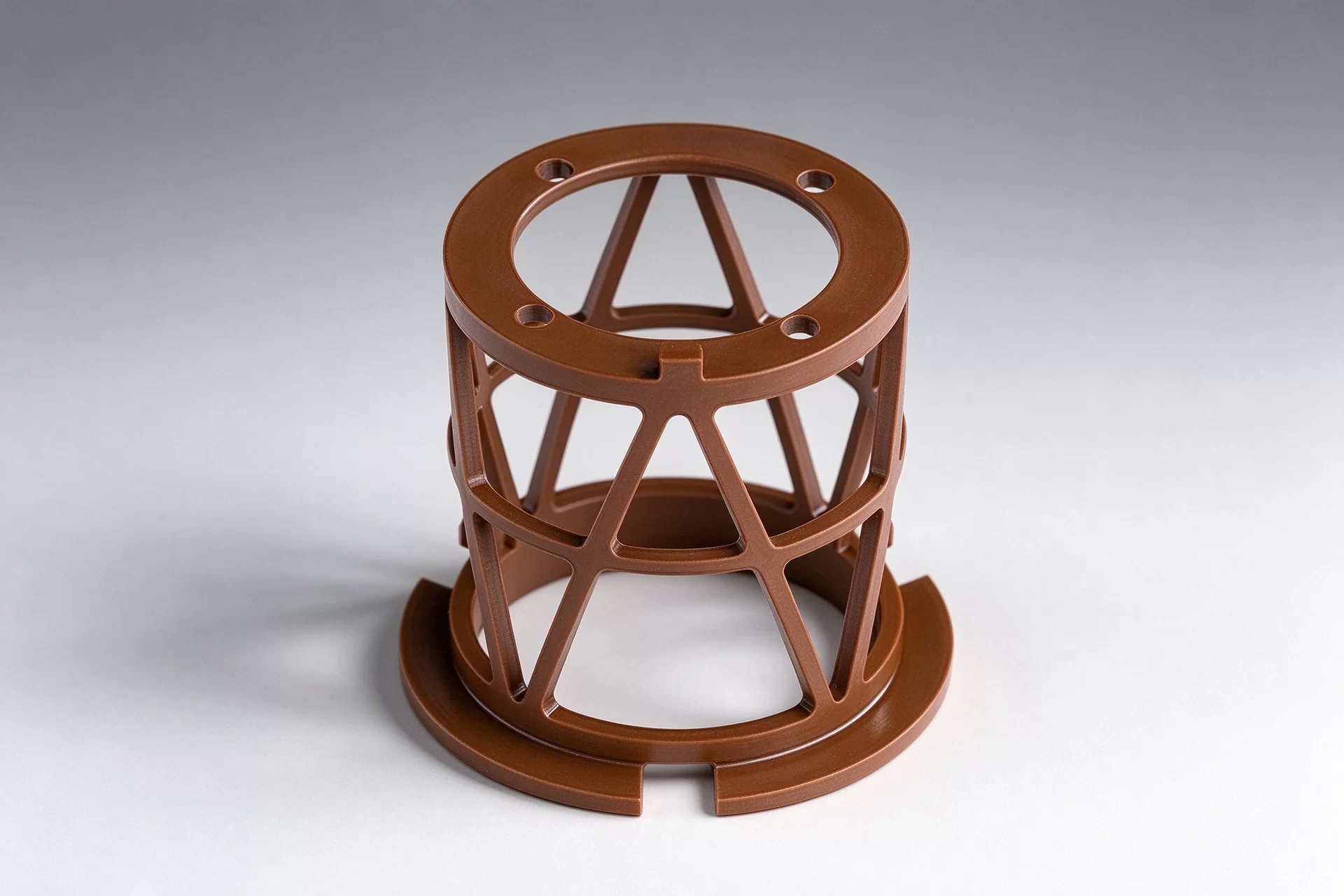 |
| Want quality parts and additive expertise at a single 3D printing source? Choose from fore different additive manufacturing technologies for cost-effective prototyping and highly precise, repeatable production parts. Learn more→ |
|
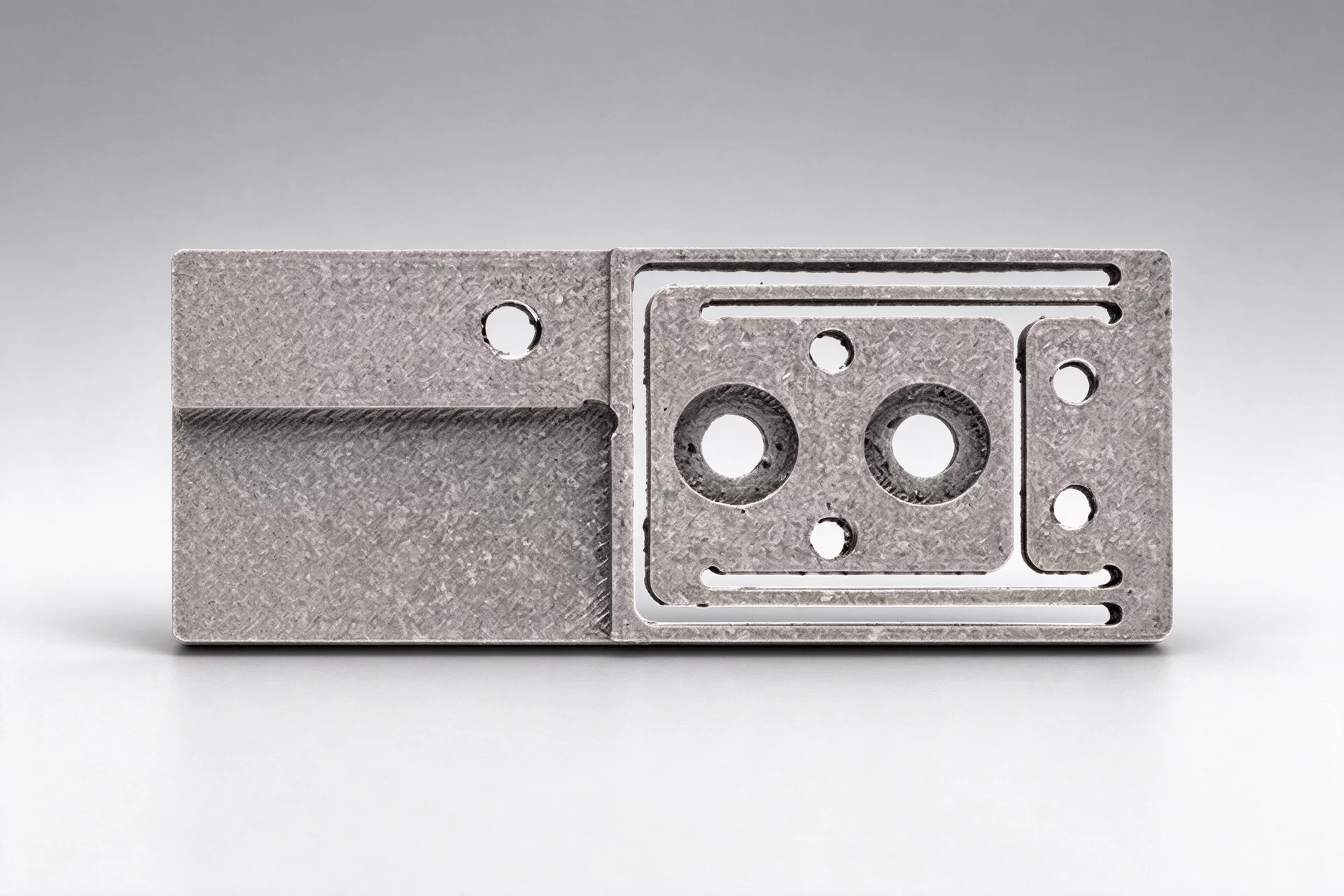 |
How a Project Moves Forward
From Prototype to Repeat Production
Keep development and ongoing machined supply with one part reference. Great Plastics supports prototypes, small batches and repeat orders.
Prototype & Application Validation
Review the drawing, material and critical features. Test machined prototypes for fit and performance under actual operating conditions.
Small-Batch Production
Use the approved sample, drawing revision, material grade and key dimensions as production references.
Repeat Supply
Maintain the approved material, drawing and inspection requirements. Revalidate changes to geometry, fillers or operating conditions.
