GP
Great PlasticsEngineering Materials & Custom Parts
Custom plastic cutting
Cut engineering plastic sheets, rods and tubes to the right starting size before fabrication.
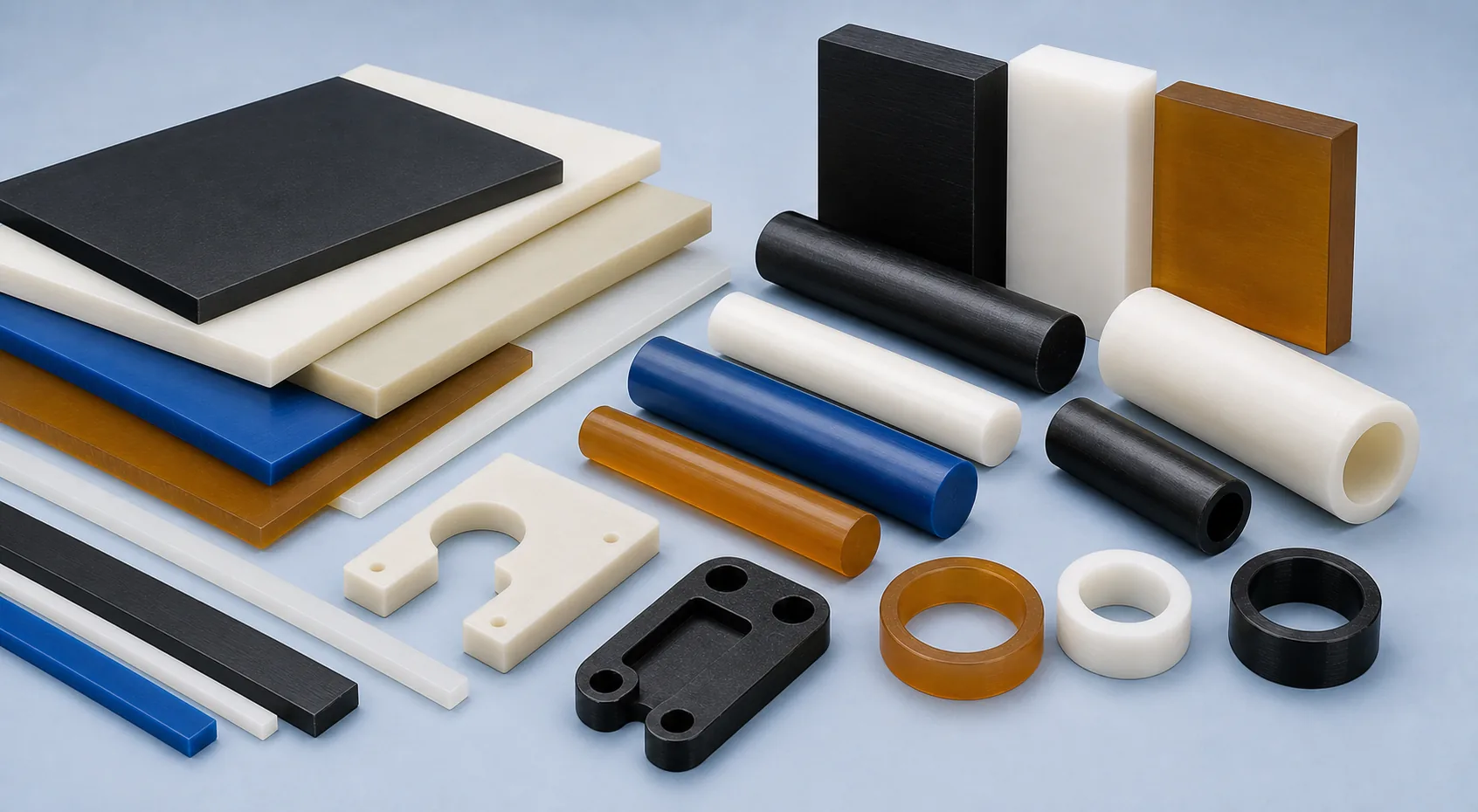
Great Plastics helps buyers review custom plastic cutting for sheet, rod, tube and plate materials, including material choice, cut method, allowance, edge finish, tolerance and whether the blank should move into CNC machining.
Short answer
Custom plastic cutting is best treated as a material and process decision, not only a size request.
A cut plastic blank may become a spacer, panel, guide, liner, fixture plate or the starting stock for machining. The best route depends on material, thickness, kerf, edge finish, flatness, stress, quantity and what happens after cutting. A clear RFQ prevents oversized blanks, poor edge quality, unnecessary machining and material waste.
Cut-to-size route
Choose the cutting method around material, geometry and edge expectations.
| Cutting route | Best fit | Engineering caution | What to confirm |
|---|---|---|---|
| Saw cut sheet or plate | Rectangles, strips, blanks and simple cut-to-size panels. | Edge saw marks, squareness and allowance may matter if the blank is a final part. | Thickness, length, width, tolerance, edge finish and protective film needs. |
| Rod and tube cut-off | Spacers, bushings, sleeves, rings and raw blanks for turning. | Cut face finish and length tolerance may need secondary facing. | Outside diameter, inside diameter, length, quantity and deburring expectations. |
| CNC router cutting | Profiles, holes, slots, pockets, panels, guards and repeat flat parts. | Tool marks, heat buildup, burrs and small internal radii need review. | DXF/STEP file, tool access, minimum radius, tabs and finish surfaces. |
| Laser cutting review | Acrylic and selected thin sheet work where polished or clean visual edges are important. | Not every engineering plastic is safe or suitable for laser cutting; fumes, heat damage and discoloration matter. | Material safety, thickness, edge appearance, heat-affected zone and ventilation constraints. |
| Waterjet or knife cutting review | Heat-sensitive sheets, rubber-like materials, gaskets or thicker blanks where cold cutting is useful. | Kerf taper, surface roughness, moisture exposure and small feature stability should be checked. | Profile, thickness, kerf allowance, edge quality and cleaning needs. |
Material review
Different plastics cut differently, even when the drawing looks simple.
Acrylic and polycarbonate
Common for panels, guards and covers. Review optical edge needs, scratch protection, cracking risk and whether holes should be machined after cutting.
HDPE, UHMW and PP
Useful for liners, wear strips and low-friction parts. These materials can move with temperature and may need allowance for fit.
POM and nylon
Good candidates for spacers, guides, rollers and mechanical blanks. Check moisture, flatness, cut-face finish and follow-up machining.
PTFE and fluoropolymers
Often selected for chemical or low-friction use. Review creep, compression, burrs, thin sections and packaging to avoid deformation.
PEEK, PPS and PEI
High-performance materials deserve careful yield planning because stock cost is higher and cutting waste can become expensive.
Sheet, rod and tube forms
Start from the most efficient stock shape. A tube blank may beat machining a hole through rod; a sheet blank may beat routing from a full plate.
Cutting RFQ workbench
Turn a cut list into quote-ready plastic blanks.
Fast cut-to-size specification
Use this structure when a buyer needs plastic sheet, rod, tube, strip, ring or simple profile cutting before assembly, fabrication or machining.
- Stock form: sheet, plate, strip, rod, tube, ring blank, panel or routed profile.
- Material target: acrylic, PC, HDPE, UHMW, POM, Nylon, PTFE, PEEK, PPS, PEI or performance-based selection.
- Cut requirement: finished size, tolerance, edge finish, deburring, protective film, oversize allowance and quantity.
- Next operation: direct use, drilling, routing, CNC machining, bonding, bending, welding, assembly or inspection.
Project path
Use cutting as the first step in a controlled manufacturing route.
Define the blank
Confirm material grade, stock form, size, thickness or diameter, grain/extrusion direction if relevant, and quantity.
Set allowance and finish
Decide whether edges are final, cosmetic, deburred only, oversized for machining or rough-cut for later trimming.
Review downstream operations
Plan holes, pockets, threads, bending, bonding, welding, assembly or CNC plastic machining before locking the cut size.
Package for RFQ
Send drawings, DXF files, cut list, quantities, tolerances, material notes and target delivery so the quote is based on real requirements.
Tolerance and edge planning
Decide what is a finished cut and what is a machining blank.
| Requirement | Cutting-only quote | Cut plus secondary operation | RFQ note |
|---|---|---|---|
| Length and width | Good for panels, strips and rough blanks where normal cut tolerance is acceptable. | Use machining when datum-based dimensions or tight squareness matter. | State finished tolerance or oversize allowance. |
| Edge finish | Deburred or saw-cut edges may be enough for hidden or nonfunctional edges. | Polished, machined, chamfered or cosmetic edges need extra review. | Mark visible edges and handling edges. |
| Holes and slots | Simple routed holes may work in flat panels. | Precision holes, counterbores, threads or bearing fits need machining. | Provide DXF/STEP and critical dimensions. |
| Flatness and stress | Suitable for many blanks and panels when material movement is acceptable. | Review machining or stress-relieved stock when flatness controls assembly. | State mounting method and flatness requirement. |
| Packing and handling | Basic packing may work for rough blanks. | Visible panels, thin sheets and PTFE-like materials may need protection. | List protective film, separator, labeling or flat-pack needs. |
Application matrix
Common cut plastic parts and what must be checked.
| Part or blank | Typical material direction | Review before quote |
|---|---|---|
| Machine guards and panels | Polycarbonate, acrylic, PETG or PVC depending on impact, clarity and chemical exposure. | Visible edges, hole locations, protective film, scratch risk and installation hardware. |
| Wear strips and liners | UHMW, HDPE, nylon, POM or PTFE depending on friction, wear and chemicals. | Thermal movement, countersunk holes, length tolerance and replacement interval. |
| Spacer and ring blanks | POM, nylon, PTFE, PEEK, PPS or PEI in rod or tube form. | Cut length, squareness, face finish, ID/OD relationship and secondary turning. |
| Fixture plates and nests | POM, nylon, PEI, PEEK, FR material or filled grades depending on heat and stiffness. | Flatness, tapped holes, pocket depth, datum faces and whether routing or machining is needed. |
| Prototype blanks | Use lower-risk materials for fit checks; move to PEEK/PPS/PEI when function requires it. | Whether the blank is for visual, fit, functional or production validation. |
Cutting vs machining
Do not ask a cut-to-size service to solve a precision machining problem.
Cutting is efficient when the requirement is a blank, strip, panel or simple profile. If the part needs tight datum relationships, bearing fits, sealing surfaces, threaded holes, pocketing or controlled surface finish, it should be reviewed as a machining project or as a cut blank plus secondary machining.
- Use cutting for rectangles, strips, rough blanks and simple profiles.
- Use CNC routing when flat profiles, holes and repeated 2D geometry matter.
- Use CNC machining when faces, pockets, threads and precision features control function.
- Use injection molding only after demand, resin, geometry and tooling risk are clear.
RFQ checklist
Send a cut list that makes the plastic cutting quote usable.
| RFQ input | Why it matters |
|---|---|
| Material and grade | PEEK, PTFE, nylon, POM, acrylic and polycarbonate require different cutting and handling decisions. |
| Stock form and size | Sheet thickness, rod diameter, tube ID/OD and plate size determine the practical cutting route. |
| Cut dimensions and tolerance | A rough blank, finished panel and precision spacer should not be quoted the same way. |
| Edge finish and deburring | Functional edges, visible edges and rough machine-stock edges have different expectations. |
| Drawing, DXF or cut list | Profiles, holes, slots, radii and cut sequence are clearer when the geometry is supplied directly. |
| Next operation | Machining, bonding, welding, bending or assembly may change the allowance and packaging plan. |
Related pages
Continue from cut stock to finished plastic parts.
FAQ
Questions buyers ask before custom plastic cutting.
What is custom plastic cutting?
Custom plastic cutting prepares sheet, rod, tube or plate material to requested dimensions, blanks or simple profiles before fabrication, machining, assembly or direct use.
What plastic materials can be cut to size?
Common cut-to-size materials include acrylic, polycarbonate, HDPE, UHMW, POM, nylon, PTFE, PVC, PET, PEEK, PPS and PEI, subject to thickness, finish and project requirements.
Is laser cutting suitable for all plastics?
No. Some plastics are unsuitable or unsafe for laser cutting because of fumes, melting, discoloration or heat damage. Material and thickness should be reviewed before selecting laser cutting.
When should a cut plastic blank be CNC machined?
CNC machining should be reviewed when the part needs holes, pockets, slots, threads, tight tolerances, smooth sealing faces or complex profiles beyond a simple cut-to-size blank.
Can rods and tubes be cut to custom lengths?
Yes. Rod and tube cut-off can support spacers, rings, sleeves and raw blanks, but length tolerance, squareness, face finish and deburring should be defined before quoting.
What details are needed for a custom plastic cutting quote?
Send material, thickness or diameter, length and width, quantity, tolerance, edge finish, drawing or DXF if shaped, operating environment, packaging needs and target lead time.
Cut list and drawing review
Request custom plastic cutting support for stock shapes, blanks and simple profiles.
Share the material, stock form, cut dimensions, tolerance, edge finish, quantity, drawing or DXF, downstream operation and lead-time target. Great Plastics will review whether cutting alone is enough or whether machining should be included.