
Aerospace engineering plastics
Aerospace engineering plastics for lightweight custom parts.
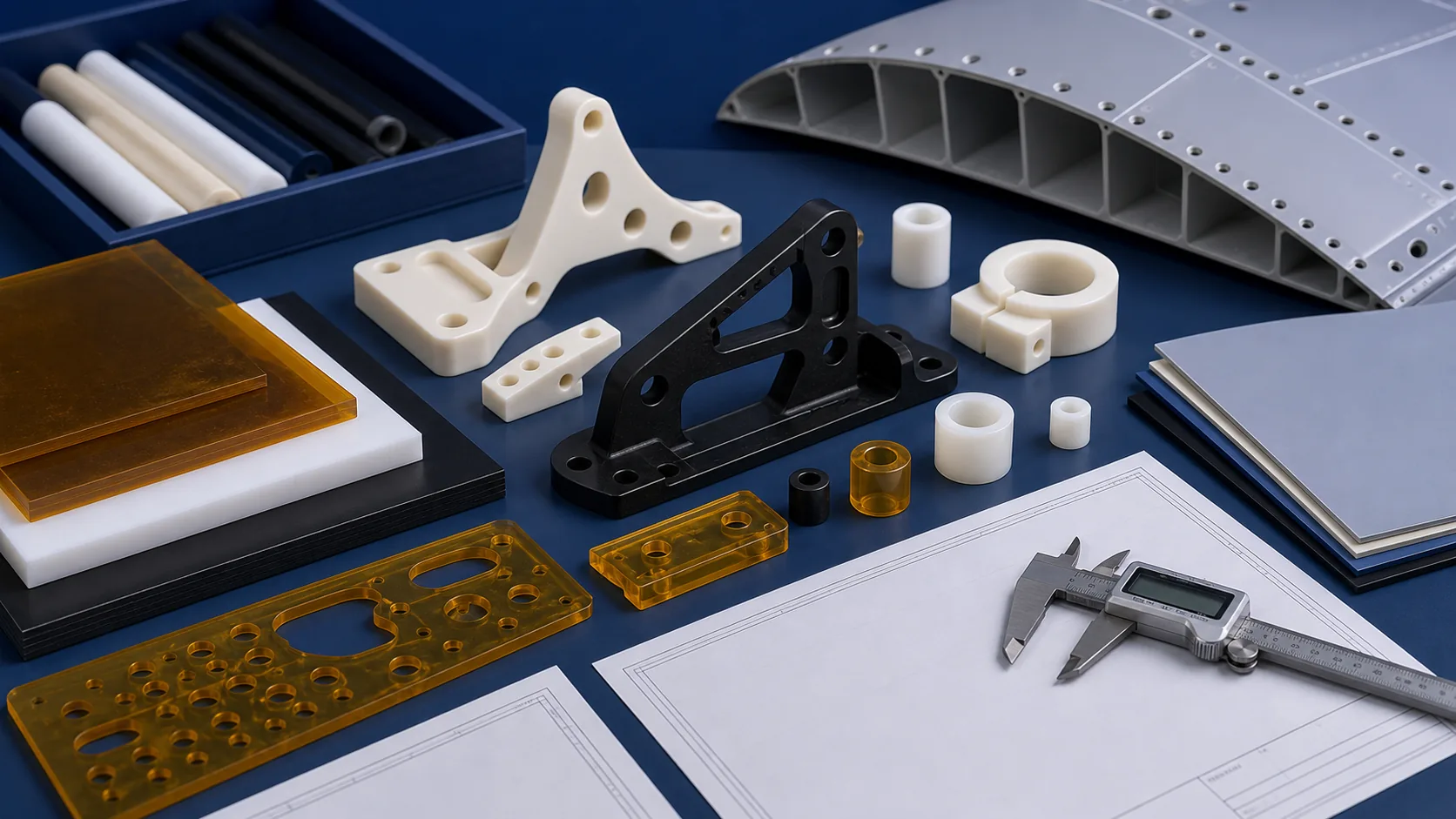
Aerospace plastic parts often start with a weight, heat, insulation, wear or dimensional-control problem. Great Plastics reviews the material route, stock form, machining risk and RFQ package before aerospace buyers lock the drawing.
Short answer
Aerospace material selection should connect the operating zone to the part geometry, not only to a material name.
PEEK, PEI, PAI, PI, PPS and filled materials may fit different aerospace support parts, fixtures and lightweight components. The useful quote starts with temperature, load, fluid exposure, electrical needs, tolerance and documentation expectations.
Application fit
Map the application to material behavior and quote inputs.
| Application | Material direction | RFQ note |
|---|---|---|
| Lightweight brackets | PEEK, PEI, PPS or filled grades | Send load path, fastener loads, temperature and inspection dimensions. |
| Insulators and spacers | PEI, PI, PEEK or PPS | Clarify electrical, heat, flame and spacing requirements. |
| Wear and motion parts | PAI, PEEK, PI or PTFE-filled materials | Send load, speed, mating material and lubrication condition. |
| Prototype or replacement parts | Machined stock shapes | Send drawing, sample photo, quantity and revision status. |
Review points
Resolve the operating risks before selecting the route.
Heat zones
Continuous and peak temperature can change the material shortlist.
Weight and stiffness
Lightweighting works only when creep, load and fastener stress are reviewed.
Documentation
Material, inspection and packaging notes should be requested before quote finalization.
Machining risk
Thin walls, bores and flatness need early review.
Route control
Prototype machining and repeat production should be planned separately.
RFQ checklist
Send the details that let the quote reflect the real application.
- Drawing, CAD file or sample photo
- Material target or operating-performance requirement
- Temperature, chemicals, load, wear, electrical or cleanliness conditions
- Critical dimensions, finish, inspection and documentation needs
- Quantity, project stage, packaging needs and repeat-order expectations
FAQ
