GP
Great PlasticsEngineering Materials & Custom Parts
Automotive Engineering Plastics
Automotive engineering plastics for under-hood, wear, EV and lightweight parts.
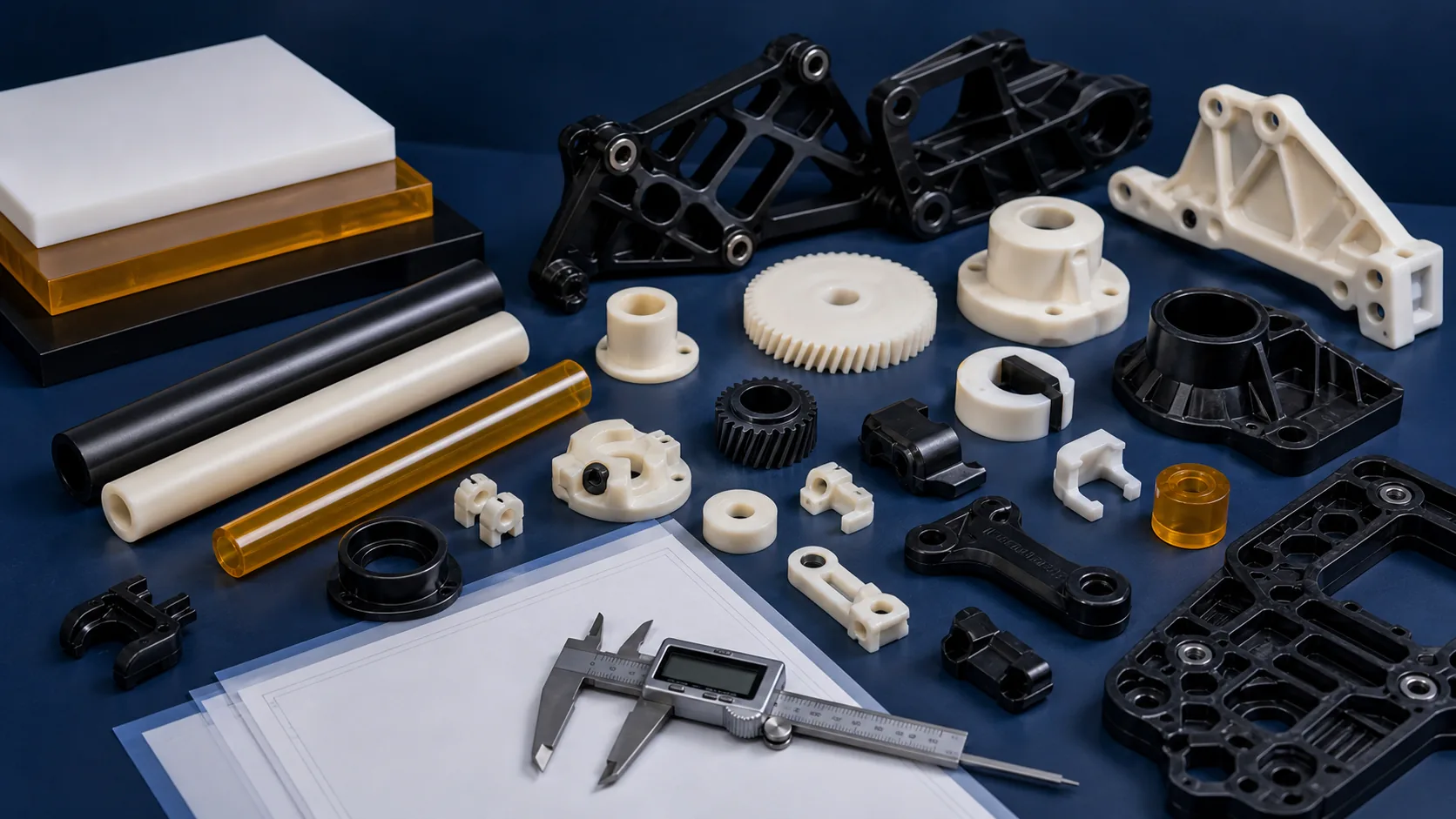
Compare nylon, POM, PPS, PEEK, PEI, PC, PET, UHMW-PE and filled grades for automotive bushings, gears, clips, brackets, insulators, sensor supports, spacers, prototypes and custom machined validation parts.
Short answer
Automotive plastic selection starts with heat, motion, fluids and validation stage.
Automotive engineering plastics are used to reduce weight, lower friction, resist corrosion, insulate electrical assemblies and support rapid prototype validation. A good material review starts with the duty cycle: temperature, oils or fuels, load, vibration, wear, moisture, dimensional tolerance, mating materials, quantity, documentation and whether the project is a prototype, replacement, test fixture or production candidate.
Application matrix
Common automotive engineering plastics project types.
| Project context | Typical parts | Material directions | Review before quote |
|---|---|---|---|
| Under-hood and thermal zones | Sensor supports, spacers, brackets, clips, insulators, guides | PPS, PEEK, PEI, PA, filled grades | Continuous heat, oil/fuel exposure, vibration, fastener load and dimensional stability |
| Wear and motion parts | Bushings, gears, washers, rollers, guide pads, sleeves | POM, nylon, UHMW-PE, PTFE-filled grades, PEEK | Load, speed, lubrication, moisture, mating surface, clearance and wear life |
| EV and electrical assemblies | Insulators, standoffs, covers, brackets, battery-related spacers | PEI, PEEK, PPS, PC, flame-rated grades | Voltage context, heat, flame target, dimensional fit and assembly method |
| Interior, exterior and fixture work | Clips, housings, trims, covers, checking fixtures, positioning blocks | PC, ABS, PET, POM, nylon, PEI | Impact, appearance, UV or cleaning exposure, repeatability and tolerance stack-up |
| Prototype and replacement parts | Machined samples, low-volume validation parts, maintenance replacements | Material matched to drawing, test plan or failure mode | Project stage, sample wear, revision level, quantity, lead time and inspection points |
Material choices
Materials commonly reviewed for automotive plastic components.
Nylon / PA
Reviewed for tough mechanical parts, clips, guides and wear components, with moisture absorption and dimensional movement checked early.
POM / Acetal
Useful for precision gears, bushings, rollers, spacers and low-friction parts where dimensional control and machinability matter.
PPS
Often considered for under-hood, electrical and chemical-exposure parts that need heat resistance and dimensional stability.
PEEK
Selected when high heat, load, wear, chemical exposure or precision requirements justify a higher-performance material.
PEI and PC
Reviewed for electrical housings, covers, fixtures and rigid components where heat, impact, transparency or insulation may matter.
UHMW-PE and PTFE grades
Considered for low-friction liners, guides, wear strips and sliding features when load, creep and surface design are suitable.
Selection path
Translate vehicle part requirements into a material shortlist.
| Decision point | What to define | How it affects material and process |
|---|---|---|
| Thermal and fluid exposure | Continuous heat, peak heat, oil, fuel, coolant, cleaning agents and time at temperature | Pushes review toward PPS, PEEK, PEI or filled grades when commodity plastics may deform or age |
| Load and motion | Static load, clamp force, vibration, sliding speed, lubrication and mating material | Separates structural plastics from wear-focused options such as POM, nylon, UHMW-PE or filled grades |
| Dimensional fit | Bores, clips, snap features, flatness, tolerance stack-up and assembly temperature | Determines machining route, stock shape, wall thickness and whether moisture movement is a risk |
| Electrical and flame needs | Insulation, voltage context, flame target, battery/EV zone and mounting method | Moves the review toward PEI, PPS, PEEK, PC or specified flame-rated families |
| Validation stage | Prototype, road-test sample, fixture, replacement, pilot lot or production candidate | Changes whether CNC machining, cut blanks, repeat machining, molding review or fixture planning is the best next step |
Failure review
Automotive plastic failures usually combine heat, load, fluids and tolerance.
A part that works on the bench may fail after heat cycling, road vibration, fuel or oil exposure, clamp load or moisture movement. For replacement and validation projects, the worn sample and the test condition often reveal whether the next part needs a stronger material, a different wear surface, more clearance, a radius change, a better fastener strategy or a different production route.
- Heat aging, creep or deformation around fasteners, clips and loaded support points.
- Swelling, cracking or property loss from oil, fuel, coolant, cleaning agents or moisture.
- Wear, noise or binding in bushings, gears, rollers and guide surfaces.
- Poor fit from tolerance stack-up, sharp corners, thin walls or material movement after machining.
Manufacturing route
Choose the route around validation stage and part geometry.
CNC machining
Useful for prototypes, fixtures, test samples, replacement parts, bushings, gears, brackets, spacers and low-volume validation components.
Cut blanks and stock shapes
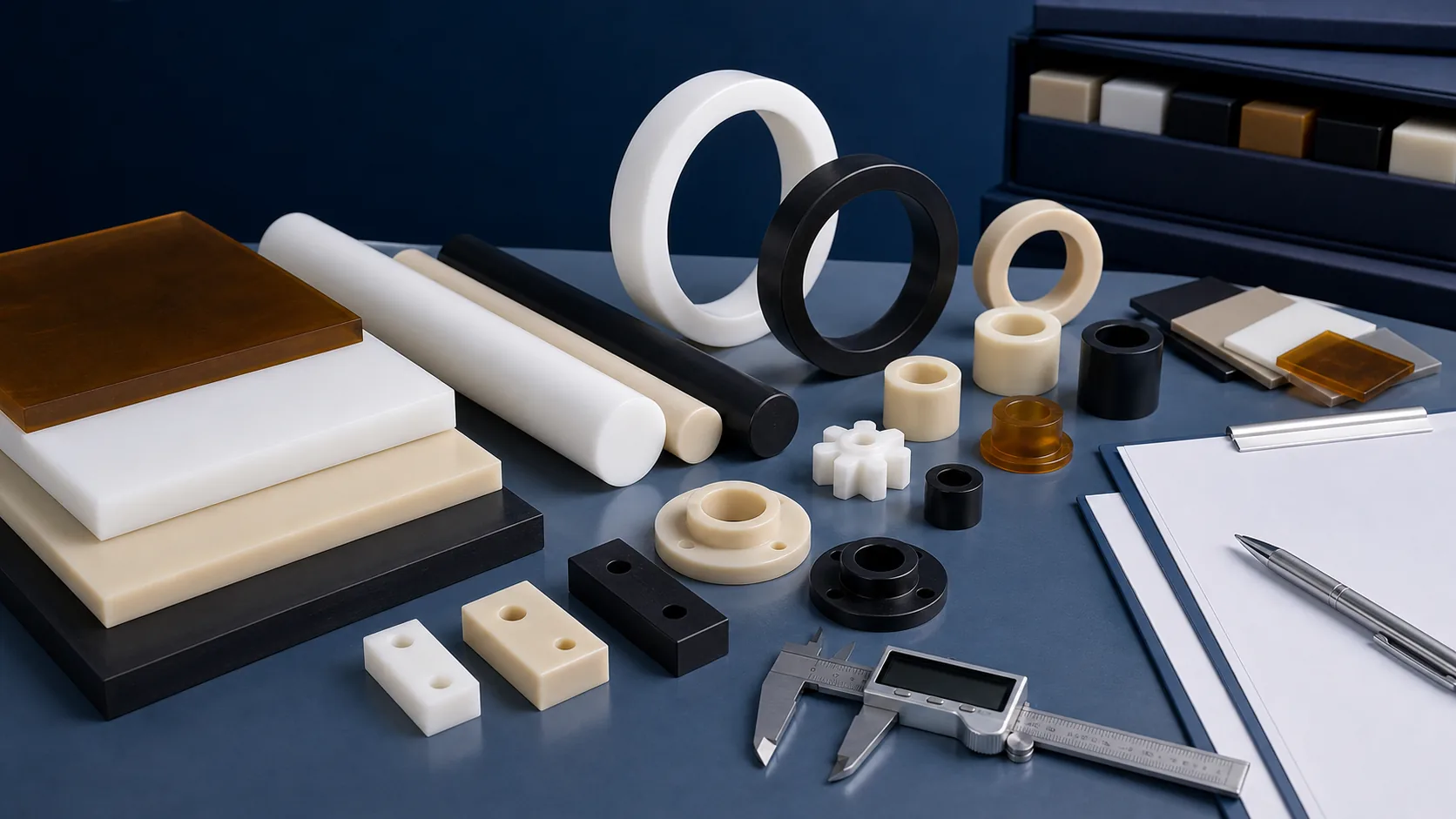
Sheets, rods and tubes support quick review of thickness, wear surface, bore fit, fixture geometry and early assembly tests.
Production planning
When geometry and material stabilize, review repeat machining, molding, inspection points, packaging and revision control.
RFQ checklist
Details that make an automotive engineering plastics quote more useful.
| RFQ input | What to send | Why it matters |
|---|---|---|
| Drawing package | 2D drawing, 3D model, sample photos, revision level and critical dimensions | Defines tolerance, mating features, surface finish and manufacturing route |
| Use environment | Temperature range, oil/fuel/coolant exposure, vibration, moisture and cleaning exposure | Connects material selection to real vehicle service conditions |
| Mechanical duty | Load, speed, wear surface, fasteners, snap features, mating materials and expected life | Prevents selecting a material by name before the duty cycle is clear |
| Commercial and quality needs | Quantity, project stage, lead time, inspection points, packaging and documentation needs | Aligns prototype, replacement, validation and repeat production planning before quote |
FAQ
Questions buyers ask about automotive engineering plastics.
Which materials are commonly used for automotive engineering plastics?
Nylon, POM/acetal, PPS, PEEK, PEI, PC, ABS, PET, UHMW-PE and filled grades may be reviewed depending on heat, oils, fuels, load, wear, vibration, tolerance, insulation and quantity.
How do I choose plastic for under-hood automotive parts?
Start with continuous and peak temperature, oil or fuel exposure, vibration, clamp load, electrical needs, dimensional tolerance, mating parts, service life and whether the part is a prototype, replacement or production component.
Can automotive plastic parts be CNC machined?
Yes. CNC machining is useful for prototypes, test fixtures, replacement parts, bushings, gears, spacers, brackets and low-volume validation parts when drawings or samples are available.
What causes automotive plastic parts to fail?
Common causes include heat aging, fuel or oil swelling, moisture movement, creep under fasteners, vibration fatigue, wear, poor tolerance stack-up, sharp internal corners and choosing a material before the duty cycle is clear.
What should an automotive engineering plastics RFQ include?
Send drawings or 3D files, material target, part function, temperature range, chemical exposure, load, vibration, wear surface, tolerance, finish, quantity, project stage and any inspection or documentation needs.
Related pages
Continue the automotive plastics review.
Automotive plastics RFQ
Send the drawing with temperature, fluid, load and validation details.
Include material target, part function, drawing or 3D model, heat range, oil/fuel/coolant exposure, vibration, load, wear surface, tolerance, finish, quantity, inspection needs and lead-time target.