
Automotive engineering plastics
Automotive engineering plastics for under-hood, wear, EV and lightweight parts.
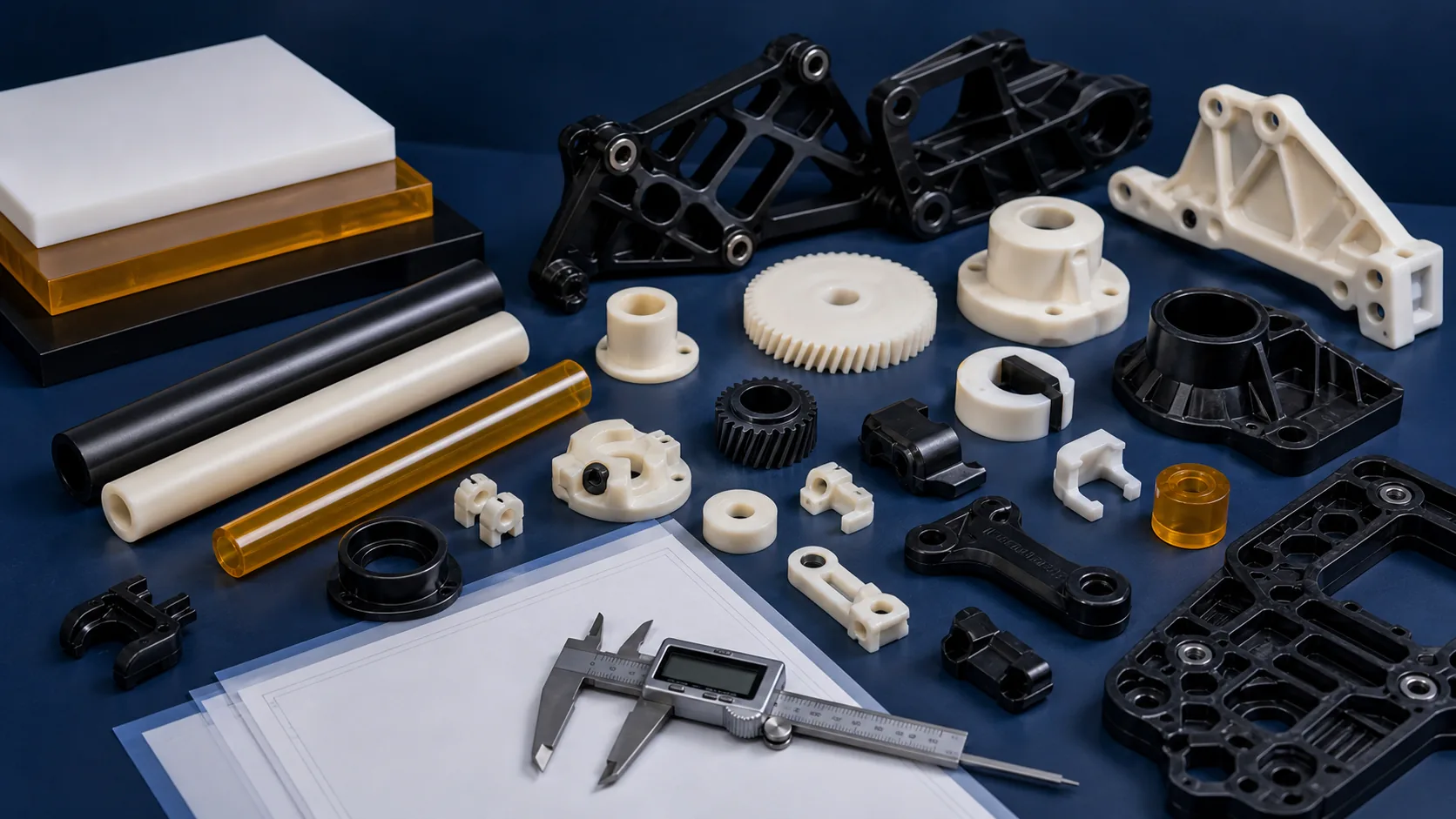
Automotive engineering plastic parts need to survive heat, fluids, vibration, wear, assembly load and validation changes. Great Plastics reviews materials, machining routes and RFQ details before prototypes or repeat parts are quoted.
Short answer
Automotive plastics should be selected around the duty cycle, fluid exposure and validation stage.
Nylon, POM, PPS, PEEK, PEI, PC, UHMW-PE and PTFE-filled materials can all be relevant, but the right path depends on under-hood heat, oils, fuels, EV electrical needs, wear surfaces, tolerance and quantity.
Application fit
Map the application to material behavior and quote inputs.
| Application | Material direction | RFQ note |
|---|---|---|
| Under-hood parts | PPS, PEEK, PEI or nylon | Send heat, fluid, vibration and assembly-load details. |
| Wear and motion parts | POM, nylon, UHMW-PE, PEEK or filled PTFE | Clarify load, speed, mating surface and lubrication. |
| EV and electrical parts | PEI, PPS, PEEK or PC | State insulation, heat, spacing and documentation needs. |
| Prototype and validation parts | CNC machined stock shapes | Send CAD, revision status, quantity and test objective. |
Review points
Resolve the operating risks before selecting the route.
Heat aging
Under-hood temperature and cycling can drive grade choice.
Fluid contact
Oil, fuel, coolant and cleaners must be named early.
Wear and vibration
Load direction, speed and mating surface affect material choice.
Validation stage
Prototype and production routes should not be priced as the same problem.
Tolerance stack-up
Plastic movement must be reviewed before replacing metal features.
RFQ checklist
Send the details that let the quote reflect the real application.
- Drawing, CAD file or sample photo
- Material target or operating-performance requirement
- Temperature, chemicals, load, wear, electrical or cleanliness conditions
- Critical dimensions, finish, inspection and documentation needs
- Quantity, project stage, packaging needs and repeat-order expectations
FAQ
