GP
Great PlasticsEngineering Materials & Custom Parts
PAI plastic / Torlon material
Choose PAI plastic for high load, wear and tight-tolerance parts.
PAI, often known by the Torlon name, is usually reviewed when a plastic part must carry mechanical load, resist wear and keep dimensions in hot or demanding environments. Great Plastics helps buyers compare PAI with PEEK, PI, PEI and PPS before RFQ.
Wear and friction grades
Low creep and tight tolerance
Heat-resistant machined parts
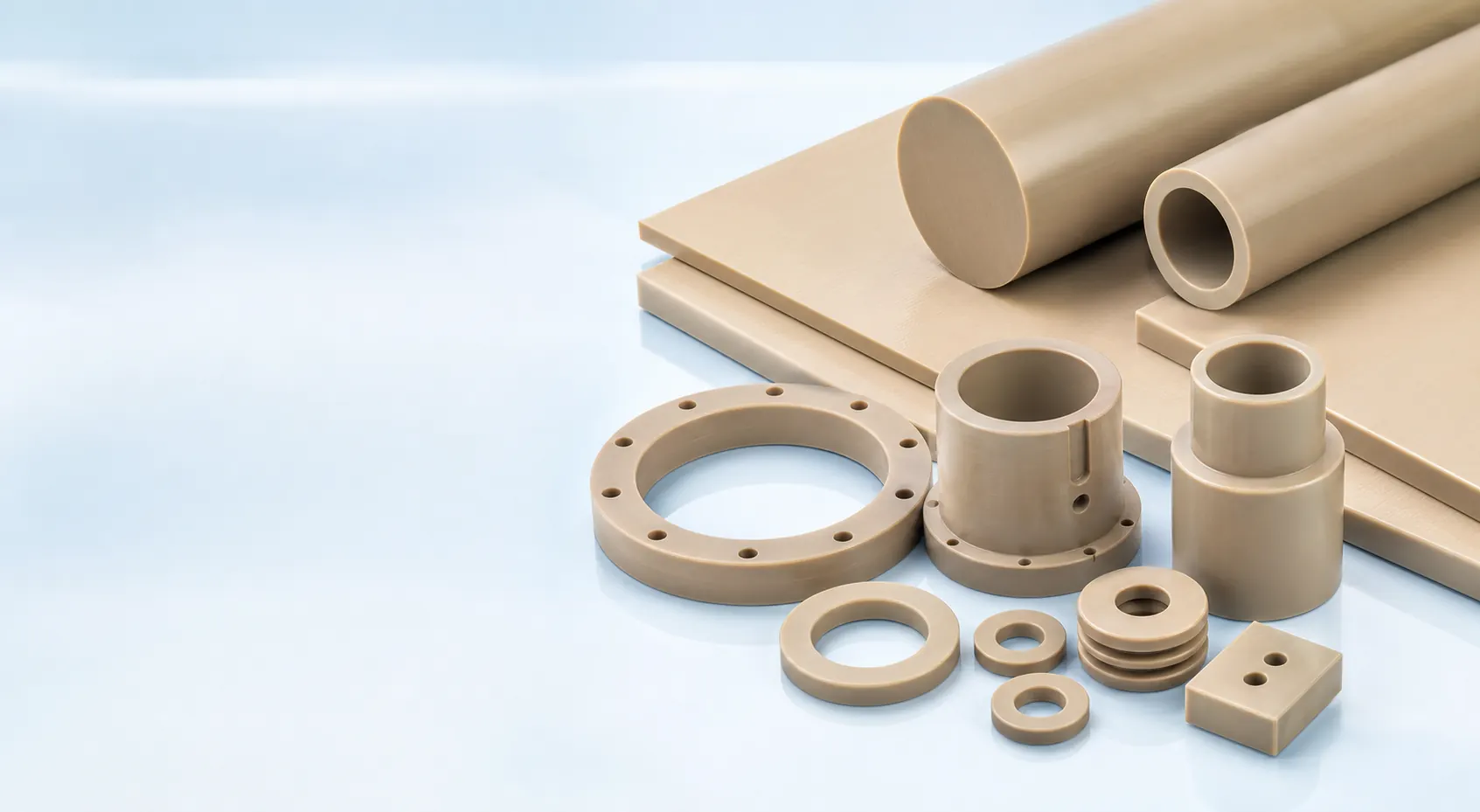
Short answer
PAI plastic is a mechanical-performance choice, not simply a higher-price material.
PAI is most useful when a plastic component must handle load, wear, creep, thermal stress and precision fit at the same time. It can be an excellent choice for bushings, bearings, thrust washers, seal rings, sockets and structural plastic parts, but it should be compared with PEEK, PI, PEI and PPS before purchase.
Material fit
When PAI plastic belongs on the shortlist.
| Requirement | Why PAI may help | What to confirm before RFQ |
|---|---|---|
| High mechanical load | PAI is often selected for strong, stiff plastic parts that carry real load in compact geometry. | Load, load duration, bearing area, safety factor and mating component. |
| Wear and friction | Bearing and filled PAI grades can suit sliding parts where standard plastics creep or wear too quickly. | Pressure, speed, lubrication, mating material, heat buildup and expected life. |
| Tight tolerance stability | Low thermal expansion and low creep can support precision parts when geometry is designed realistically. | Critical dimensions, inspection temperature, flatness, wall thickness and moisture control. |
| Elevated temperature | PAI can retain mechanical performance where many thermoplastics soften or lose stiffness. | Continuous temperature, peak temperature, cycle time and load at temperature. |
| Severe service replacement | PAI may replace metal when weight, noise, galling, lubrication or electrical isolation is important. | Why the existing material failed, assembly constraints and performance target. |
Grade and process decisions
PAI performance depends on grade, cure state and machining plan.
Unfilled PAI
Useful where strength, stiffness and electrical behavior matter, but the exact grade must match the environment.
Bearing grades
Graphite, PTFE or other filled grades may improve wear and friction, with tradeoffs in machining and surface finish.
Glass or carbon filled grades
Filled grades can improve stiffness or wear but may be abrasive to tools and more sensitive at edges.
Stock shape condition
Post-cure, moisture and stress state can affect final part performance and dimensional stability.
CNC machining
Review heat control, tool wear, flatness, burrs, internal corners and critical bores before quoting.
Inspection plan
Define which dimensions actually control fit or performance so precision effort is spent correctly.
Applications
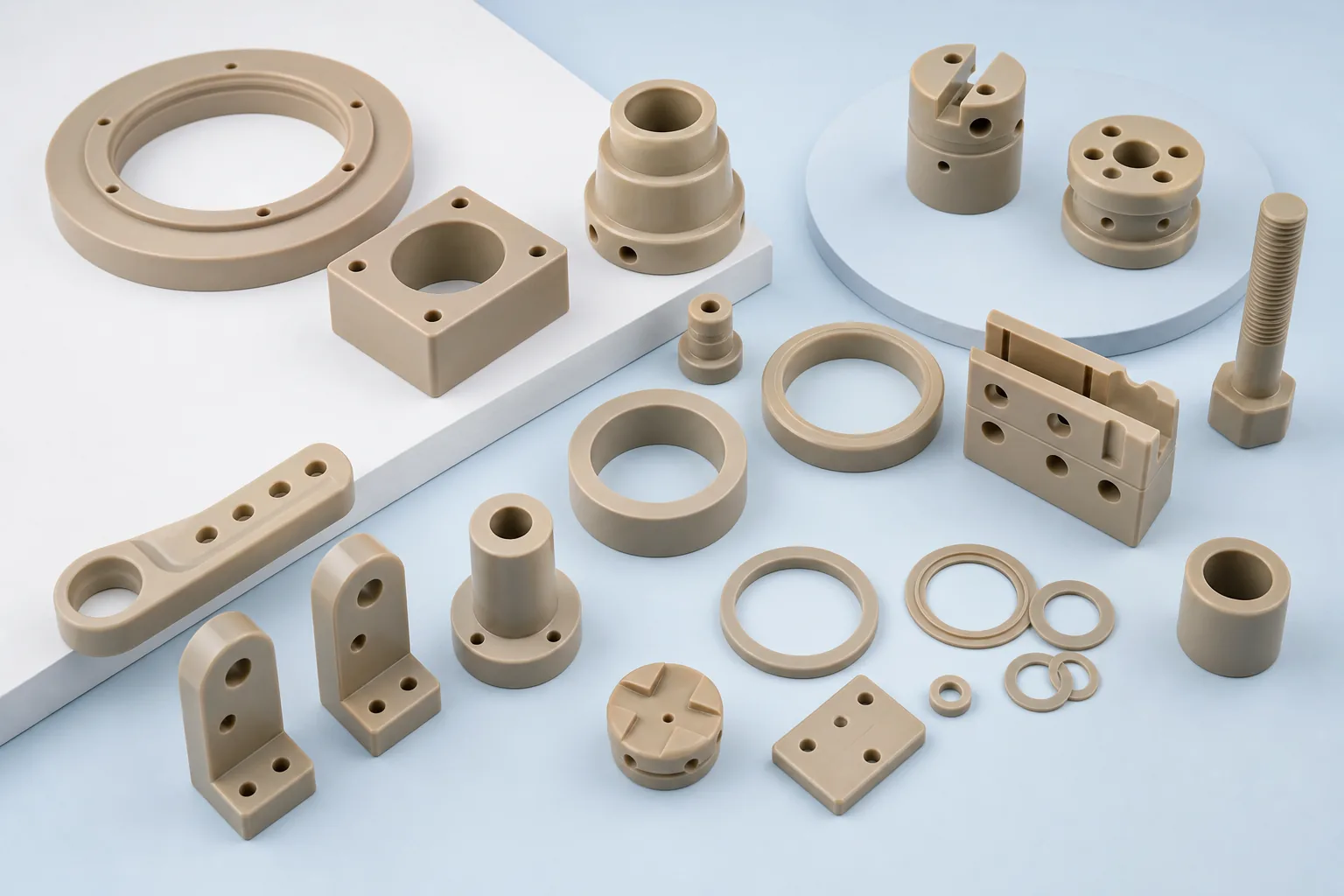
Typical PAI questions start with load, wear and stability.
- Bushings, bearings, thrust washers, rollers, seal rings and wear pads.
- Precision sockets, test components, aerospace actuation parts and semiconductor machinery components.
- Pump, valve, compressor and machinery parts where heat, wear and chemical exposure combine.
- Metal-replacement components where weight, noise, lubrication or electrical isolation matter.
- Parts where a failed PEEK, POM, Nylon or metal component needs a more stable plastic option.
Alternatives
Compare PAI with nearby high-performance plastics before quoting.
| Material | Why compare it | When PAI may be preferred |
|---|---|---|
| PEEK | Excellent chemical resistance, availability, machining familiarity and broad high-performance use. | PAI may fit better when load, creep, wear or tight-tolerance stability at temperature dominate. |
| PI | Specialty severe heat, dry friction, electrical insulation and vacuum contexts. | PAI may be more practical when high mechanical load and wear are the main requirements. |
| PEI | Heat, flame resistance, stiffness and electrical insulation at a more practical cost. | PAI may be needed when PEI lacks load-bearing or wear performance. |
| PPS | Chemical resistance and dimensional stability in many industrial environments. | PAI may be selected for higher load, wear or precision mechanical duty. |
| POM / Nylon / PTFE | Useful for lower-cost wear, bearing or sliding parts under moderate conditions. | PAI may be justified when heat, creep or load causes these materials to fail. |
Manufacturing route
Plan the PAI part around load path, grade and machining risk.
Material and grade review
Start with load, wear, heat, mating surface, chemical exposure and documentation needs.
CNC machining review
Review stock condition, tool wear, heat control, stress relief, tight bores and flatness before quote.
RFQ package
Send drawing, grade target, quantity, tolerance and service conditions so the route can be checked.
Application matrix
Where PAI plastic is commonly reviewed.
| Industry context | Possible part types | Review emphasis |
|---|---|---|
| Aerospace | Actuation components, bushings, guides, insulators, wear parts | Load, temperature, traceability, approved material and dimensional stability. |
| Semiconductor | Test sockets, precision fixtures, carriers, wear guides | Cleanliness, tight tolerance, electrical behavior and machining stress. |
| Energy | Seal rings, valve parts, pump components, downhole-related wear parts | Pressure, temperature, chemicals, wear and documentation needs. |
| Machinery | Bearings, rollers, thrust washers, gears, guides and replacement parts | Load, speed, lubrication, mating surface and failure mode. |
| Automotive | Transmission-adjacent parts, wear components, high-temperature supports | Heat aging, friction, vibration, fluid exposure and cost target. |
RFQ checklist
Send enough detail to decide whether PAI is justified.
- Drawing or 3D model with critical dimensions marked
- Target PAI / Torlon grade or performance requirement
- Quantity, prototype stage and repeat demand
- Load, speed, mating material and lubrication condition
- Continuous and peak temperature conditions
- Chemical exposure, fluid contact and cleaning process
- Tight tolerance, flatness, bore and surface finish requirements
- Inspection, certificate, traceability or approved-material needs
- Known failure mode of the current part or material
- Target lead time and delivery destination
Related pages
Continue the PAI material review.
FAQ
Questions buyers ask before specifying PAI plastic.
What is PAI plastic?
PAI plastic, or polyamide-imide, is a high-performance thermoplastic family often selected for high load, wear resistance, low creep, dimensional stability and elevated-temperature mechanical parts.
Is Torlon the same as PAI plastic?
Torlon is a well-known trade name for PAI material. Buyers often use Torlon and PAI together, but the exact grade, stock shape and documentation requirements should be confirmed before quote review.
When should PAI be considered instead of PEEK?
PAI may be considered when load-bearing strength, wear resistance, creep resistance or tight-tolerance stability at elevated temperature exceed what PEEK can comfortably provide. PEEK may still be more practical for chemical resistance, availability or cost.
Can PAI plastic be machined into custom parts?
PAI stock shapes can be machined into bushings, bearings, thrust washers, seal rings, rollers, sockets and precision mechanical parts. Machining risk, stress relief, moisture, grade and post-processing needs should be reviewed before quoting.
What information is needed for a PAI plastic quote?
Send a drawing or 3D model, target PAI or Torlon grade, quantity, critical tolerances, load, speed, temperature, mating surface, chemical exposure, inspection needs and target lead time.
PAI plastic RFQ
Send a drawing or failure note for Torlon material review.
Include PAI grade target, load, speed, temperature, mating surface, failure mode, quantity, tolerance, inspection requirements and lead time so Great Plastics can review whether PAI is the right choice.