GP
Great PlasticsEngineering Materials & Custom Parts
Product hub
Engineering plastic products organized by stock shape, custom part route and material requirement.
Compare sheets, rods, tubes, filaments and custom plastic parts by geometry, material family, machining route, quantity and RFQ readiness.
Finished custom plastic parts
PEEK, PPS, PEI, PAI, PI and more
Drawing and RFQ review
Short answer
The right product form depends on the geometry, the material and the next process.
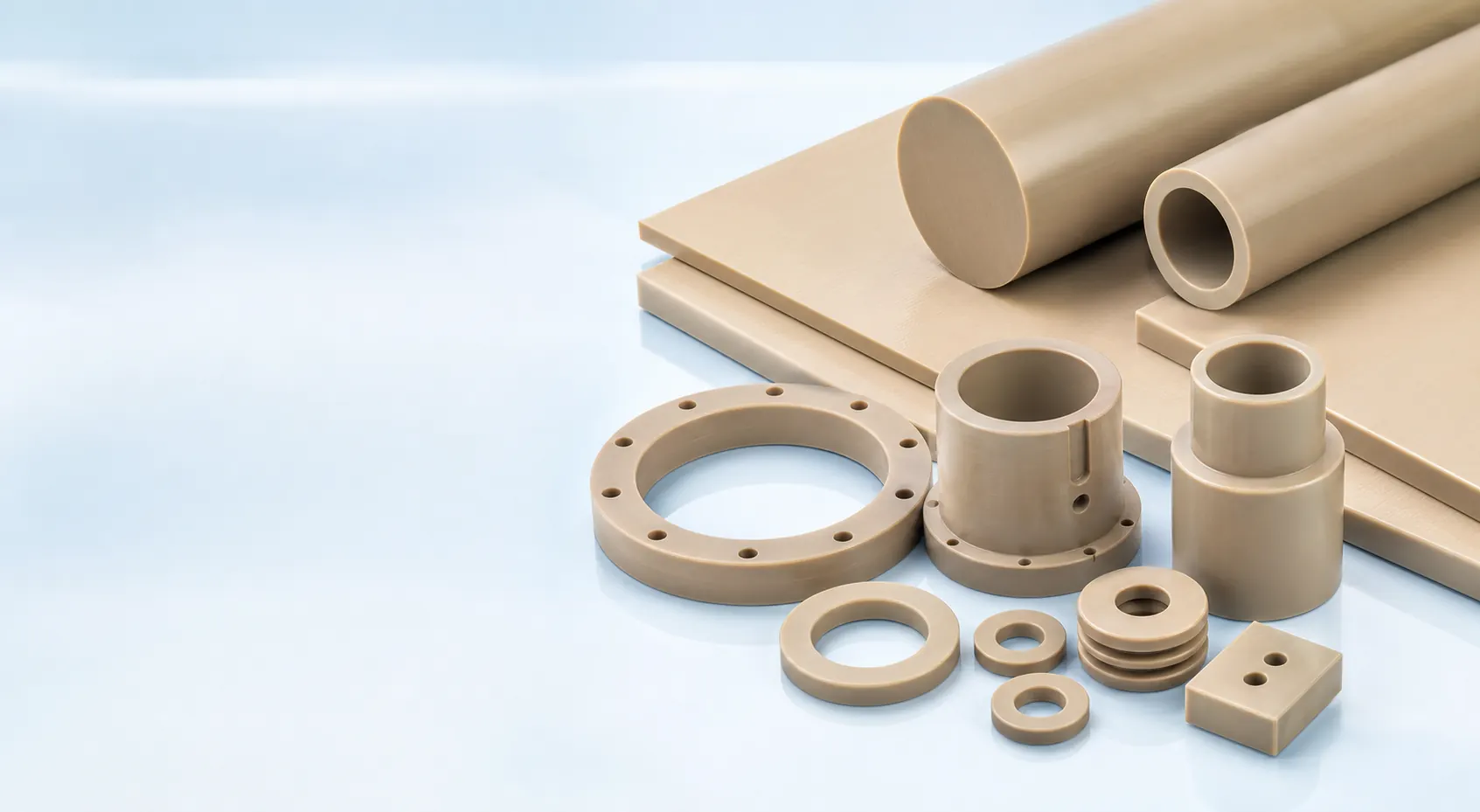
Engineering plastic products can be purchased as stock shapes or as finished parts. A flat wear strip may start from sheet, a bushing from tube, a roller from rod, and a precision component from a custom machining review. This page routes buyers from product form to material selection and RFQ preparation.
Product form router
Start with the shape closest to the finished part.
Flat stockPlastic SheetsSheets and plates for panels, fixtures, liners, wear strips and machining blanks.
Round stockPlastic RodsRod and bar stock for rollers, spacers, pins, bushings and turned parts.
Hollow stockPlastic TubesTube stock for sleeves, hollow bushings, insulators and fluid or mechanical components.
PrototypePlastic FilamentsFilament options for prototypes, fixtures, concept checks and additive manufacturing trials.
Selection table
Match the product form to the drawing and process route.
| Part or buying need | Best starting product form | Why it fits | RFQ details to include |
|---|---|---|---|
| Wear strip, liner, panel, plate, fixture base | Engineering plastic sheet or plate | Flat stock reduces setup and simplifies cutting, milling or panel preparation. | Thickness, flatness, sheet size, cut tolerance, finish, material grade. |
| Roller, pin, plug, spacer, round bushing | Engineering plastic rod or bar | Round stock supports turning, boring, grooving and concentric features. | Diameter, length, bore, runout, threads, quantity, machining allowance. |
| Sleeve, hollow bushing, guide, insulation body | Engineering plastic tube | Tube can reduce waste versus drilling a large bore from solid rod. | OD, ID, wall, length, concentricity, mating shaft, thermal movement. |
| Prototype, fixture, fit check or early design trial | Filament, printed prototype or machined sample | Early parts can validate geometry before the final material and process are locked. | What the prototype must prove, target material, final environment, quantity. |
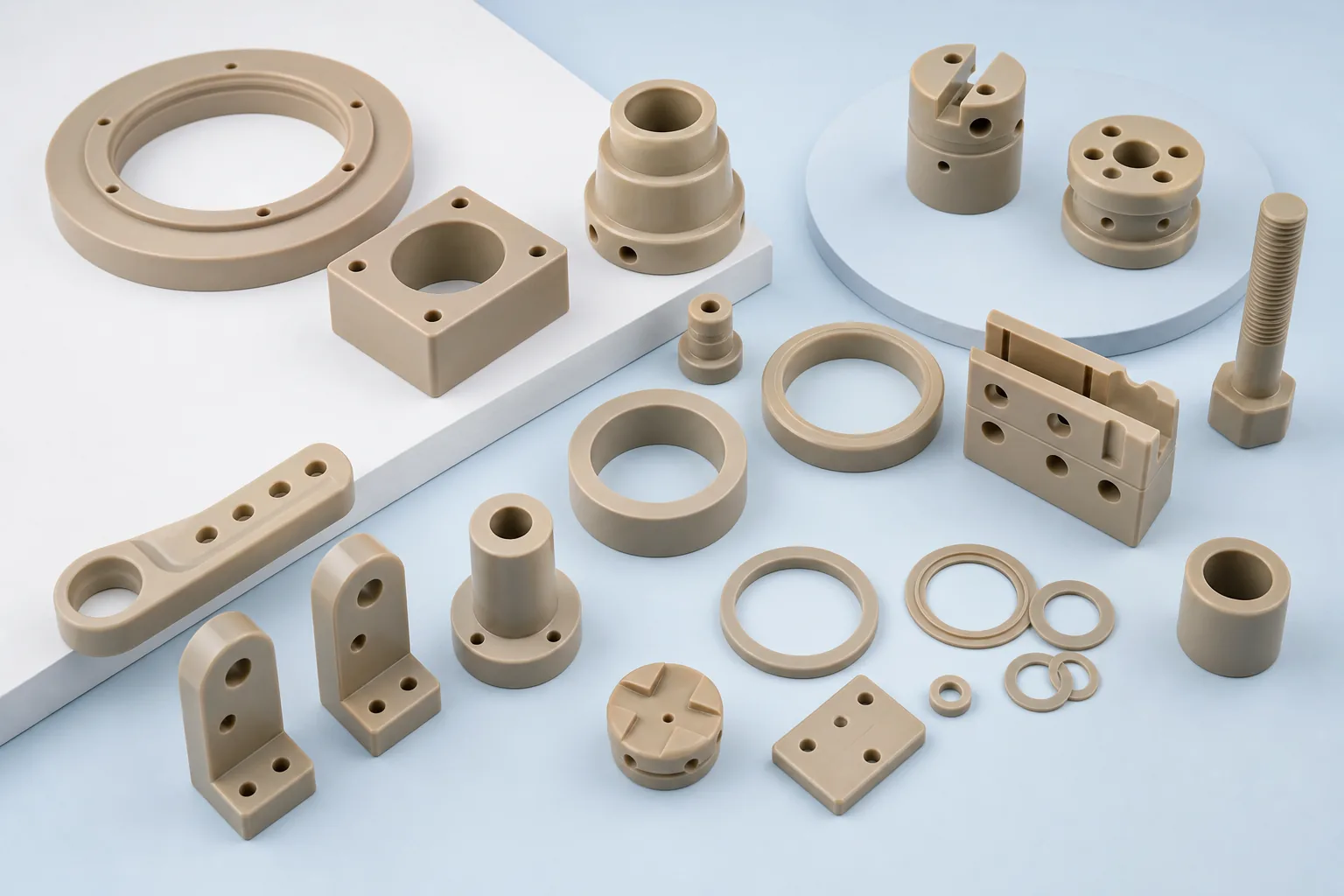
| Finished component with tolerance and surfaces | Custom plastic part | Drawing review connects material, stock form, tooling, machining and inspection. | 2D drawing, 3D model, tolerance, critical surfaces, quantity, environment. |
Product families
Engineering plastic products for different project stages.
Stock shapes
Sheets, rods and tubes are practical when buyers need material for machining, cutting, prototypes or prepared blanks.
Custom plastic parts
Use when the part requires drawing review, tight dimensions, machining features, finishing or assembly context.
High-performance materials
PEEK, PPS, PEI, PAI and PI support demanding heat, chemical, wear, load and electrical requirements.
Prototype routes
Filaments, machined samples and rapid manufacturing routes help validate geometry before production.
Machining inputs
Drawing, tolerance and material behavior determine whether a stock shape can become a reliable component.
RFQ review
Use the product form, material target and operating environment to prepare a faster quote request.
Material fit
Common materials used across engineering plastic product forms.
| Material group | Common product forms | Typical buying reason | Useful next page |
|---|---|---|---|
| PEEK, PPS, PEI, PAI, PI | Sheets, rods, tubes, machined parts, selected molded or prototype routes. | Heat, chemical exposure, dimensional stability, wear, load or electrical performance. | PEEK material review |
| POM / Acetal, Nylon, PET | Sheets, rods, bars, rollers, gears, spacers and general machined parts. | Machinability, wear resistance, toughness, lower cost and mechanical function. | Material selection tool |
| PTFE, PVDF and chemical-resistant plastics | Sheets, rods, tubes, seals, liners, valve seats and chemical-contact components. | Chemical resistance, low friction, insulation, fluid contact and outdoor exposure. | Material properties |
| PC, PSU, PPSU and specialty options | Stock shapes, molded candidates, prototype parts and application-specific components. | Impact, transparency, heat, hydrolysis resistance, cleaning cycles or specialty constraints. | Datasheet review |
Buying path
Move from product category to manufacturable quote.
Choose product form
Select sheet, rod, tube, filament or custom part based on the shape closest to the finished component.
Confirm material behavior
Compare temperature, chemicals, wear, load, electrical needs, moisture and dimensional stability.
Review manufacturing route
Decide whether to quote stock, cutting, CNC machining, printing, molding or a staged prototype path.
Application matrix
How engineering plastic product requests usually arrive.
| Buyer situation | Useful product route | Review points before quote |
|---|---|---|
| Maintenance replacement part | Custom machined part from sheet, rod or tube. | Existing failure mode, sample part, mating surface, load, wear and fit. |
| OEM mechanical component | Machined or molded custom plastic part. | Critical dimensions, expected volume, material grade, inspection and assembly. |
| Fixture, jig or tooling support | Sheet, plate, rod, machined block or printed prototype. | Flatness, heat, chemicals, ESD, wear surface, fasteners and lead time. |
| Chemical or fluid-contact component | PTFE, PVDF, PPS, PEEK or selected chemical-resistant product form. | Chemical concentration, pressure, temperature, sealing surface and documentation. |
| Prototype to production transition | Filament or machined prototype, then production machining or molding review. | What the prototype must prove, final material behavior and expected demand. |
Quick product RFQ
Build the product request before sending the drawing.
Useful details for a first review
- Product form: sheet, rod, tube, filament or finished custom part.
- Material or performance target: PEEK, PPS, POM, Nylon, PTFE, heat, chemical or wear requirement.
- Size list, drawing, model, quantity and tolerance.
- Operating environment, surface finish, inspection and target lead time.
Drawing review
A better product quote starts with material, form and function.
A request for engineering plastic products can be too broad if it only says “plastic rod” or “custom part.” The quote becomes more useful when the buyer explains how the part will be used and what must be controlled.
- Send dimensions, material target, quantity and whether you need stock shape or finished part.
- Attach drawings or 3D models for machined, cut, molded or assembled parts.
- Mark critical tolerances, mating surfaces, wear surfaces, sealing faces and cosmetic surfaces.
- State certificate, inspection, packing or traceability requirements when they apply to the project.
Related pages
Continue from product category to material and process review.
FAQ
Questions buyers ask before ordering engineering plastic products.
What are engineering plastic products?
Engineering plastic products include stock shapes such as sheets, rods, tubes and filaments, plus finished or semi-finished custom parts made from materials such as PEEK, PPS, PI, PAI, PEI, POM, Nylon, PTFE and PVDF.
Should I buy stock shapes or custom plastic parts?
Choose stock shapes when you need material for cutting, prototyping or in-house machining. Choose custom plastic parts when the geometry, tolerance, machining route, finishing or inspection plan should be reviewed before manufacturing.
How do I choose between plastic sheets, rods, tubes and filaments?
Flat parts often start from sheet or plate, turned parts from rod, sleeves and bushings from tube, and prototype trials from filament. Finished components should be reviewed from the drawing and expected quantity.
Can Great Plastics quote engineering plastic products from a drawing?
Yes. A drawing or 3D model helps review material, stock shape, machining route, tolerance, inspection, documentation and lead time before quotation.
What should I include in an engineering plastic products RFQ?
Send the product form, material or performance target, dimensions, drawing or model, quantity, tolerance, operating environment, surface finish, inspection needs and target lead time.
Which materials are common for engineering plastic products?
Common options include PEEK, PPS, PEI, PAI, PI, PTFE, PVDF, POM, Nylon, PC and specialty plastics selected by heat, chemicals, wear, load, electrical behavior and dimensional stability.
Product RFQ
Need stock shape, custom part, or help choosing the route?
Send the product form, material target, drawing or size list, quantity and operating environment. Great Plastics can review the practical route before quote preparation.