GP
Great PlasticsEngineering Materials & Custom Parts
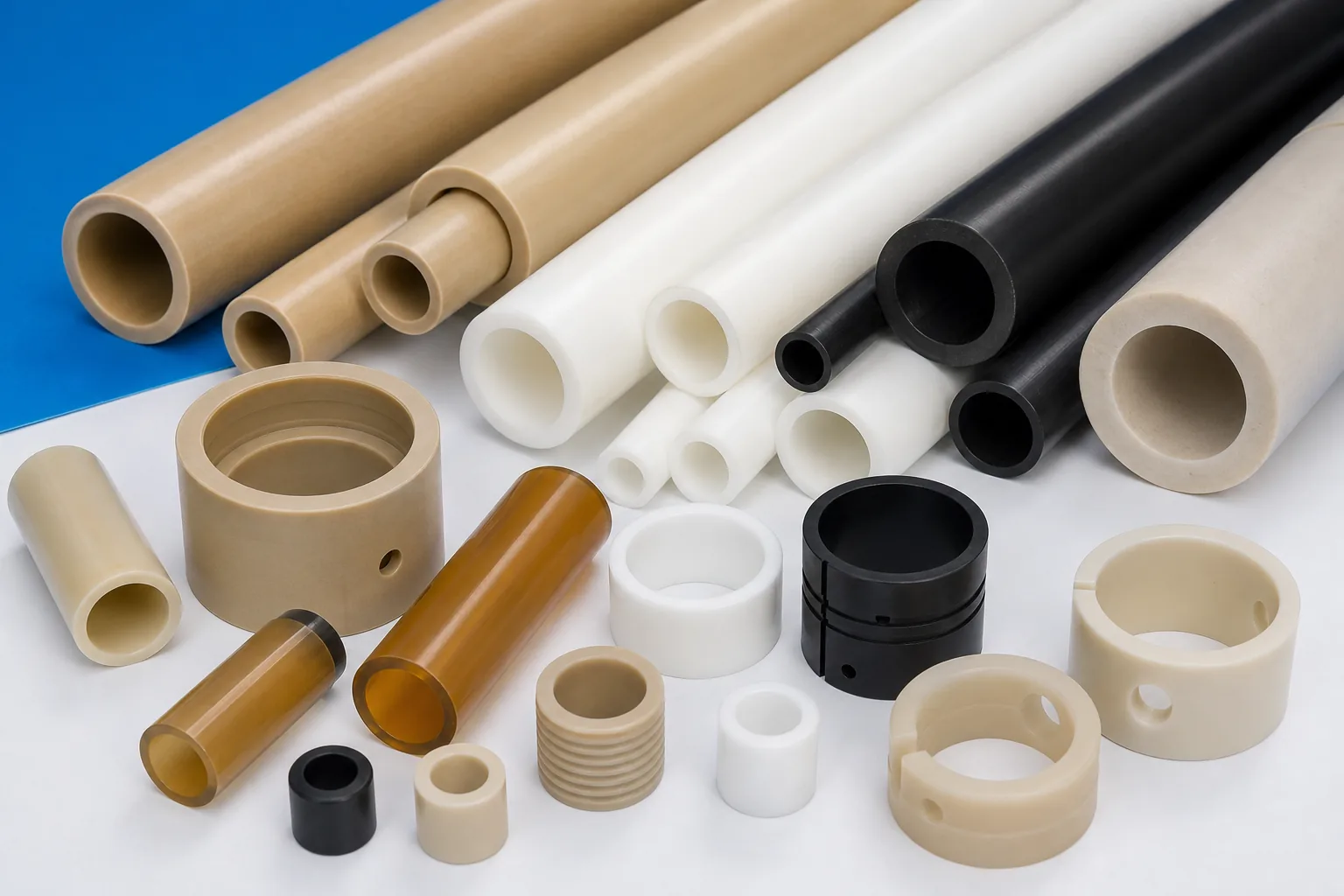
Engineering plastic tube
Source engineering plastic tube for sleeves, bushings and machined hollow parts.
Great Plastics helps buyers review hollow stock material, OD, ID, wall thickness, length, concentricity, machining allowance and operating environment before quote preparation.
PEEK, PTFE, PPS, PEI, POM, Nylon
Sleeves, bushings and insulators
Concentricity and bore review
Short answer
Engineering plastic tube is useful when the finished part already needs a bore.
Tube can reduce waste and machining time for sleeves, bushings, spacers, standoffs, insulating bodies and fluid-contact parts. A useful tube RFQ should define OD, ID, wall thickness, length, material target, final machining and service conditions.
Material fit
Common engineering plastic tube materials and buying reasons.
| Tube material | Often reviewed for | Confirm before quote |
|---|---|---|
| PEEK tube | High-temperature sleeves, seal carriers, valve parts, bushings and precision hollow components. | Grade, OD/ID, wall thickness, machining allowance, chemicals and documentation. |
| PTFE tube | Low-friction sleeves, seals, chemical barriers, insulation and fluid-contact parts. | Creep, filler needs, bore tolerance, wall support, pressure and deformation limits. |
| PPS tube | Chemical-service sleeves, electrical parts and heat-resistant hollow components. | Temperature, chemical exposure, filled grade options, wall thickness and stability. |
| PEI / Ultem tube | Electrical insulation, high-temperature standoffs, transparent or flame-resistant components. | Color or clarity, heat exposure, stress cracking risk, tolerance and finish. |
| POM / Acetal tube | Precision spacers, sleeves, bushings and low-moisture machined parts. | Fit type, bore, OD, runout, moisture, mating parts and surface finish. |
| Nylon tube | Wear sleeves, impact-resistant bushings, rollers and mechanical supports. | Moisture movement, swelling, lubrication, load, speed and filled grade options. |
Selection path
Choose tube format by wall, bore and final function.
Stock tube
Use when your team will cut, bore or machine hollow plastic parts from standard tube.
Cut-to-length tube
Use when prepared tube blanks reduce saw time, waste and handling before final machining.
Machined sleeves
Review OD, ID, wall, press fit, clearance, shaft contact and lubrication before quote.
Insulating bodies
Review dielectric need, heat, wall thickness, fasteners and assembly compression.
Fluid-contact parts
Review chemical exposure, temperature, pressure, sealing surfaces and cleaning method.
Precision bushings
Review concentricity, bore tolerance, runout, wear surface and inspection temperature.
Tube RFQ workbench
Build a hollow-stock request around OD, ID and wall behavior.
Fast tube specification
Use this structure when your buyer or engineer needs hollow stock, cut tube blanks or finished sleeve components.
- Material family and grade target: PEEK, PTFE, PPS, PEI, POM, Nylon or a performance requirement.
- Tube format: full-length tube, cut-to-length blank, machined sleeve, bushing, spacer, insulator or fluid-contact part.
- Dimensions: raw OD, raw ID, finished OD, finished ID, wall thickness, length and quantity per size.
- Function: shaft fit, press fit, sliding surface, sealing face, chemical exposure, heat, pressure and inspection needs.
Tube quote details
What changes yield, tolerance and machining risk.
| RFQ detail | Why it matters | Buyer note |
|---|---|---|
| OD and ID | Control fit, material yield, machining allowance and whether tube is better than solid rod. | State raw stock size and finished OD/ID targets separately. |
| Wall thickness | Thin walls may deform during machining or assembly; thick walls may waste material. | Flag press fit, load and any minimum finished wall. |
| Length | Affects cutting, handling, stability and final facing operations. | Separate blank length from finished part length. |
| Concentricity and runout | Important for bushings, rollers, sleeves and precision rotating parts. | Mark only functional precision requirements. |
| Surface finish | Bore, sealing and sliding surfaces often need more control than outside nonfunctional faces. | Identify bearing, sealing and fluid-contact faces. |
Processing route
Match tube supply to the next manufacturing operation.
Cut tube blanks
Best for simple hollow blanks or projects where final machining happens after material preparation.
CNC machining
Use when tube must become sleeves, bushings, seal carriers, spacers or precision hollow parts.
Alternative form review
Check whether rod, sheet or molding is better when the bore is small, the wall is unusual or volume is high.
Application matrix
Where engineering plastic tube is commonly reviewed.
| Application | Typical tube-based parts | Review focus |
|---|---|---|
| Sleeves and bushings | Wear sleeves, bearing bushings, guide sleeves and shaft spacers. | OD, ID, fit, lubrication, mating material, load and wear life. |
| Electrical insulation | Insulating tubes, standoffs, separators and equipment spacers. | Dielectric needs, wall thickness, heat, fasteners and compression. |
| Fluid and chemical service | Seal carriers, valve sleeves, pump components and fluid-contact spacers. | Chemical compatibility, temperature, sealing stress and cleaning method. |
| Precision round assemblies | Roller cores, hollow guides, sleeves with grooves or threaded ends. | Concentricity, runout, bore finish, OD finish and inspection plan. |
| Prototype and replacement parts | Sample sleeves, replacement bushings and bridge-production hollow parts. | Existing failure mode, sample fit, drawing completeness and material target. |
Drawing review
Separate tube stock size from finished OD, ID and wall requirements.
Tube projects can become expensive when the bore, wall thickness and concentricity are not defined. A clearer drawing separates raw tube size from the dimensions that actually affect assembly and performance.
- Mark OD, ID, wall thickness, length, grooves, shoulders and chamfers.
- Identify bore surfaces, sealing surfaces, bearing areas and press-fit zones.
- State whether concentricity, runout or bore finish is functional or general.
- Confirm certificates, inspection or traceability only when the project requires them.
Related forms
Tube is not always the best starting point.
| Alternative form | Use when | Related page |
|---|---|---|
| Rod | The finished part is mostly solid or has only a small bore. | Engineering plastic rods |
| Sheet | The part is flat, panel-like or better nested from plate stock. | Engineering plastic sheets |
| Custom part | The drawing includes complex features, tight tolerance, inspection or finished assembly review. | Custom plastic parts |
| Molding route | Repeat demand and geometry may justify tooling after prototype validation. | Injection molding |
Related pages
Continue tube selection into material and machining review.
FAQ
Questions buyers ask before ordering engineering plastic tube.
What is engineering plastic tube?
Engineering plastic tube is hollow cylindrical stock used for machining sleeves, bushings, spacers, insulators, fluid-contact parts and other components where a bore or hollow geometry is needed.
How do I choose an engineering plastic tube material?
Choose by service condition first: load, wear, temperature, chemicals, moisture, electrical insulation and dimensional stability. Then confirm OD, ID, wall thickness, length, machining allowance and tolerance.
When should I use tube instead of rod?
Use tube when the finished part has a bore or sleeve geometry and solid rod would require excessive material removal. Use rod when the finished part is mostly solid or the bore is small.
Can plastic tube be machined into finished sleeves or bushings?
Machinable plastic tube can be cut, bored, faced, turned, grooved, threaded or milled into custom sleeves, bushings, spacers and insulating components. OD, ID, wall thickness, concentricity and surface finish should be reviewed from the drawing.
What should I send for an engineering plastic tube RFQ?
Send material or performance target, OD, ID, wall thickness, length, quantity, drawing or model if machined, tolerance, concentricity needs, operating environment, finish, inspection needs and lead time.
Tube RFQ
Send OD, ID, wall thickness, material and any machining requirements.
Include material or performance target, OD, ID, wall thickness, length, quantity, drawing if machined, tolerance, operating conditions, finish, inspection needs and lead time.