Engineering plastic products

Engineering plastic products organized by material, stock shape and custom part route.

Compare plastic sheets, rods, tubes, filaments and custom machined parts by geometry, material family, operating environment and RFQ readiness.

Stock shapesSheets, rods, tubes
Custom routeDrawing-driven parts
Material pathPEEK, PPS, PEI, PAI, PI

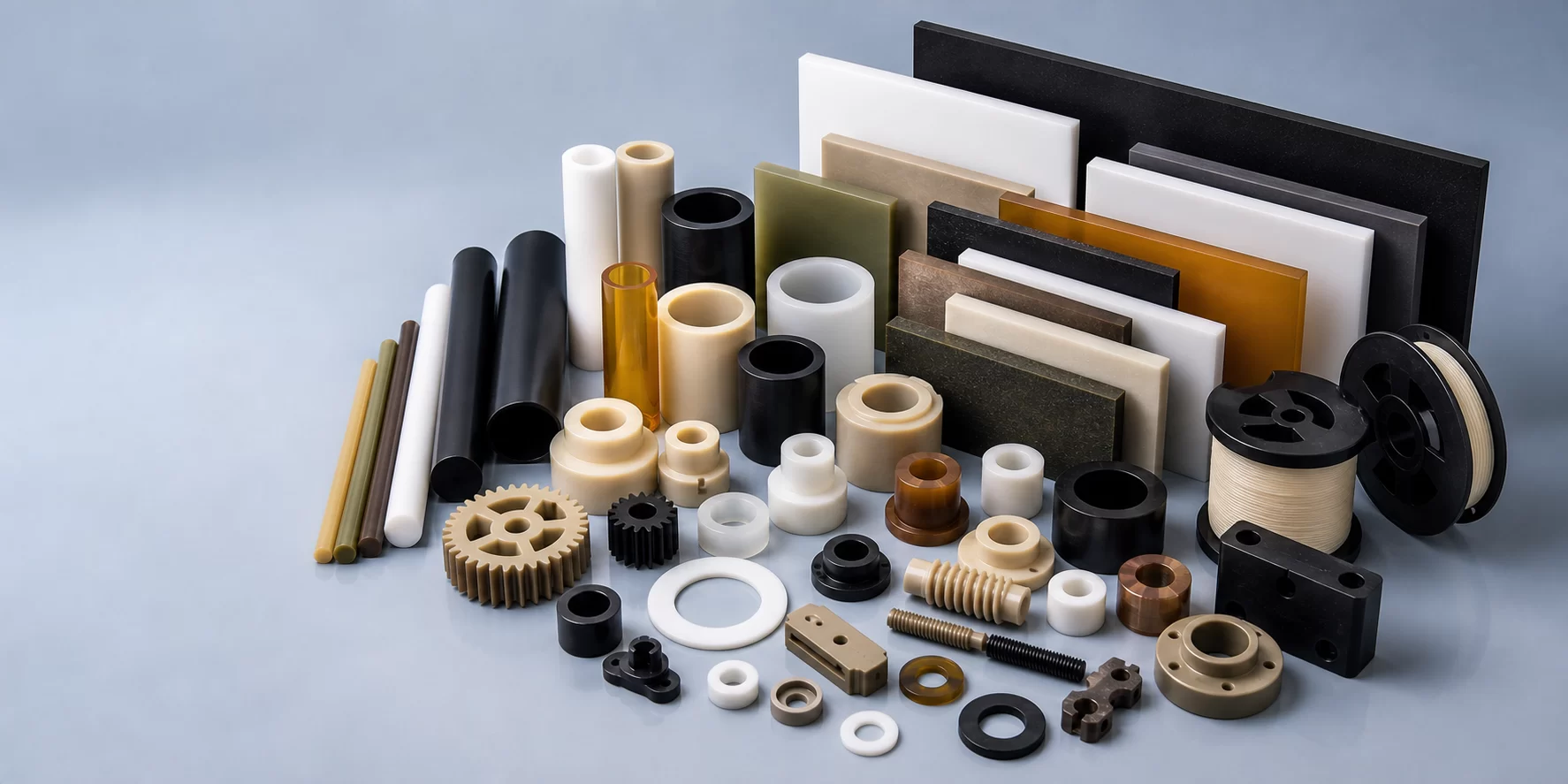
Engineering plastic products including sheets rods tubes filaments and machined plastic parts on a clean blue gray studio surface

Short answer

The right product form depends on geometry, material risk and production route.

Engineering plastic products are not only catalog items. A buyer may need a plastic sheet for flat machining, a plastic rod for turned bushings, a plastic tube for sleeves, a custom plastic part from a drawing, or a material review through the engineering plastic materials hub.

Product form router

Choose the form that gives the fastest path to a quote.

Sheets

Plastic sheets and plates

Use sheets for machined plates, panels, fixtures, wear pads, insulators and flat components where thickness, flatness and cutting route matter.

Rods

Plastic rods

Use rods for turned parts, rollers, bushings, spacers, wheels and round components that need diameter control or concentric features.

Tubes

Plastic tubes

Use tubes for sleeves, liners, pipe-style components, spacers and parts where a preformed bore reduces machining time.

Filaments

Plastic filaments

Use filaments for prototype trials, 3D printed concepts and geometry checks before a machined or molded production route.

Custom

Custom plastic parts

Use custom parts when a drawing, STEP file, assembly function, tolerance or inspection requirement defines the part.

Machining

CNC plastic machining

Use machining when stock shapes need precision holes, pockets, threads, grooves, sealing faces or tight-tolerance features.

Selection table

Match product form to the part geometry before selecting material.

Buyer need Best starting product Why it works Next detail for RFQ
Flat panels, wear pads or insulating plates Sheets / plates Flat stock reduces machining time and supports cutting, drilling, pockets and surface features. Thickness, flatness, hole pattern, tolerance and surface finish.
Round bushings, rollers, spacers or wheels Rods Round stock supports turning, boring, OD/ID control and concentric features. Diameter, length, bore, concentricity, load and quantity.
Sleeves, liners or spacer tubes Tubes Tubular stock can reduce material waste and internal boring time. OD, ID, wall thickness, length, pressure and mating shaft or housing.
Prototype geometry or print trials Filaments 3D printing can help check form and fit before machining or tooling decisions. Print material, layer direction, expected load and post-processing needs.
Assembly-ready engineered component Custom plastic parts Drawing-driven parts connect material, tolerance, function and inspection in one quote path. PDF drawing, STEP file, material target, tolerance, quantity and operating environment.

Material route

Use material pages when the environment is the real risk.

Operating requirement Material families to review Useful internal path
High temperature with mechanical load PEEK, PAI, PI, PPS PEEK plastic, PAI plastic, PI plastic, PPS plastic.
Electrical insulation or dimensional stability PEI, PPS, PEEK, PI PEI plastic and core engineering plastic material pages.
Chemical exposure or fluid handling PTFE, PVDF, PPS, PEEK Other high-performance plastics and PPS/PEEK comparison.
Wear, friction or sliding contact POM, Nylon, PTFE, filled PEEK, PAI Product form plus machining review before locking tolerance and material.
Cost-sensitive replacement parts POM, Nylon, PET, PC, UHMW-PE Use practical engineering plastics before moving to premium high-temperature materials.

From product to production

The product page should lead to a manufacturing decision.

Prototype

Validate geometry and material risk

Use stock shapes or printed concepts when the buyer needs a fast form-fit check, replacement part or first material shortlist.

Machined batch

Turn stock shapes into functional parts

Use CNC machining for precision features, small batches, jigs, fixtures, replacement parts and engineering samples.

Production route

Prepare drawing, tolerance and quantity

Use the RFQ package to compare machining, cutting, molding or staged development before committing to tooling.

Application matrix

Common engineering plastic product use cases.

Application Product forms often used Material and design notes
Aerospace and machinery components Sheets, rods, custom machined parts Weight, thermal exposure, vibration, creep and inspection needs drive material choice.
Chemical and energy systems Tubes, sheets, gaskets, valve parts, custom components Chemical concentration, temperature, pressure and sealing geometry decide the shortlist.
Semiconductor and electronics fixtures Sheets, rods, precision machined parts Electrical insulation, dimensional stability, cleanliness and small features are important.
Medical and sterilization fixtures Rods, sheets, custom parts, selected filaments Cleaning chemistry, steam cycles, traceability and dimensional stability should be defined.
Automotive and packaging machinery Wear strips, rollers, guides, bushings, plates Wear, friction, impact, replacement interval and cost often decide the product route.

RFQ checklist

Send product-form details with the drawing, not after the quote starts.

RFQ input Why it matters Example
Product form Separates sheet, rod, tube, filament and custom part quoting routes. Sheet 20 mm thick, rod OD 60 mm, tube OD/ID, custom drawing.
Material target or performance problem Allows engineering plastics to be compared instead of forcing one resin too early. PEEK alternative, POM wear part, PVDF chemical component, unknown material.
Drawing or 3D model Controls tolerance, feature access, machining time and inspection. PDF drawing, STEP file, critical dimensions and mating parts.
Operating environment Connects material choice to heat, chemicals, load, wear, moisture and electrical exposure. Temperature, chemical, pressure, speed, load and service cycle.
Quantity and timing Controls stock, machining setup, process choice and cost direction. Prototype quantity, production quantity, target lead time and packaging needs.

FAQ

Questions buyers ask before choosing engineering plastic products.

Engineering plastic products include stock shapes and custom parts made from polymers selected for mechanical, thermal, chemical, wear or electrical performance beyond ordinary commodity plastics.
Choose sheets for plates, panels and flat machined parts; rods for turned parts, bushings and rollers; tubes for sleeves and spacers; and custom parts when the geometry, tolerance or assembly function is already defined by a drawing.
Start with the operating environment. Temperature, load, chemical exposure, moisture, friction, electrical behavior, tolerance and quantity usually decide whether PEEK, PPS, PEI, PI, PAI, PTFE, PVDF, POM, Nylon or another material belongs on the shortlist.
Yes. Sheets, rods and tubes are commonly machined into bushings, gears, spacers, manifolds, guide rails, wear pads, washers and precision plastic components.
Send the drawing or 3D model, product form, material target, dimensions, tolerances, quantity, operating environment, surface finish, documentation needs and target lead time.
Stock shapes are often better for prototypes, small batches, replacement parts, precision machined features and projects that need material validation before investing in tooling.

Engineering plastic products RFQ

Send the drawing, product form and service environment for a quote-ready review.

A strong product RFQ connects the plastic form to the actual part function. Share the drawing, material target and operating conditions so sheets, rods, tubes, filaments or custom parts can be reviewed against the correct route.

  • Product form: sheet, rod, tube, filament or custom part
  • Drawing or 3D model
  • Material target or performance problem
  • Quantity, tolerance and operating environment