Engineering Plastic Tubes for Custom Sleeves, Bushings & Spacers

Source engineering plastic tubes for hollow components, from cut-to-length blanks to drawing-based sleeves and bushings.

Great Plastics reviews material, OD, ID, wall thickness, length and critical tolerances to help determine a suitable supply and machining route.

5

High-performance materials

1-2days

Cut-to-size lead time from

1pc

MOQ

MTC

Mill cert & batch traceability

Product forms

Choose the tube form around the finished hollow part

A tube RFQ can mean stock supply, a cut blank, a machined sleeve, an insulating spacer or a finished bushing. The right route depends on how much material must remain after machining and which surfaces control fit.
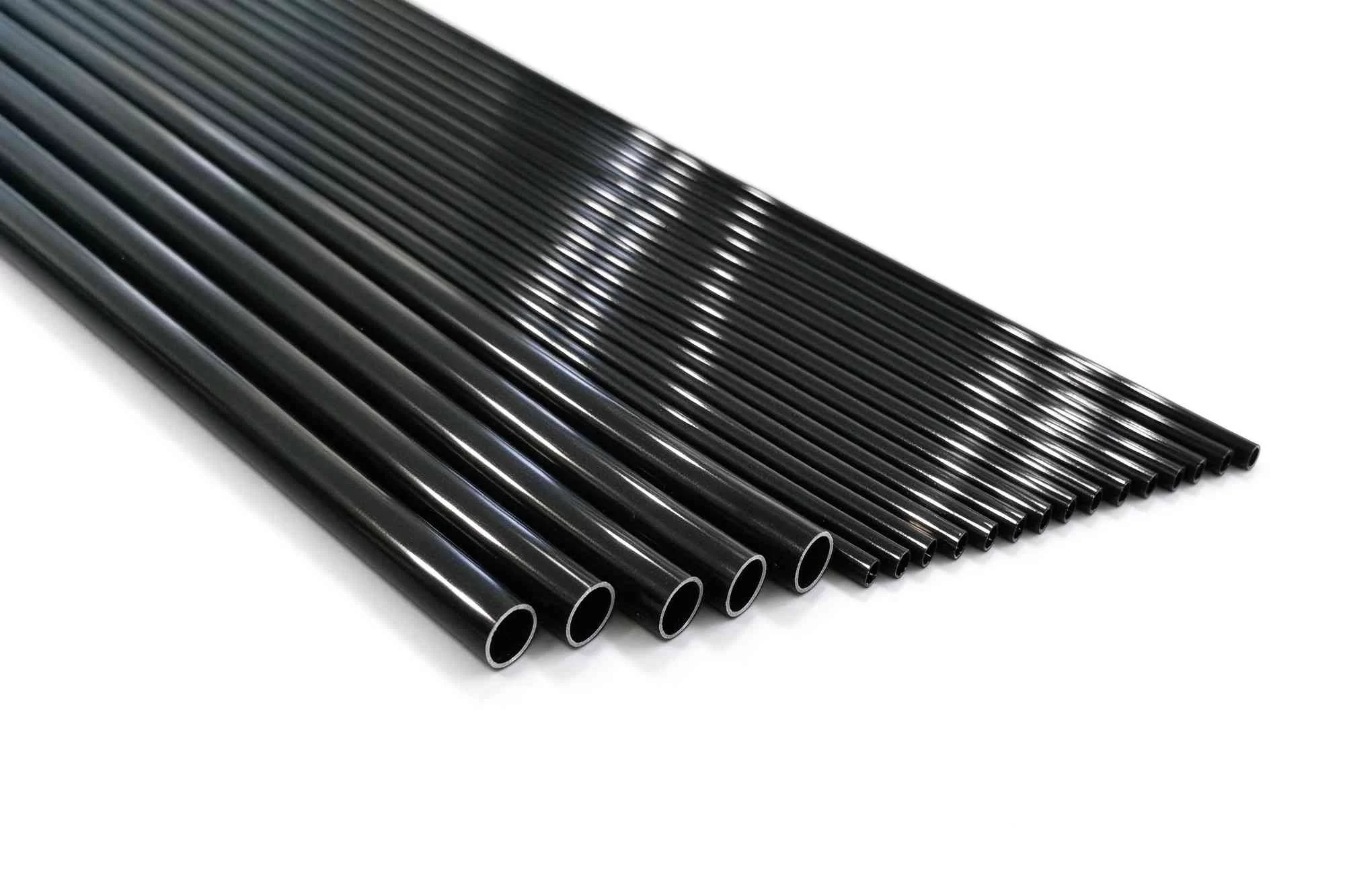
Black conductive PEEK tube stock for machined hollow components

Engineering plastic tube stock

For buyers machining in-house: hollow stock for maintenance parts, trial runs or prepared inventory. Supply is confirmed per material, grade and dimension.

Natural PEEK tube cut-to-length segments — Zhihao Ceramics

Cut-to-length tube blanks

For buyers who want ready-to-machine sections: specify cut length, end condition and tolerance so blanks arrive ready for facing, boring or secondary work.

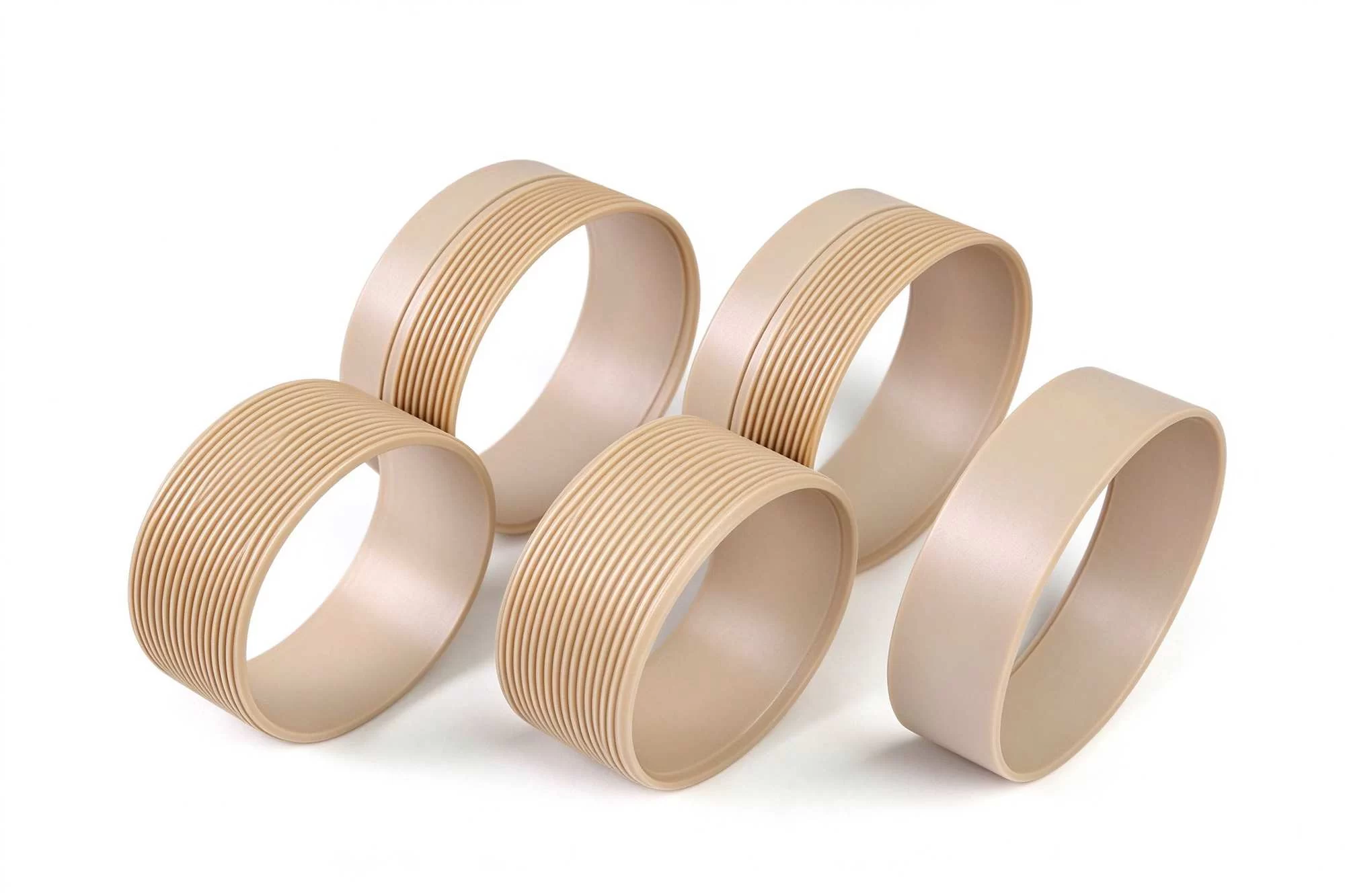
Natural PEEK threaded ring bushings machined from tube stock

CNC-machined sleeves and bushings

For buyers who need finished parts to drawing: OD, ID, wall, bore finish and critical tolerances are reviewed before quoting.

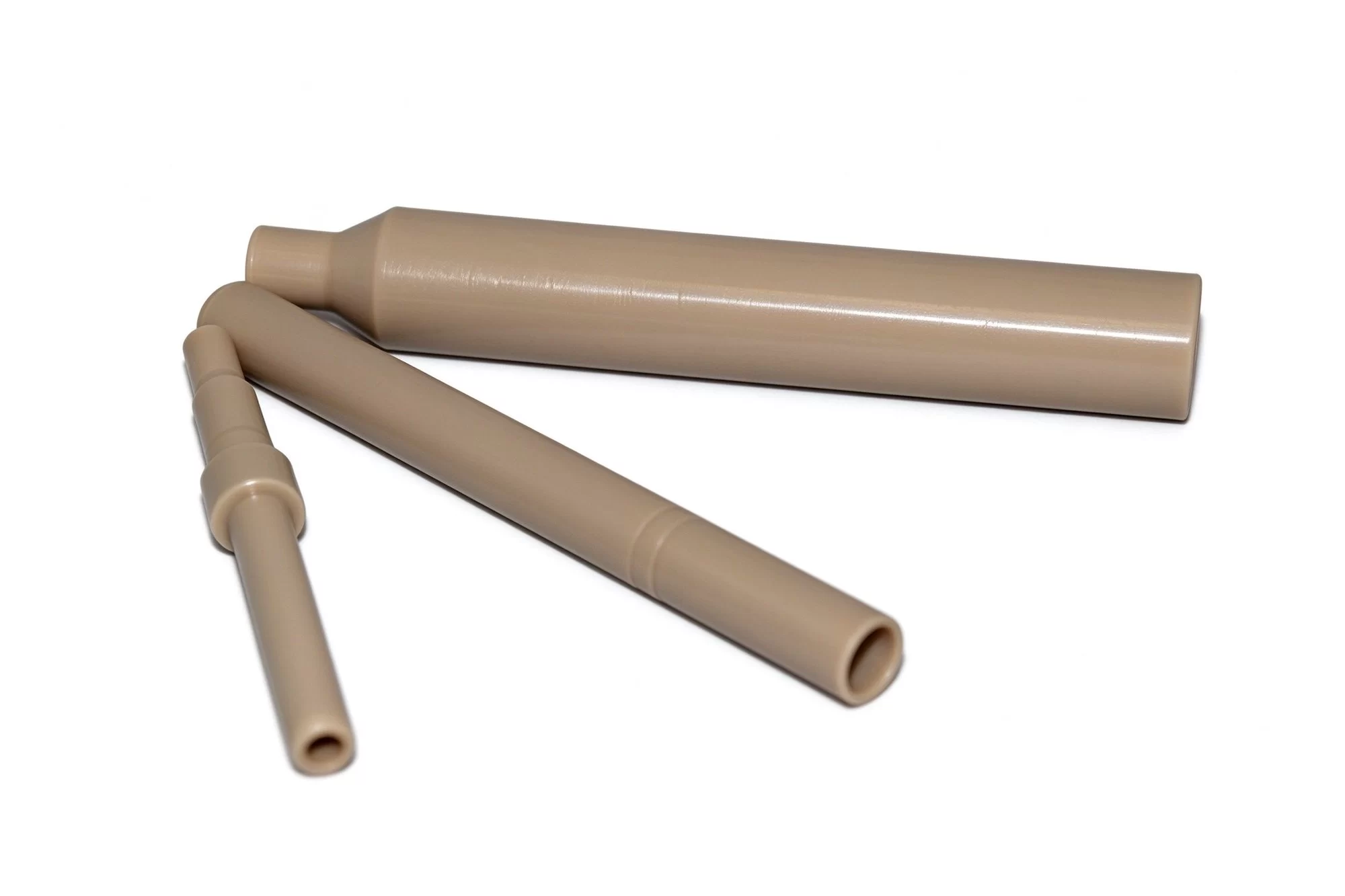
Natural PEEK stepped protection tubes for insulating assemblies

Insulating tube bodies

For electrical, thermal or clean-process spacing where a hollow shape saves mass and keeps clearance — confirm the dielectric, temperature and cleanliness requirements for the application.

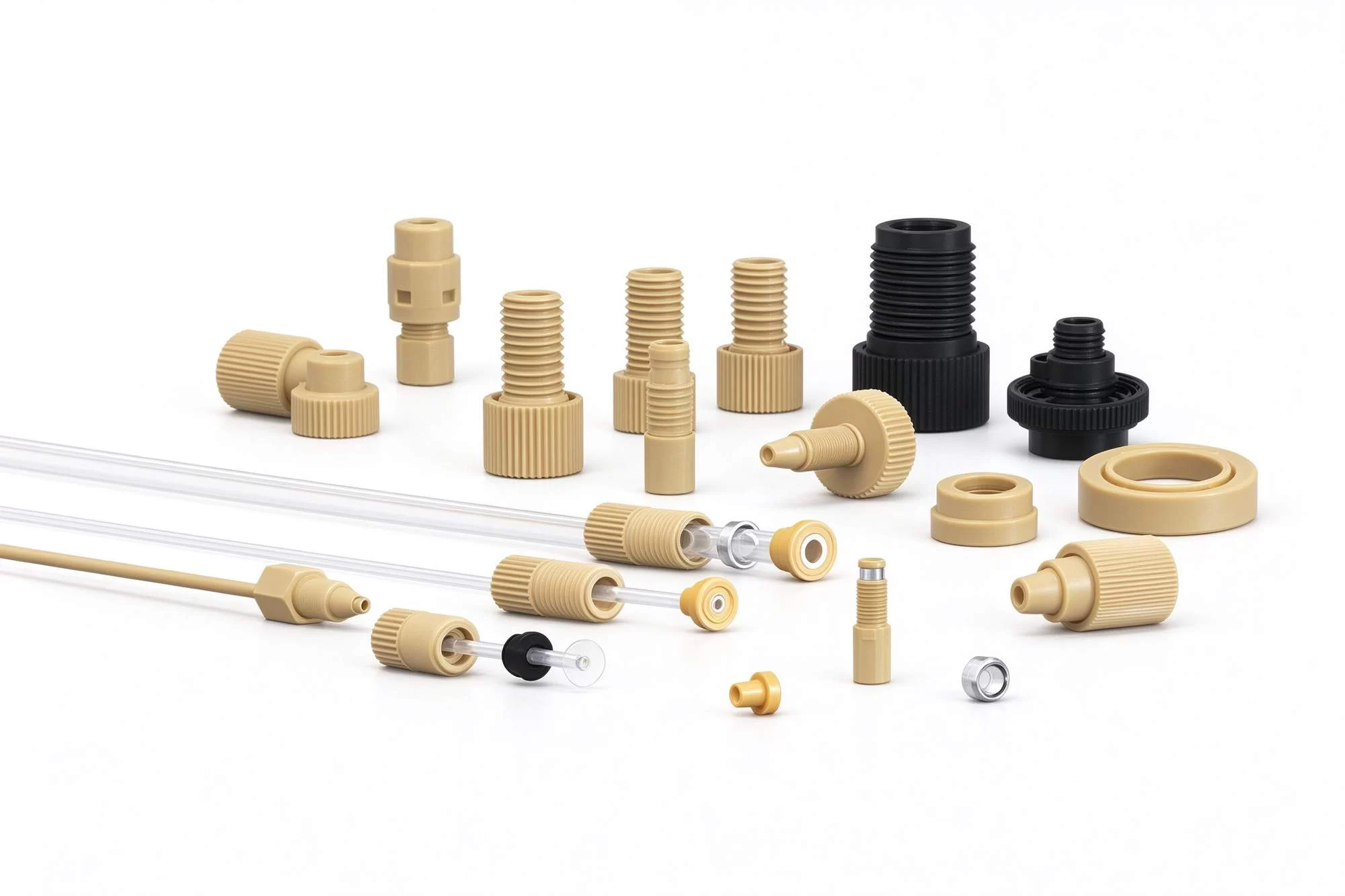
Assorted PEEK fluid fittings and connectors for wet-process parts

Fluid-contact or chemical parts

Selected wet-process, valve, liner or sleeve applications where compatibility must be checked by condition.

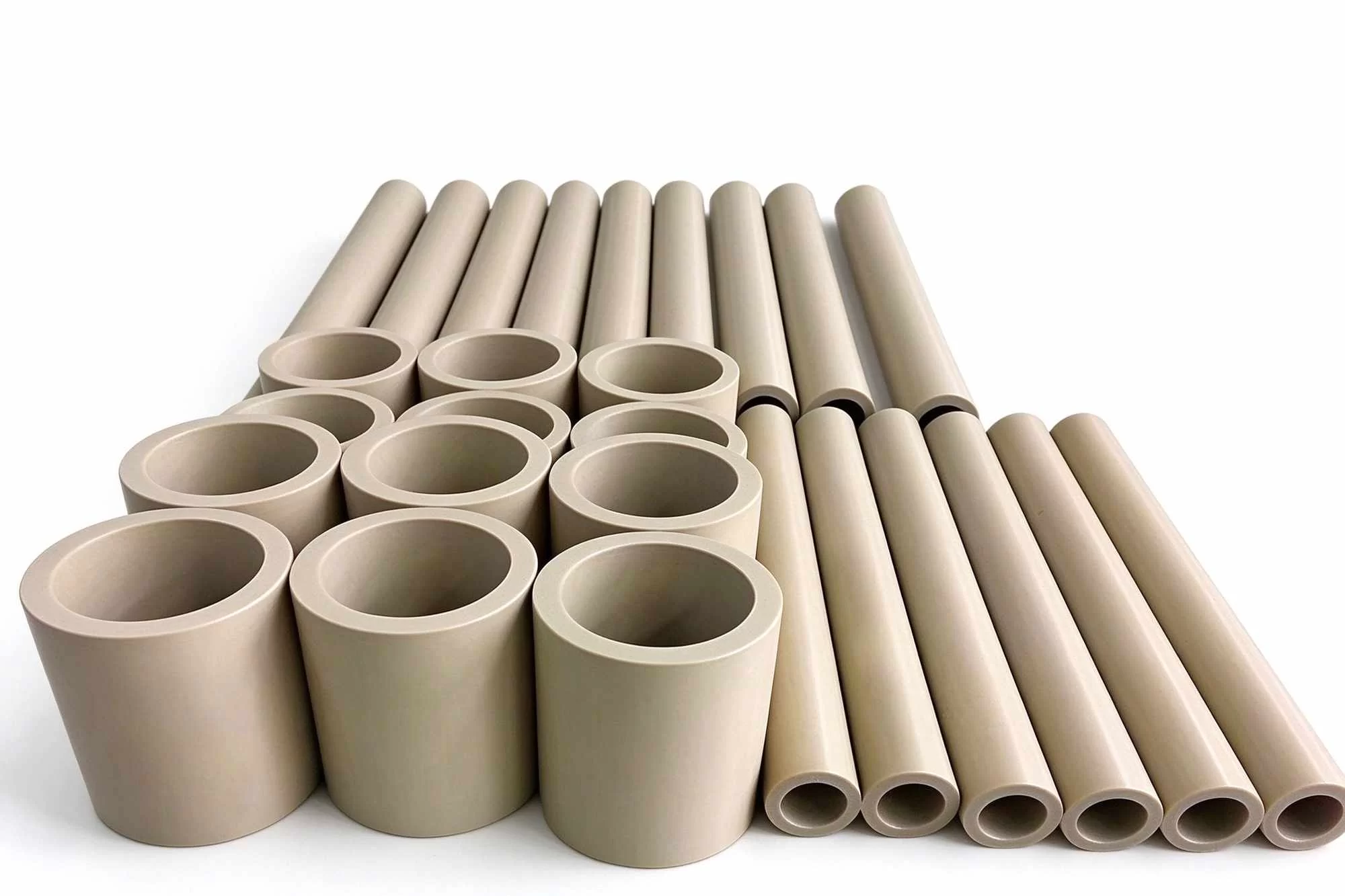
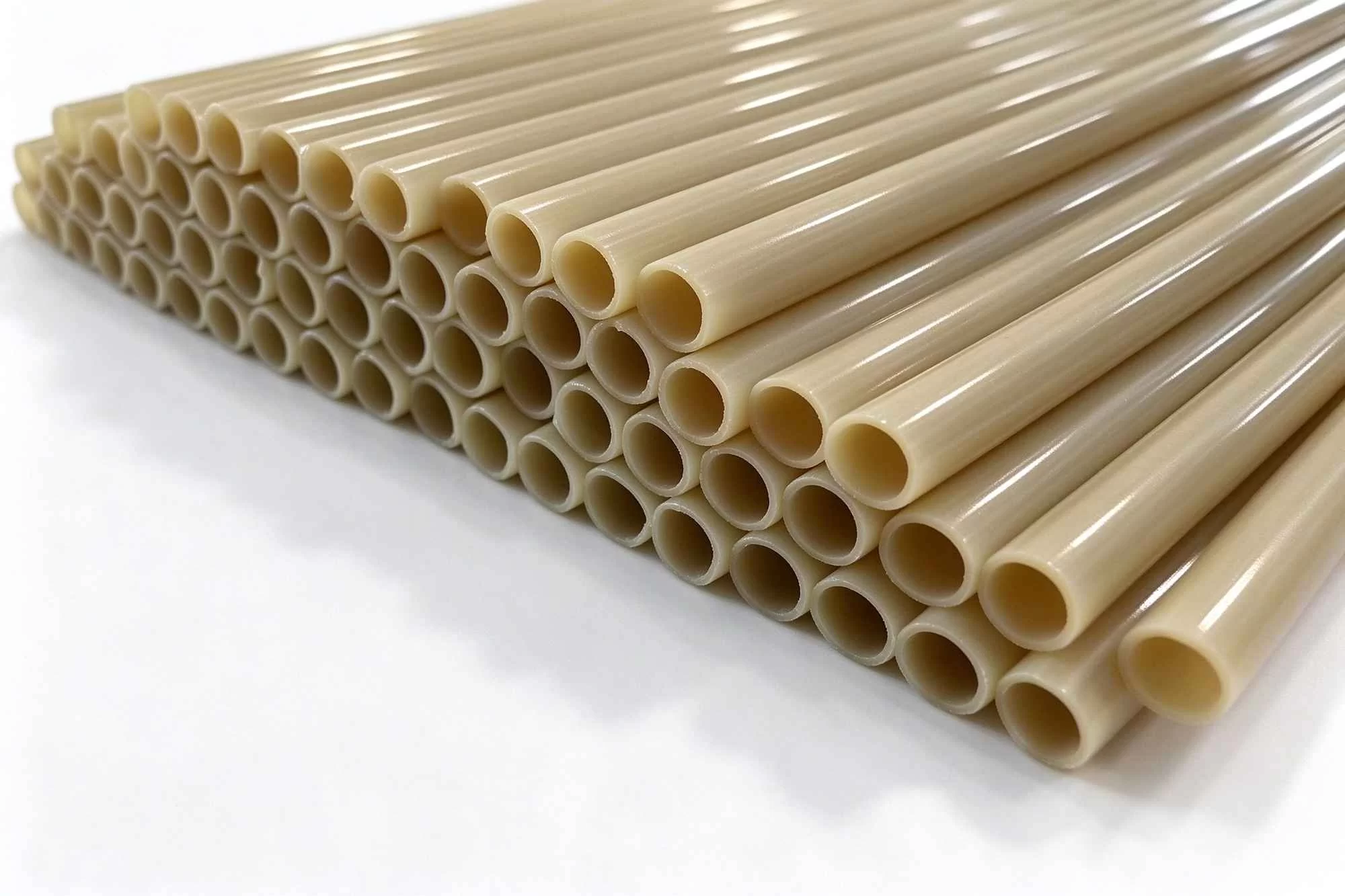
Natural PEEK hollow tubes in several diameters and wall thicknesses

Tube vs Rod: Which Starting Form?

Tube stock may reduce material removal when the finished part requires a substantial central bore and a suitable tube size is available.Solid rod may be worth evaluating when the bore is relatively small or a suitable tube cannot be sourced. Compare starting dimensions, machining allowance and finished geometry before deciding.

Sizes & supply options

Engineering Plastic Tube Sizes & Supply Options

Actual sizes and availability depend on the material grade, product form, supply channel and machining route. Great Plastics supplies tube stock, cut blanks and machined hollow components in PEEK, PPS, PEI, PI and PAI. Send the following so the request can be checked against current supply.

Parameter What to provide
Material and grade Material family and grade, e.g. PEEK natural, PEEK CF30, PPS GF40
Outside diameter (OD) Target outer diameter
Inside diameter (ID) Target inner diameter
Wall thickness Wall thickness, with tolerance where known
Length Length and quantity
Supply form Tube stock / cut-to-length blank / CNC-machined sleeve or part / custom component
Critical tolerances OD/ID/wall tolerance, concentricity, bore finish
Quantity & inspection requirements Batch size, drawing-based inspection, documentation needs

Reference supply size guide

The sizes listed are for supply reference only.Final dimensions and availability are confirmed per RFQ against current supply; sizes outside these ranges are reviewed on request rather than assumed as stock.

Material Reference OD range Wall / length Supply forms
PEEK OD 40–260 mm (actual OD 42–263 mm), capillary 0.25–4 mm;up to 2200 mm Wall: 5–180 mm; length commonly 1000 mm, customisable Extruded / compression-moulded / injection-moulded tubes & rings; cut blanks
PPS rods 4–220 mm, tube sizes custom;e.g. CMP retention-ring tube O.D. 350 / I.D. 300 mm Custom-tube basis; confirm wall and length per RFQ Extruded tubes (custom), machined rings & sleeves
PEI standard profile length 3000 mm;rod/plate/tube custom Tube dimensions custom; confirm per RFQ Extruded profiles & custom tubes, machined parts
PI tubes 70–289 mm (length up to 120 mm);temp grades 220–350 °C profiles Length-limited (moulded/sintered); confirm per RFQ Compression/sintered tubes (small batch), machined rings
PAI rods 6.4–52 mm, plates H5–30 mm;PAI rod/plate range Tubes typically machined from rod or ring; drawing-based Machined tubes, sleeves and rings from stock shapes

Availability of a specific size depends on grade, requested dimensions, product form and current supply. Submit the specification for confirmation before quotation.

Material selection

Which Tube Material for Your Application?

Start with how the tube will actually be used — temperature, chemicals, load, wear, moisture and electrical insulation all narrow the choice, and so does the wall thickness and the final part geometry.

Heat + Chemical Exposure

When temperature and chemicals are the main drivers, start with PEEK or PPS. If dimensional stability matters as much as resistance, PEEK is usually the safer first call.

Insulation + Stiffness

PEI and PI are the usual picks for insulating bodies, spacers and tube-shaped parts in electrical or clean assemblies. Tell us the dielectric requirement and how clean the environment needs to be.

Wear Sleeve or Bushing

For guided motion, replacement sleeves and bearing-style parts, evaluate PEEK, PAI and PI against the mating surface, load, sliding speed, lubrication condition and the wear requirements of the assembly. No single grade fits every wear case; the review starts from these operating parameters.

Precision Hollow Spacer

When wall thickness, concentricity or cut length decides the assembly fit, send us the finished dimensions first. We will work back to the right starting stock and tolerance.

Supply and machining routes

Tube Stock, Cut Blanks or CNC-Machined Parts?

Choose the route by how much finishing you want to keep in-house and what the finished part requires. Send your drawing or the dimensions available and we will confirm the practical route with you.

Tube Stock

For buyers who machine in-house and want to keep finishing flexibility, or are building inventory. Ask about material and grade, OD, ID, wall thickness, length and quantity.

Cut-to-length blanks

For buyers who want clean cut lengths in advance, then finish in-house. Ask about cut length, length tolerance, end condition and quantity.

CNC-Machined Sleeves & Bushings

For buyers who need finished features — steps, grooves, chamfers, threads or a controlled bore — machined to drawing. Ask about key tolerances, mating surfaces and inspection.

From Drawing to Delivery

How We Review Your Tube Request

Send us the drawing or the key dimensions, and we will work out the right material, the right starting stock and a price — usually within one business day.

  1  

Send dimensions

Dimensions, drawing, CAD file or sample photo — provide whatever is available now.

  2  

Material review

We narrow PEEK, PPS, PEI, PI or PAI against operating conditions and tolerances.

  3  

Supply form

We confirm tube stock, cut blank or machined part based on geometry and quantity.

  4  

Quotation

Price, lead time, inspection and documentation are stated per order.

  5  

Production

Cutting, machining and quality checks are managed against the agreed drawing.

Quality & Inspection

Dimensional Inspection for Plastic Tubes and Sleeves

Inspection scope is agreed per order. Confirm the items below when you request a quote. Routine checks are part of standard supply; drawing-defined and documented inspections are confirmed per order and are not automatically included in every batch.

  • Outside diameter, inside diameter and wall thickness
  • Cut length and end condition
  • Concentricity or other drawing-defined requirements
  • Bore finish and machined features
  • Material certificate and batch traceability
  • First-article inspection documentation

Orders leave us bundled, with the ends protected, on pallets and stretch-wrapped, ready for sea or air freight.
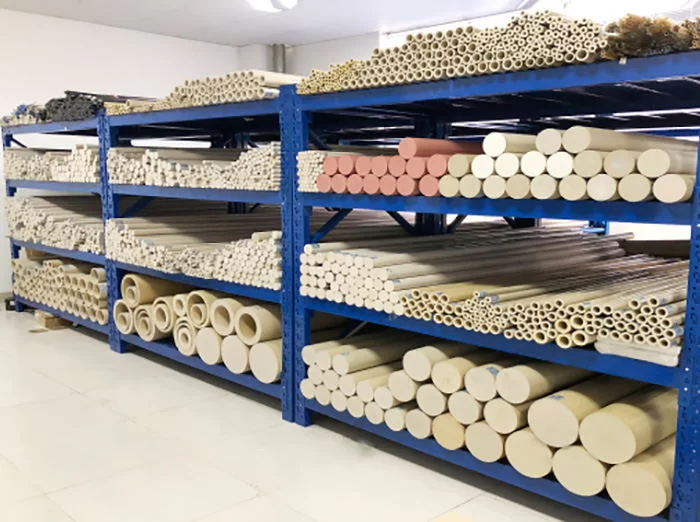
Natural PEEK hollow tubing with uniform wall thickness, beige polyether ether ketone tubes

Buyer questions

Frequently Asked Questions

Engineering plastic tubes are used as hollow stock for sleeves, bushings, spacers, guides, insulating components and selected fluid-contact parts. The appropriate material depends on temperature, chemical exposure, load, wear and dimensional requirements.

Provide the outside diameter, inside diameter, wall thickness, length, material grade if known and quantity. For precision components, include critical tolerances, concentricity, bore finish and a drawing or CAD file.

Cut-to-length supply may be available depending on material, dimensions, required tolerance and current production capability. State the requested length, end condition and quantity so the appropriate route can be reviewed.

Suitable plastic tubes can be machined into sleeves, bushings, spacers and other hollow components. Turning, facing, boring and additional features depend on material, wall thickness, geometry and required tolerances.

Tube stock may reduce material waste when the finished part has a substantial central bore. Solid rod may be more suitable for predominantly solid components, unusual bore dimensions or cases where a suitable tube size is unavailable. Compare stock size, machining allowance and finished geometry before deciding.

PEEK, PPS and PEI may be evaluated for different high-temperature applications. Specialized materials such as PI or PAI may also be relevant in selected applications. The correct choice depends on actual temperature, exposure duration, load, chemical environment, grade and tube availability.

Great Plastics can review drawing-based plastic components through its custom parts and CNC machining routes. Provide the drawing, material target, quantity, OD, ID, length and critical inspection requirements for feasibility review.

Price depends on material and grade, tube dimensions, wall thickness, length, quantity, supply condition, machining requirements, dimensional tolerances, inspection and documentation needs.

Availability depends on the material grade, requested dimensions, product form, manufacturing route and current supply conditions. Submit the required specifications so the requested tube can be reviewed before quotation.

Request a Quote for Plastic Tubes or Custom Sleeves

You do not need to finalize every material and machining detail before contacting us.

Send a drawing, CAD file, sample photo or the dimensions currently available.

Include material requirements, OD, ID, wall thickness, length, quantity and critical tolerances where known.

We can review the requested supply form and identify the details needed for quotation.