GP
Great PlasticsEngineering Materials & Custom Parts
Aerospace Engineering Plastics
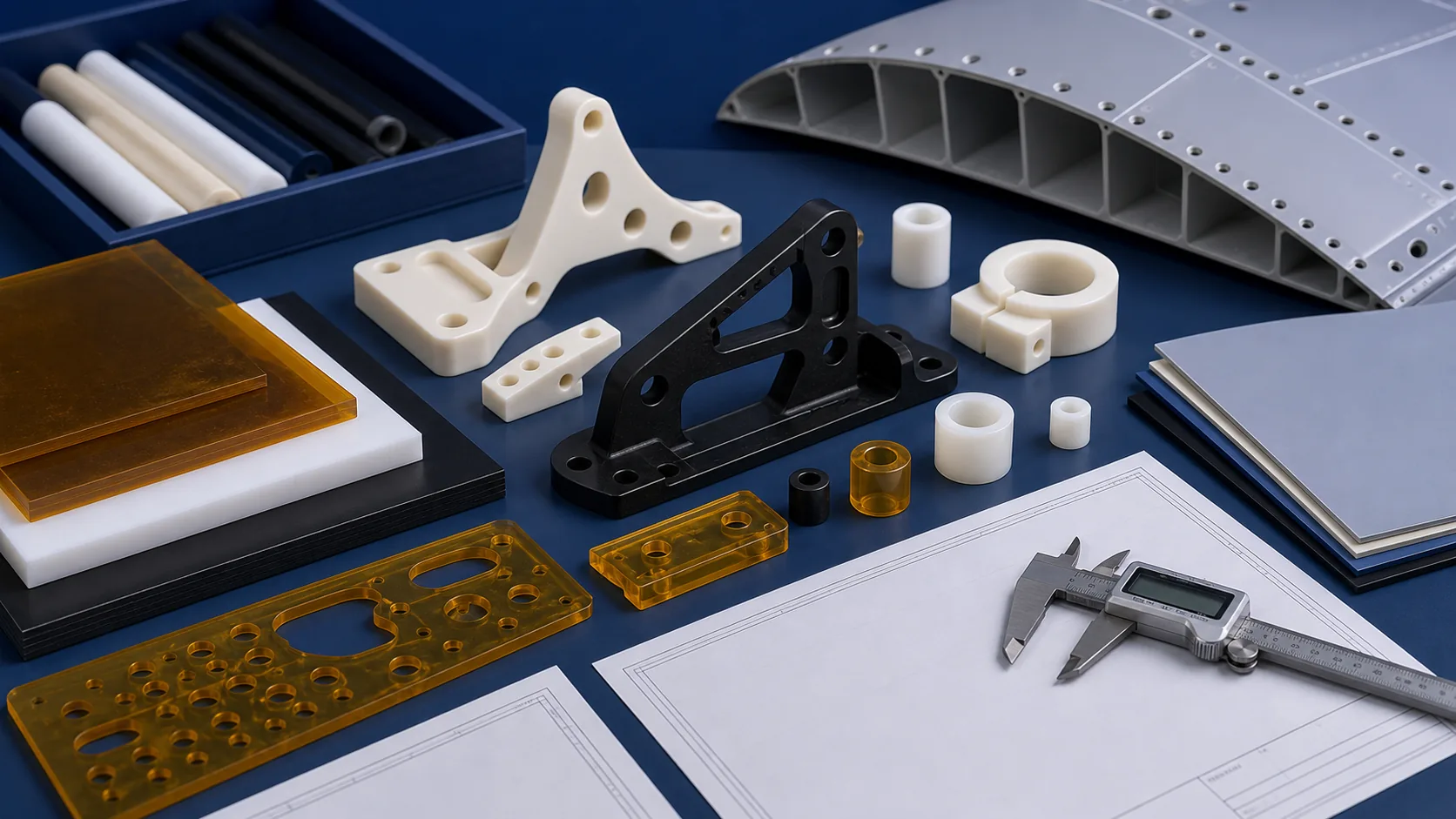
Aerospace engineering plastics for lightweight custom parts.
Review PEEK, PEI, PPS, PI, PAI and other high-performance plastics for aerospace prototypes, fixtures, insulators, brackets, wear components and machined custom parts.
Short answer
Aerospace plastic selection starts with the part function and service environment.
Aerospace engineering plastics are considered when a part needs lower weight, heat resistance, electrical insulation, dimensional stability, corrosion resistance or reduced friction. The material choice should follow the application details: temperature, load, wear, chemical exposure, flame or smoke requirement, tolerance, documentation and production stage.
Application matrix
Common aerospace engineering plastics project types.
| Project context | Typical parts | Material directions | Review before quote |
|---|---|---|---|
| Avionics and electronics | Insulators, housings, spacers, sensor supports | PEI, PEEK, PPS, PI | Electrical behavior, heat, weight, flame needs and dimensional stability |
| Cabin and interior systems | Wear pads, clips, panels, brackets, bushings | PEI, PPS, PEEK, nylon, filled grades | Weight, finish, wear, fastener design and flame/smoke/toxicity targets |
| Tooling and fixtures | Assembly fixtures, drill guides, inspection nests | PEEK, PAI, acetal, glass-filled grades | Machinability, stiffness, repeatability, flatness and inspection points |
| Prototype replacement parts | Machined PEEK, PEI, PPS or nylon components | PEEK, PEI, PPS, PAI, nylon | Original failure, drawing tolerance, material availability and documentation |
| Wear and motion components | Bushings, rollers, guides, sleeves, sliding pads | PTFE, PEEK, PAI, UHMW-PE, filled grades | Load, speed, mating surface, lubrication, temperature and debris |
Material choices
Materials commonly reviewed for aerospace applications.
PEEK
Often reviewed for heat, wear, chemical resistance and high-performance machined parts where the application earns the cost.
PEI
Useful for stiff, heat-resistant and electrical support components, especially when dimensional control and flame behavior are part of the review.
PPS
Often considered when dimensional stability, chemical resistance and cost balance matter more than maximum mechanical performance.
PI and PAI
Reviewed for extreme heat, wear and precision applications where a conventional engineering plastic may not hold the requirement.
PTFE and filled grades
Useful when low friction, chemical exposure or special wear behavior is the main driver, with geometry reviewed carefully for load.
Stock shapes
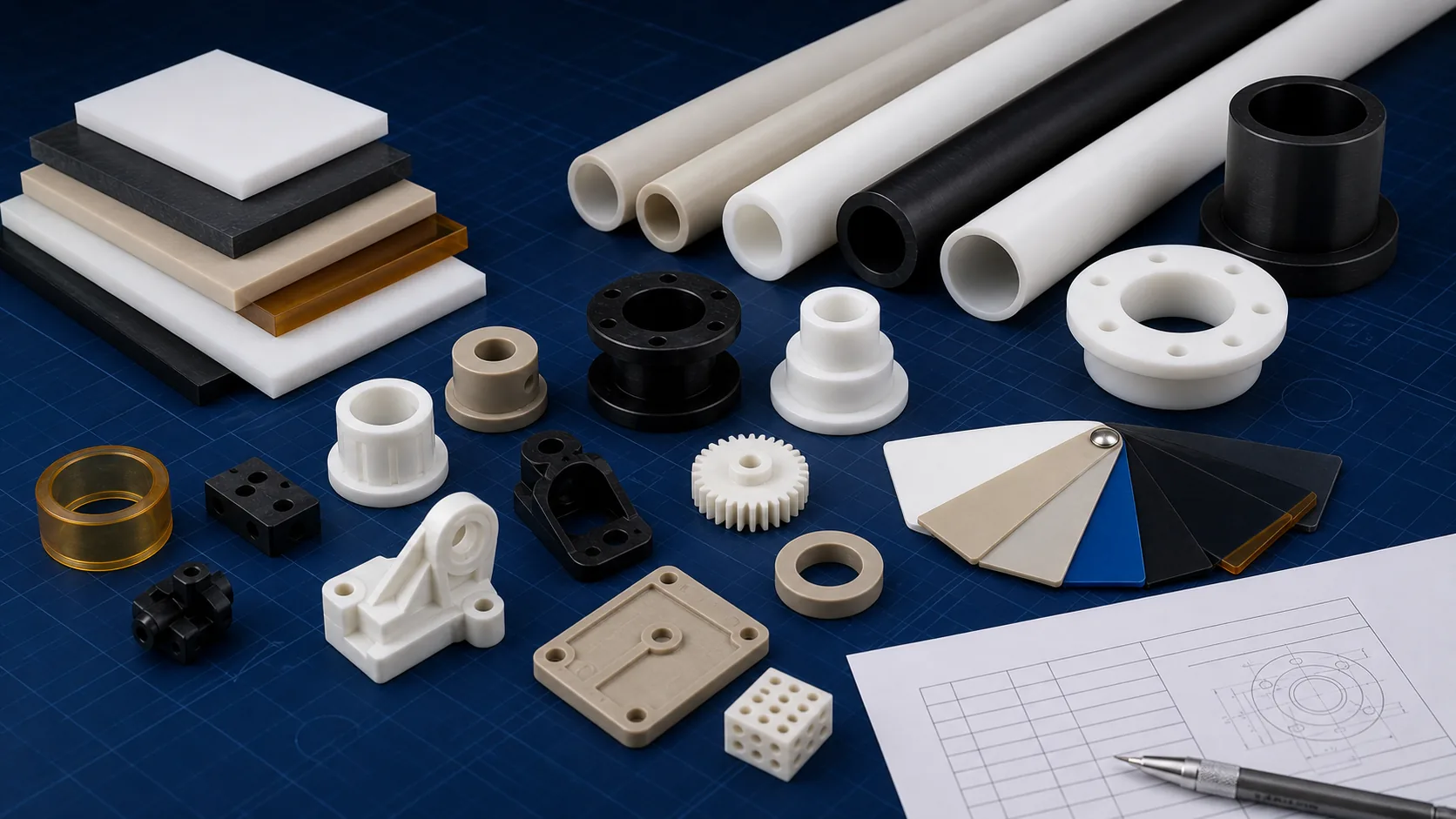
Sheets, rods and tubes can support early prototypes, replacement parts, cut blanks and machined aerospace components.
Failure risk
Where aerospace plastic part reviews often go wrong.
Material is chosen before the environment is clear. Heat, load, chemical exposure, vibration, humidity and inspection needs can shift the best resin family.
Metal drawings are copied without plastic design review. Sharp corners, thin walls, press fits and tight tolerances can create stress or machining risk.
Documentation is treated as an afterthought. Material certificates, traceability, packaging, inspection notes or customer documentation can change quote scope.
Prototype and production routes are mixed together. CNC machining is useful for early parts, but production quantity may point toward molding, cutting or a repeat machining plan.
Selection path
Translate aerospace requirements into material and process choices.
| Requirement | Practical material direction | Manufacturing note | Useful next page |
|---|---|---|---|
| Lightweight metal replacement | PEEK, PEI, PPS, nylon, fiber-filled grades | Review load path, fasteners, wall thickness and creep. | Application guides |
| High-temperature fixture or support | PEEK, PEI, PI, PAI, PPS | Check load at temperature and post-machining stability. | Performance guides |
| Electrical insulation | PEI, PEEK, PPS, PI, acetal | Review dielectric need, flame target, burr control and flatness. | Material properties |
| Low-volume machined part | Stock shapes in PEEK, PEI, PPS, PAI or nylon | Mark critical dimensions, finish and inspection method. | CNC plastic machining |
Manufacturing route
Choose the process that fits the aerospace project stage.
CNC machining
Useful for prototypes, replacement parts, precision features, fixture details and low-volume batches.
Cut blanks and stock shapes
Sheets, rods, tubes and cut blanks can simplify early material trials and replacement part review.
Prototype to production
Use machining, 3D printing, cutting or molding when geometry, quantity and material choice become stable.
RFQ checklist
Aerospace project details to include with the drawing.
- Drawing or model: 2D drawing, 3D model, marked critical dimensions or sample photos.
- Part function: insulation, support, wear surface, bracket, fixture, spacer or replacement part.
- Material direction: target material, approved alternatives or materials to avoid.
- Service conditions: temperature, load, chemicals, vibration, humidity, mating surface and cleaning exposure.
- Quality needs: inspection points, certificates, traceability, packaging or customer documents.
- Commercial details: prototype quantity, production quantity, lead time and target manufacturing route.
FAQ
Questions buyers ask about aerospace engineering plastics.
Which engineering plastics are commonly reviewed for aerospace parts?
PEEK, PEI, PPS, PI, PAI, PTFE and selected filled grades are commonly reviewed when aerospace parts need heat resistance, low weight, chemical resistance, insulation or dimensional stability.
Can aerospace plastic parts replace metal components?
Some metal parts can be redesigned in engineering plastic when the application benefits from lower weight, corrosion resistance, electrical insulation, lower friction or reduced noise.
What aerospace RFQ details help material selection?
Useful details include drawing or model, part function, material target, temperature, load, chemical exposure, flame or smoke requirements, tolerance, quantity, documentation needs and lead time.
Is CNC machining suitable for aerospace engineering plastics?
CNC machining is useful for prototypes, replacement parts, precision fixtures and low-volume batches when geometry, tolerance and material availability are still being refined.
Why do aerospace plastic parts fail in service?
Common causes include choosing by material name only, missing temperature or load details, copying metal tolerances, ignoring moisture or chemicals, and leaving documentation needs out of the RFQ.
Related pages
Continue the aerospace material review.
Industry RFQ
Send the aerospace application conditions with the drawing.
Include material target, part function, drawing or 3D model, quantity, operating environment, tolerance, finish, documentation needs and lead-time target.