GP
Great PlasticsEngineering Materials & Custom Parts
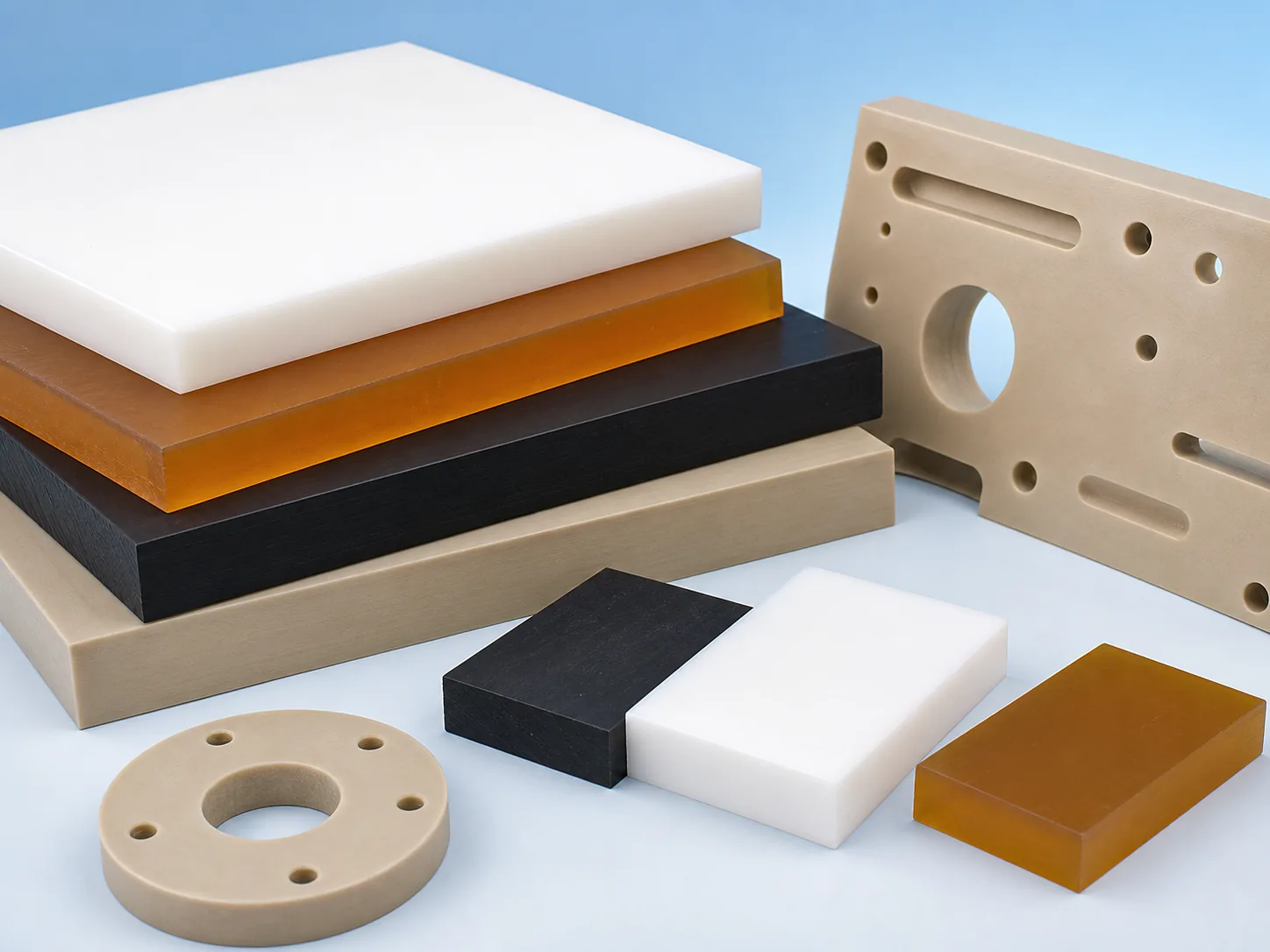
Engineering plastic sheet
Source engineering plastic sheet for cut blanks, panels and machined parts.
Great Plastics helps buyers review sheet material, thickness, size, cut tolerance, flatness, surface finish and downstream machining needs before quote preparation.
PEEK, PPS, POM, Nylon, PTFE, PVDF
Flatness and cut tolerance review
Machining and fixture-ready panels
Short answer
Engineering plastic sheet should be quoted by material behavior, sheet size and the next operation.
A sheet RFQ is stronger when it states whether the material will be used as a panel, liner, wear plate, fixture, cut blank or machined part. The same sheet material can behave differently after sawing, routing, milling, drilling or thermal exposure, so Great Plastics reviews material choice together with thickness, tolerance and application environment.
Material fit
Common engineering plastic sheet materials and buying reasons.
| Sheet material | Often reviewed for | Confirm before quote |
|---|---|---|
| PEEK sheet | High temperature, chemical resistance, strength, wear parts and premium machined components. | Grade, thickness, stress relief, machining allowance, documentation and budget target. |
| PPS sheet | Chemical service, dimensional stability, electrical components and heat-resistant fixtures. | Temperature, chemical exposure, flatness, glass-filled options and machining risk. |
| POM / Acetal sheet | Precision plates, sliding parts, jigs, fixtures and low-moisture mechanical components. | Copolymer or homopolymer preference, color, tolerance, edge finish and critical dimensions. |
| Nylon sheet | Wear pads, liners, impact-resistant plates, rollers, guides and bearing surfaces. | Moisture movement, load, lubrication, thickness, creep and filled grade options. |
| PTFE sheet | Low friction surfaces, seals, chemical barriers, gaskets and electrical insulation. | Creep, deformation under load, filler needs, cut tolerance, thickness and sealing pressure. |
| PVDF / PEI / specialty sheet | Chemical, electrical, transparent, heat or application-specific sheet projects. | Environment, flame needs, cleaning method, documentation and downstream process. |
Selection path
Choose sheet format by how the material will be used.
Full sheet
Use when your team will nest parts, cut panels or machine multiple blanks from one sheet.
Cut-to-size blanks
Use when simple rectangular blanks reduce handling, saw time and material waste.
Machined panels
Use when the drawing includes holes, pockets, slots, threads, countersinks or critical edges.
Wear plates and liners
Review load, sliding direction, mounting holes, backing support and replacement interval.
Fixtures and tooling
Review flatness, thermal exposure, chemicals, ESD needs, fasteners and repeated use.
Prototype plates
Use sheet when fit, stiffness, clearance and material behavior need quick physical validation.
Sheet RFQ workbench
Build a practical sheet request before sending the drawing.
Fast sheet specification
Use this structure when your buyer or engineer needs a sheet quote, cut blank quote or machined panel review.
- Material family and grade target: PEEK, PPS, POM, Nylon, PTFE, PVDF, PEI or performance requirement.
- Sheet format: full sheet, cut-to-size blank, profiled panel or finished machined part.
- Dimensions: thickness, length, width, quantity per size and whether dimensions are rough-cut or finished.
- Use conditions: heat, chemicals, load, wear, electrical insulation, moisture and cleaning method.
Sheet quote details
What changes the price, tolerance and lead time.
| RFQ detail | Why it matters | Buyer note |
|---|---|---|
| Thickness | Controls stiffness, material movement, machining allowance and availability. | State nominal thickness and any minimum finished thickness. |
| Length and width | Determines sheet yield, cutting method, packaging and shipping constraints. | Send final blank sizes and quantity per size. |
| Cut tolerance | Saw-cut blanks, routed profiles and precision machined panels need different expectations. | Separate rough blanks from finished dimensions. |
| Flatness and warp | Plastic sheet can move with stress, heat, moisture and machining removal. | Mark flatness only where function requires it. |
| Surface and edge finish | Functional faces, sliding surfaces, cosmetic surfaces and bonding areas may need different treatment. | Identify wear faces, sealing faces and visible faces. |
Processing route
Match sheet supply to the next manufacturing operation.
Cut blank review
Best for rectangular blanks, simple panels and projects where the buyer performs final machining.
CNC machining
Use when sheet must become a finished plastic panel, plate, fixture, liner or precision component.
Material substitution
Compare PEEK, PPS, POM, Nylon, PTFE, PVDF and PEI before over-specifying or under-specifying the sheet.
Application matrix
Where engineering plastic sheet is commonly reviewed.
| Application | Typical sheet products | Review focus |
|---|---|---|
| Machine fixtures and jigs | Flat plates, locator panels, nests, test fixtures and support blocks. | Flatness, holes, dimensional stability, ESD and repeated handling. |
| Wear and sliding surfaces | Wear strips, liners, guide plates, pads and replaceable contact panels. | Load, friction, lubrication, fasteners, moisture and wear life. |
| Chemical and fluid service | Tank liners, valve plates, gaskets, pump plates and manifold blanks. | Chemical compatibility, temperature, sealing pressure and documentation. |
| Electrical insulation | Insulating plates, spacers, covers, test boards and equipment panels. | Dielectric needs, heat, thickness, cutouts and surface condition. |
| Prototype and bridge production | Cut blanks, machined plates, trial panels and fixture components. | What must match final production and what can be relaxed. |
Drawing review
Separate cut sheet dimensions from finished machined features.
Sheet projects often mix simple blank dimensions with precision part features. The quote is clearer when rough stock, cut blank tolerance and final machined tolerances are separated in the drawing or note.
- Mark finished dimensions separately from saw-cut blank dimensions.
- Identify critical holes, slots, pockets, sealing surfaces and wear faces.
- State whether edge finish is functional, cosmetic or only safe-to-handle.
- State material certificates, inspection or traceability requirements in the RFQ when they apply.
Related forms
Sheet is not always the lowest-waste starting point.
| Alternative form | Use when | Related page |
|---|---|---|
| Rod | The part is round, turned, cylindrical or needs better yield from round stock. | Engineering plastic rods |
| Tube | The part is a sleeve, bushing or hollow component where sheet or solid rod wastes material. | Engineering plastic tubes |
| Custom part | The drawing includes multiple features, tight tolerance or inspection needs. | Custom plastic parts |
| Filament or prototype route | The goal is form-fit testing before committing to machined sheet or molded production. | Engineering plastic filaments |
Related pages
Continue sheet selection into material and part review.
FAQ
Questions buyers ask before ordering engineering plastic sheet.
What is engineering plastic sheet?
Engineering plastic sheet is a flat stock shape made from materials such as PEEK, PPS, POM, Nylon, PTFE, PVDF, PEI and other engineering plastics. It is commonly cut, machined or fabricated into panels, liners, fixtures, wear parts and precision components.
How do I choose an engineering plastic sheet material?
Choose by operating environment first: temperature, chemical exposure, load, wear, moisture, electrical needs, dimensional stability and cost target. Then confirm thickness, sheet size, tolerance, finish and whether the sheet will be cut or machined.
Can engineering plastic sheet be cut to size?
Engineering plastic sheet can often be quoted as full sheet, cut blank or machined part. Cut tolerance, edge finish, flatness and material movement should be confirmed before quote review.
When should I order sheet instead of a custom plastic part?
Order sheet or cut blanks when the geometry is simple or your team will machine the material in-house. Request a custom plastic part when the drawing includes critical tolerances, pockets, holes, threads, sealing faces or inspection requirements.
What information should I send for an engineering plastic sheet RFQ?
Send material or performance target, thickness, length, width, quantity, cut tolerance, finish, drawing if machined, operating environment, documentation needs and target lead time.
Sheet RFQ
Send sheet material, thickness, size and any machining requirements.
Include material or performance target, thickness, dimensions, quantity, cut tolerance, drawing if machined, operating conditions, finish, inspection needs and lead time.