GP
Great PlasticsEngineering Materials & Custom Parts
Chemical Resistant Plastic Parts
Chemical resistant plastic parts for pumps, valves, seals and wet process equipment.
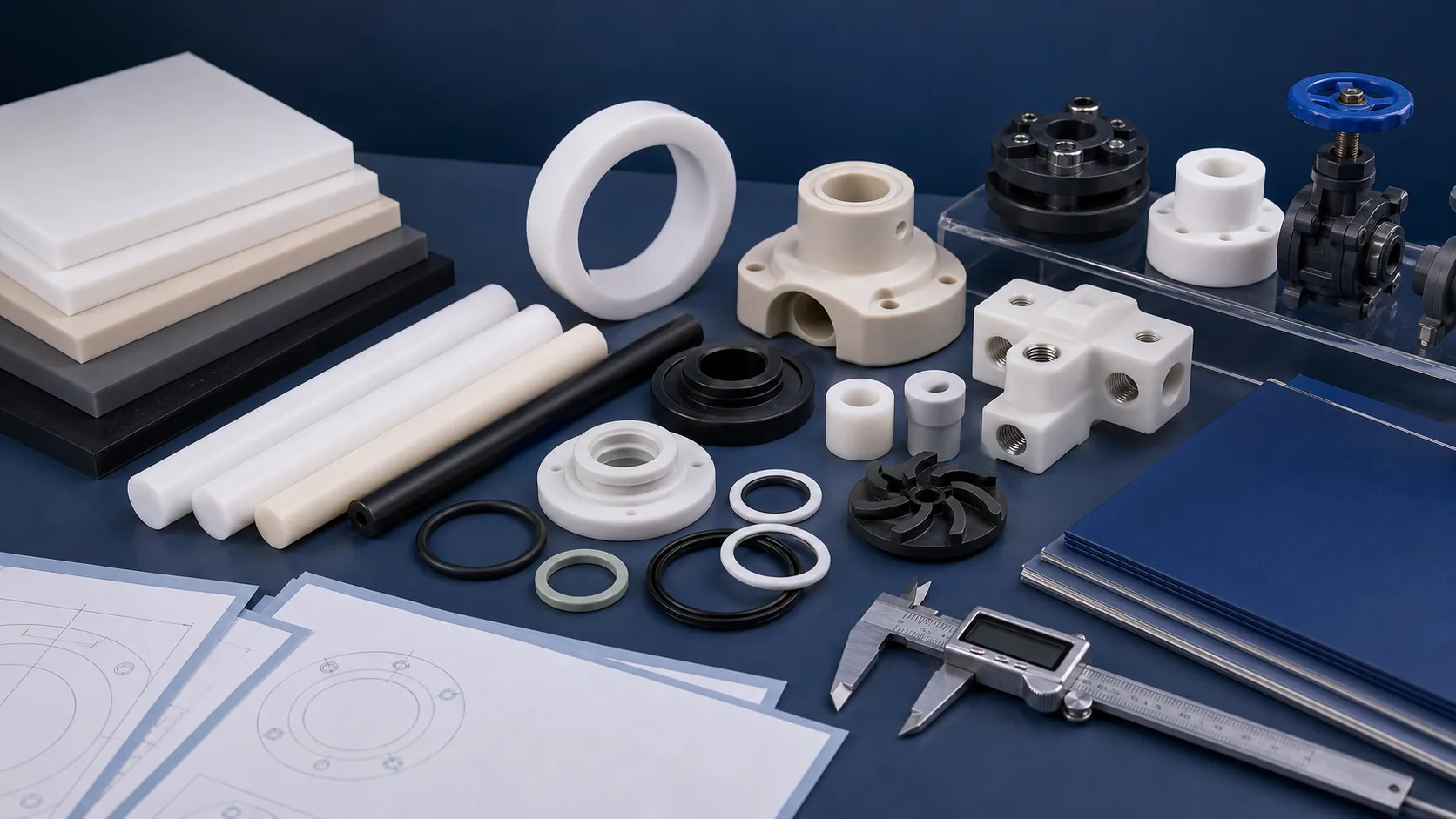
Compare PTFE, PVDF, PEEK, PPS, PP, PE, UHMW-PE and filled grades for chemical processing components exposed to corrosive media, cleaning cycles, sealing pressure, sliding wear and tight assembly requirements.
Short answer
Start with chemical media, then check temperature, load and part function.
Chemical resistant plastic parts are not selected by chemical name alone. A valve seat, pump bushing, manifold, wet process carrier or seal support can face the same fluid but completely different stress. Useful material selection combines the media, concentration, temperature, pressure, movement, tolerance, surface finish, cleaning method and expected replacement cycle before choosing the plastic and manufacturing route.
Application matrix
Common chemical processing plastic part types.
| Project context | Typical parts | Material directions | Review before quote |
|---|---|---|---|
| Pumps and rotating equipment | Wear rings, bushings, thrust washers, impeller spacers | PEEK, PPS, PTFE, filled PTFE, PVDF | Media, shaft material, clearance, temperature, speed and abrasive particles |
| Valves and flow control | Valve seats, sealing rings, sleeves, flow plates | PTFE, filled PTFE, PEEK, PPS, PVDF | Pressure, sealing load, creep, surface finish and chemical contact time |
| Fluid handling and manifolds | Manifolds, adapters, spacers, fittings, connector blocks | PVDF, PP, PE, PEEK, PPS | Port geometry, thread design, permeability, cleanliness and assembly torque |
| Wet process fixtures | Trays, carriers, guides, plates, tank-side parts | PVDF, PP, PE, UHMW-PE, PTFE | Bath chemistry, cleaning cycle, dimensional stability and handling wear |
| Maintenance replacement parts | Machined parts from drawings, samples or worn components | Match existing grade or upgrade by failure mode | Original failure, critical dimensions, lead time, quantity and documentation needs |
Material choices
Materials commonly reviewed for chemical resistant plastic parts.
PTFE and filled PTFE
Used for broad chemical resistance, low friction seats, seals and sliding surfaces. Filled grades can improve wear or deformation behavior when load is part of the problem.
PVDF
Often reviewed for fluid handling, manifolds, wet process parts and corrosive environments where stiffness, cleanliness and chemical resistance need balance.
PEEK
Selected for higher heat, mechanical strength, wear and dimensional stability when a chemical part also has structural or precision demands.
PPS
A practical high-performance option for chemical stability, heat and dimensional control when the part does not require the full performance range of PEEK.
PP, PE and UHMW-PE
Useful for economical corrosion-resistant plates, guides, liners, wet process fixtures and lower-load parts where the service temperature fits.
Machined stock shapes
Sheets, rods and tubes support quick review of prototypes, replacement parts, rings, sleeves, spacers, manifolds and cut-to-size blanks.
Selection path
Turn the chemical environment into a material shortlist.
| Decision point | What to define | How it changes material choice |
|---|---|---|
| Chemical media | Fluid name, concentration, mixture, pH range and cleaning exposure | Separates fluoropolymers, PVDF, PPS, PEEK, PP and PE into realistic candidates |
| Temperature and pressure | Continuous temperature, spikes, steam, pressure and sealing load | Pushes the review toward PEEK, PPS or filled grades when commodity plastics may move or creep |
| Movement and wear | Static seal, sliding seat, rotating bushing, abrasive slurry or guide surface | Changes filler selection, clearance, surface finish and whether low friction is more important than stiffness |
| Geometry and tolerance | Thin walls, threads, grooves, flatness, sealing faces and critical bores | Determines whether CNC machining from rod, sheet, tube or plate is the most practical route |
| Documentation and handling | Material certificate, inspection points, packaging, cleanliness and traceable drawings | Prevents quote gaps when the part supports regulated, clean or maintenance-critical equipment |
Failure review
Most chemical part failures are material, load and geometry problems happening together.
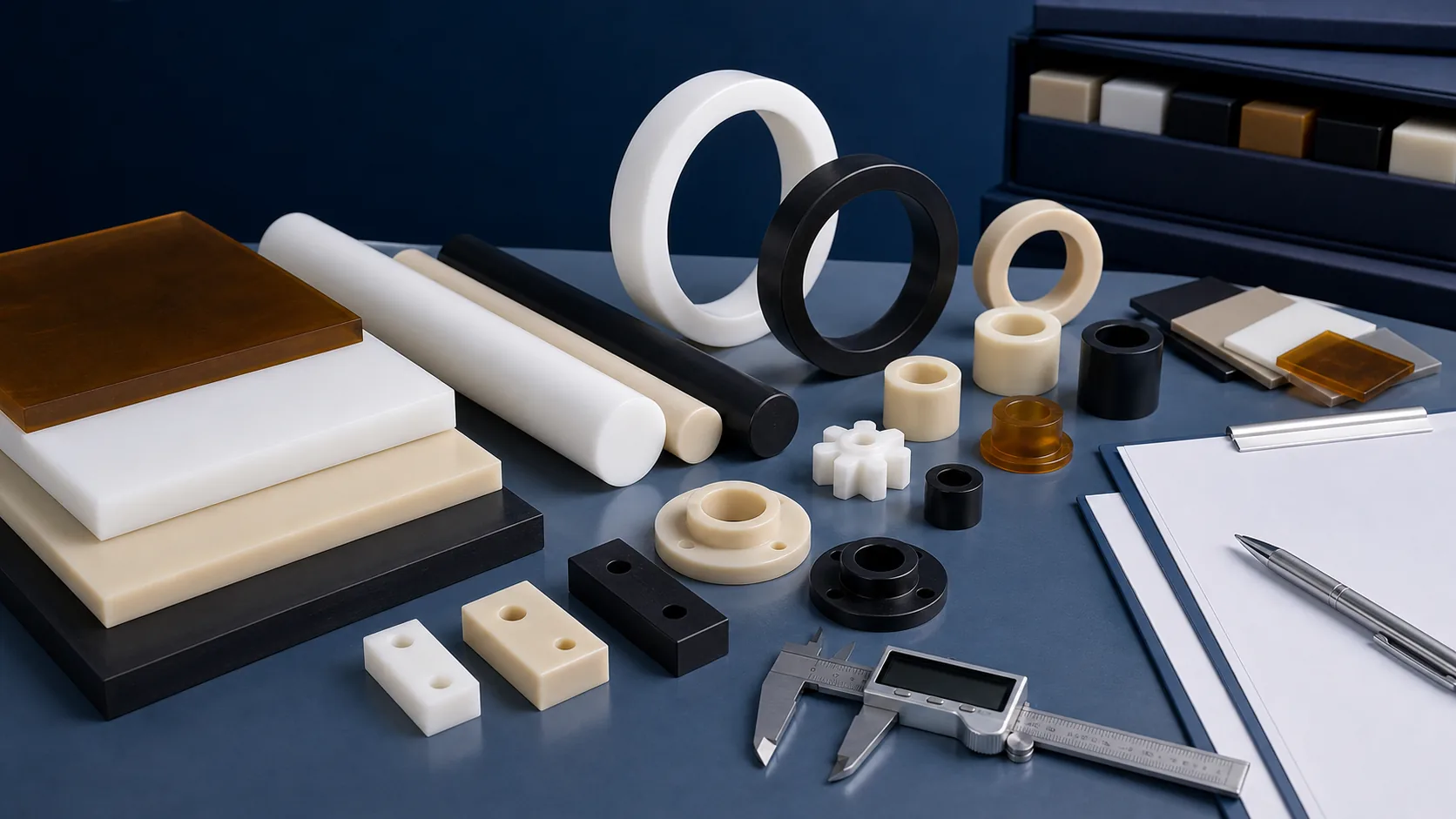
A part can pass a simple chemical-resistance chart and still fail when heat, stress, threaded features, seal compression, abrasive solids or cleaning cycles are added. For replacement work, the worn sample can be useful because it shows whether the issue is swelling, cracking, wear, creep, poor clearance, edge chipping or assembly damage.
- Stress cracking around threads, press fits, sharp corners or over-tightened fasteners.
- Creep or deformation under continuous seal load, especially at elevated temperature.
- Wear on seats, bushings or guide faces caused by abrasive media or dry running.
- Dimensional movement from temperature changes, moisture, machining stress or thin sections.
Manufacturing route
Choose the process around geometry, quantity and risk.
CNC machining
Useful for pump rings, valve seats, manifolds, spacers, bushings, prototypes and low-volume replacement parts with defined dimensions.
Cut blanks and stock shapes
Sheets, rods and tubes help buyers evaluate chemical plastic parts quickly before committing to larger production decisions.
Repeat production planning
When quantity grows, review fixture strategy, inspection points, machining cycle, packaging and whether molding or another route becomes suitable.
RFQ checklist
Details that make a chemical resistant plastic parts quote more accurate.
| RFQ input | What to send | Why it matters |
|---|---|---|
| Drawing package | 2D drawing, 3D model, marked sample photos or critical dimensions | Defines tolerances, bores, grooves, sealing faces and machining route |
| Service media | Chemical list, concentration, temperature, cleaning method and exposure time | Prevents material choices based on an incomplete compatibility picture |
| Mechanical duty | Pressure, load, movement, speed, mating surface and expected wear life | Connects chemical resistance with creep, friction and wear behavior |
| Commercial needs | Quantity, stage, target lead time, packaging and documentation needs | Helps choose between prototype machining, repeat machining, cut blanks or another route |
FAQ
Questions buyers ask about chemical resistant plastic parts.
What plastic is best for chemical resistant plastic parts?
PTFE, PVDF, PEEK, PPS, PP, PE and UHMW-PE are common options. The right choice depends on chemical media, concentration, temperature, pressure, load, wear, dimensional tolerance and part function.
Which plastics are used for pump and valve components?
Pump and valve projects often review PTFE or filled PTFE for low friction seats and seals, PVDF for fluid handling and purity, PEEK or PPS for higher load and heat, and PP or PE for economical corrosion-resistant parts.
How should I specify chemical exposure in an RFQ?
List each chemical, concentration, temperature, exposure time, cleaning media, pressure, whether the part is static or moving, and any sealing, wear or dimensional requirement.
Can CNC machining support chemical resistant replacement parts?
CNC machining is useful for pump wear rings, valve seats, manifolds, spacers, bushings, gaskets, prototypes and replacement parts when drawings, 3D files or measured samples are available.
Why do chemical plastic parts fail in service?
Common causes include chemical attack at elevated temperature, stress cracking, creep under seal load, abrasive particles, poor clearance, trapped cleaning media, sharp internal corners and material selection based only on a chemical name.
Related pages
Continue the chemical plastics review.
Chemical parts RFQ
Send the drawing with the chemical exposure details.
Include material target, part function, drawing or 3D model, chemical media, concentration, temperature, pressure, movement, tolerance, quantity, finish, documentation needs and lead-time target.