
Medical engineering plastics
Medical engineering plastics for device components, trays and precision fixtures.
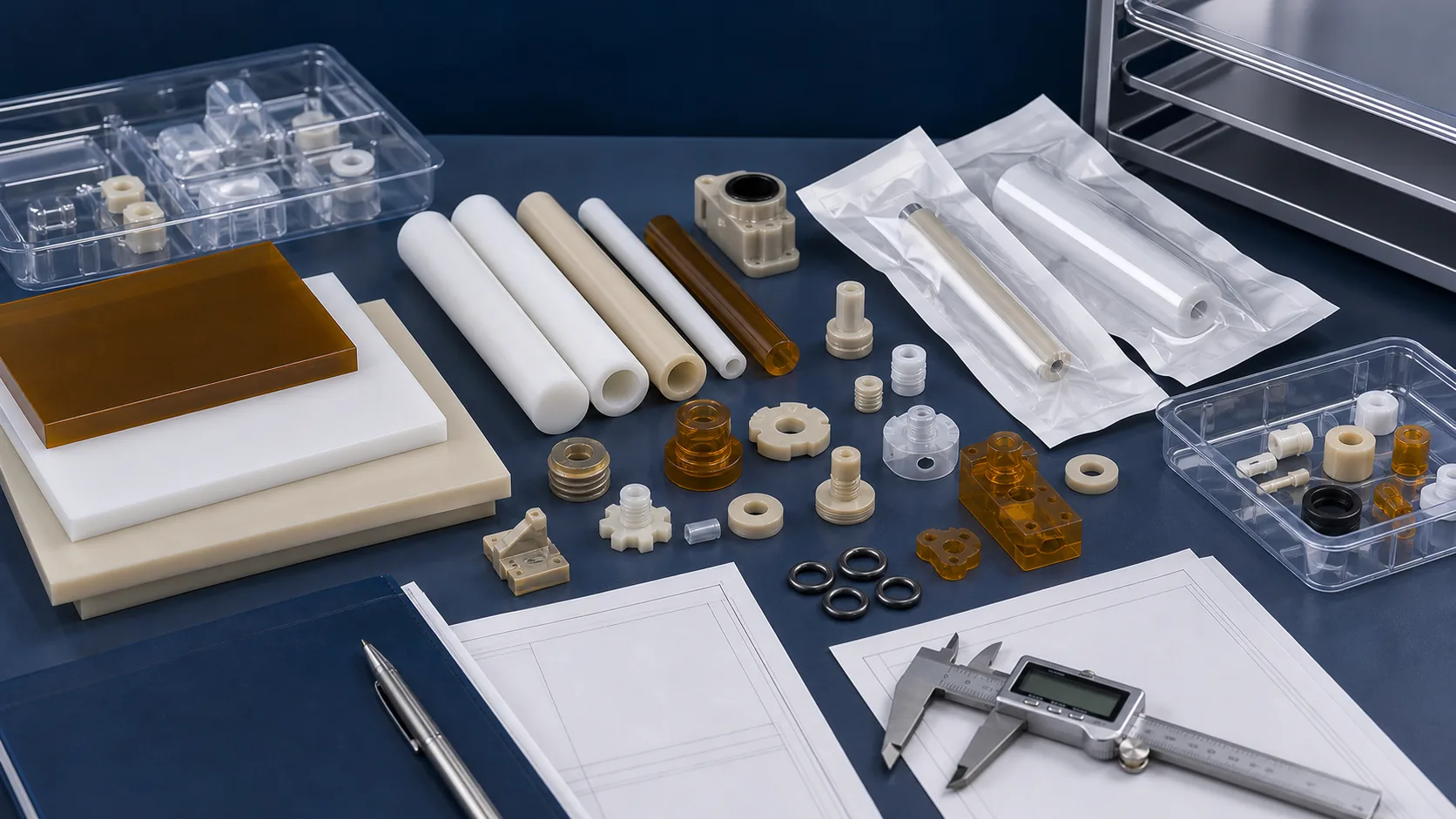
Medical engineering plastic parts require early review of material, sterilization exposure, tolerance, surface finish, documentation and project stage. Great Plastics reviews drawings and requirements before device components, trays, fixtures or prototype parts are quoted.
Short answer
Medical plastics should be selected around use context, cleaning exposure and documentation expectations.
PEEK, PPSU, PSU, PEI, PC, POM and specialty materials may be considered for device parts, trays, fixtures and prototypes. The quote should state whether the part is for prototype, fixture, non-implant device support or another defined use.
Application fit
Map the application to material behavior and quote inputs.
| Application | Material direction | RFQ note |
|---|---|---|
| Device components | PEEK, PEI, PPSU, PC or POM | Send use context, tolerance, finish and documentation needs. |
| Sterilizable trays | PPSU, PSU, PEI or PEEK | Clarify sterilization method, heat cycles and cleaning exposure. |
| Test fixtures | PEI, PC, POM, PEEK or PPS | State dimensional stability, wear and inspection points. |
| Prototype parts | CNC machined stock shapes | Send CAD, revision status, quantity and validation goal. |
Review points
Resolve the operating risks before selecting the route.
Sterilization
Autoclave, chemical or other cleaning methods must be named.
Contact context
Use context affects material and documentation review.
Surface finish
Edges, bores and cleanability can affect acceptance.
Documentation
Traceability and material paperwork should be requested before quoting.
Prototype status
Prototype, fixture and production expectations should be separated.
RFQ checklist
Send the details that let the quote reflect the real application.
- Drawing, CAD file or sample photo
- Material target or operating-performance requirement
- Temperature, chemicals, load, wear, electrical or cleanliness conditions
- Critical dimensions, finish, inspection and documentation needs
- Quantity, project stage, packaging needs and repeat-order expectations
FAQ
