GP
Great PlasticsEngineering Materials & Custom Parts
Engineering plastic materials
Engineering plastics selection for custom parts, machining and RFQ decisions.
Use this material hub to compare PEEK, PI, PPS, PEI, PAI and practical alternatives before locking a
drawing, stock shape or manufacturing route. Great Plastics helps buyers connect material behavior with
machining, molding, tolerance and RFQ requirements.
Short answer
The best engineering plastic is the one that survives the environment and can be manufactured reliably.
Do not choose a plastic only by name or by the highest published property. A reliable material choice starts with temperature,
chemicals, load, wear, moisture, electrical behavior, tolerance, stock form and production quantity. This page is a practical
starting point for narrowing the material family before a custom plastic part is quoted.
Material class guide
Engineering plastics sit between commodity plastics and the highest-performance polymers.
| Material class | Typical use case | Examples | Selection caution |
|---|---|---|---|
| Commodity plastics | Low-cost parts where heat, load and chemical exposure are modest. | PP, PE, PVC, PS | May not hold tolerance, stiffness or temperature performance in demanding mechanical parts. |
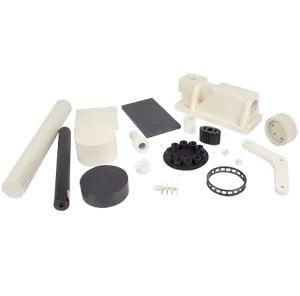
| Engineering plastics | Industrial parts that need stronger wear, stiffness, dimensional stability or chemical behavior. | POM, Nylon, PC, PET, PBT, PTFE, PVDF | Moisture, creep, friction, chemical exposure and machining stress still need review. |
| High-performance plastics | Severe heat, chemicals, wear, insulation or precision requirements where failure cost is high. | PEEK, PPS, PEI, PAI, PI, PPSU | Do not over-specify; confirm the environment, quantity and manufacturability before accepting higher material cost. |
Material family map
Where common engineering plastics usually fit.
| Material family | Typical reason to consider it | Common part examples | Quote questions to answer first |
|---|---|---|---|
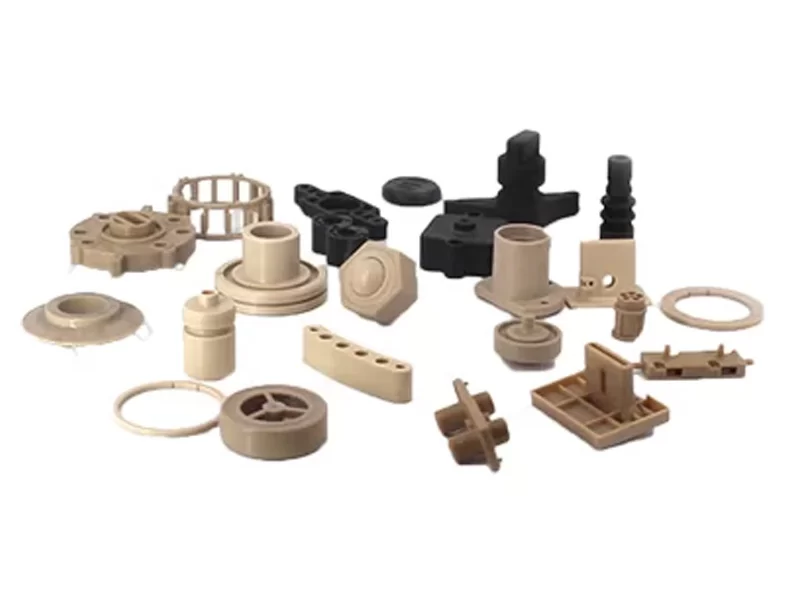
| PEEK | High heat, chemical resistance, stiffness, wear and dimensional stability. | Valve seats, bushings, rings, insulators, semiconductor fixtures. | Grade, temperature, chemical exposure, tolerance and inspection needs. |
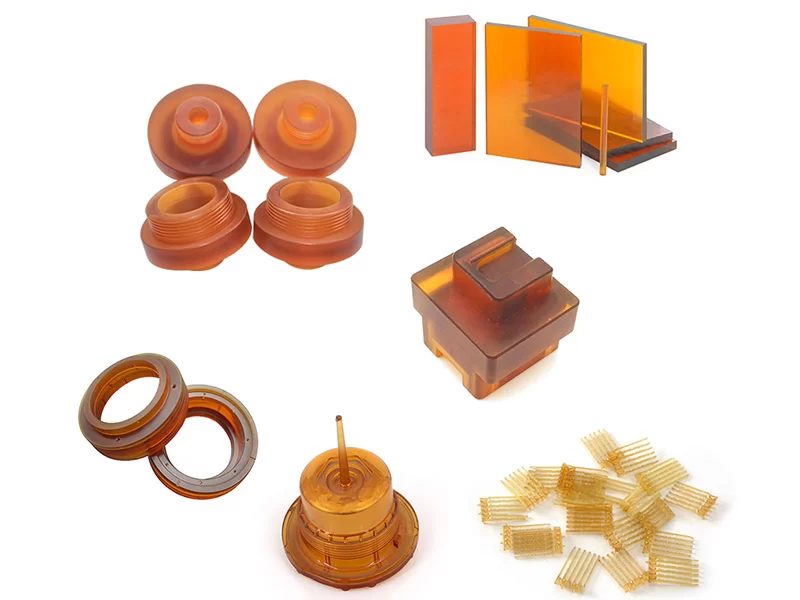
| PI / Polyimide | Severe heat and stability where many thermoplastics are near their limit. | High-temperature spacers, insulation parts, precision wear parts. | Operating temperature, brittleness risk, machining features and documentation. |
| PPS | Chemical resistance, dimensional stability and heat performance at a lower cost tier than many PEEK uses. | Pump parts, electrical parts, fluid-handling components, under-hood parts. | Filled grade, chemical concentration, temperature and molded-vs-machined route. |
| PEI / Ultem | Stiffness, insulation, flame resistance and machinable stock shapes. | Electrical housings, fixtures, medical/lab components, structural insulators. | Flame rating, electrical requirement, steam/cleaning exposure and finish. |
| PAI / Torlon | High load, wear resistance, creep resistance and elevated-temperature mechanical performance. | Bearings, rollers, wear pads, gears, high-load precision components. | Moisture, bearing pressure, mating surface, lubrication and tolerance stack-up. |
| POM, Nylon, PTFE, PVDF, PC | Useful alternatives when the environment does not require the highest-cost high-performance materials. | Guides, gears, rollers, wear strips, chemical parts, guards and fixtures. | Cost target, moisture, friction, chemical exposure and acceptable service temperature. |
Selection path
Start with the condition most likely to make the part fail.
Heat and thermal cycling
Check continuous temperature, short-term peaks, heat deflection, hot-fluid contact and whether the part must hold flatness after machining.
Chemical exposure
Record the chemical, concentration, temperature and exposure time. A material that works at room temperature may fail faster under heat or stress.
Wear, friction and load
Review bearing pressure, sliding speed, lubrication, mating surface, creep and whether a filled or bearing grade is needed.
Electrical and flame needs
Define insulation, dielectric, ESD, static, flame or smoke requirements before choosing PEI, PI, PEEK, PPS or alternatives.
Moisture and dimensional stability
Moisture absorption, annealing, residual stress and feature orientation can affect tolerance, flatness and repeatability.
Cost and availability
Do not over-specify PEEK or PAI if PPS, PEI, POM, Nylon, PTFE or PVDF can meet the actual environment.
Manufacturing route
Material choice and process choice should be reviewed together.
Machining from sheet, rod or tube
Often the fastest route for prototypes, precision custom parts and low-to-medium quantities. Check thin walls, sharp corners, flatness, tool marks and stress relief.
Stock shape sourcing
Use stock shapes when you need material quickly, prepared blanks, cut-to-size pieces or machining-ready rods, sheets and tubes.
Molding or production planning
Molding becomes practical when geometry, annual volume and tooling risk justify it. Review wall thickness, shrinkage, draft and material flow before tooling.
Application matrix
Typical starting points by application environment.
| Application environment | Materials to compare first | Part examples | Design or RFQ warning |
|---|---|---|---|
| Semiconductor and electronics | PEEK, PI, PEI, PPS, ESD grades | Fixtures, insulators, rings, carriers, test components. | Confirm contamination, electrical behavior, cleaning chemistry and dimensional stability. |
| Chemical processing and fluid handling | PPS, PEEK, PTFE, PVDF | Valve seats, seals, manifolds, pump wear parts, spacers. | Chemical concentration, temperature and exposure duration matter as much as the chemical name. |
| Machinery and wear parts | PEEK, PAI, POM, Nylon, filled PTFE | Gears, rollers, bushings, guide rails, wear pads. | Review load, speed, mating surface and lubrication before setting tolerances. |
| Medical, lab and sterilization equipment | PEEK, PEI, PPSU, PPS, PI | Instrument parts, trays, housings, spacers, fixtures. | Do not assume compliance; specify grade, sterilization method and documentation needs. |
| Aerospace, energy and high-load systems | PEEK, PAI, PI, PEI, PPS | Insulators, bushings, seals, lightweight metal-replacement components. | Ask for operating envelope, load, vibration, inspection and traceability expectations. |
Drawing review
Material selection should happen before avoidable machining risk is locked into the drawing.
Tight tolerances, unsupported thin walls, sharp internal corners, large flat areas and surface-finish callouts can all change the best material or process route.
Great Plastics can review the drawing package and flag the material/process questions that affect quote accuracy.
- Separate critical dimensions from general clearance dimensions.
- Confirm if annealing, first-article inspection or material certificates are needed.
- Call out only the surface finish features that matter for sealing, sliding or fit.
- Share the operating environment so material substitutions are evaluated safely.
Related materials and services
Continue from material choice to part sourcing.
FAQ
Questions buyers ask when choosing engineering plastics.
What are engineering plastics?
Engineering plastics are materials chosen for stronger heat, wear, chemical, electrical or dimensional performance than commodity plastics. Common examples include POM, Nylon, PC, PBT, PET, PTFE, PVDF, PPS, PEI, PEEK, PAI and PI.
How do I choose between PEEK, PPS, PEI, PAI and PI?
Start with the operating environment. PEEK is often considered for heat, chemicals and stiffness; PPS for chemical resistance and stability; PEI for insulation and flame resistance; PAI for high load and wear; PI for severe heat applications.
Should I always choose the highest-performance plastic?
No. A higher-performance material can add cost and machining complexity. If the environment allows it, POM, Nylon, PC, PTFE or PVDF may be a better commercial choice.
Can Great Plastics quote parts from a drawing?
Yes. Send a 2D drawing or 3D model with material target, dimensions, tolerance, quantity, operating environment, surface finish and lead time requirements.
What if I do not know the correct material?
Send the application conditions first. Great Plastics can help narrow materials by heat, chemical exposure, load, wear, electrical behavior, stock shape and manufacturing route.
When should material selection happen?
Material selection should happen before final drawing release or tooling decisions, especially when the part has tight tolerances, high heat, chemical exposure, sliding wear or inspection requirements.
RFQ checklist
Send the project conditions, not only the material name.
Include drawing or 3D model, material target, dimensions, tolerance, quantity, operating temperature, chemical exposure, load, surface finish, inspection needs and target lead time.