
Custom Machined Plastic Parts for Medical Equipment
Custom plastic components for your diagnostic instruments, laboratory systems and medical equipment. Great Plastics combines PEEK, PEI and high-performance material supply with CNC milling and turning, from functional prototypes to repeat production.
Lösungen
Custom Plastic Components for Medical Equipment
Your component needs to fit the assembly and retain its function in use. Your drawing-defined components start with the interfaces that matter: mounting faces, bores, fluid ports and electrical clearances.
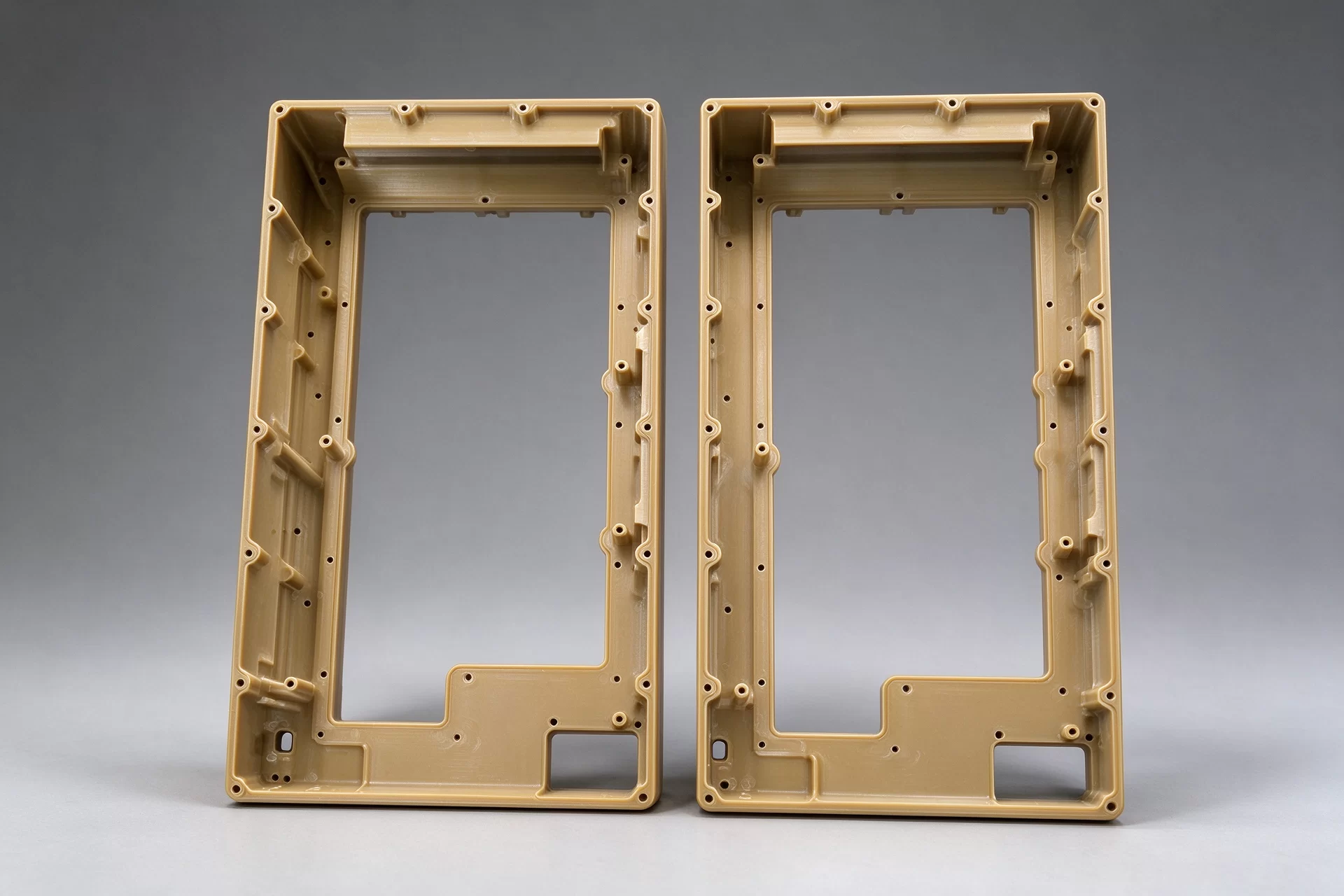
Diagnostic Housings & Instrument Bodies
Milled housings integrate sensor pockets, connector openings and mounting holes. PEI and PEEK selection depends on stiffness, temperature and electrical requirements. Wall thickness, cover fit and assembly access guide machining.
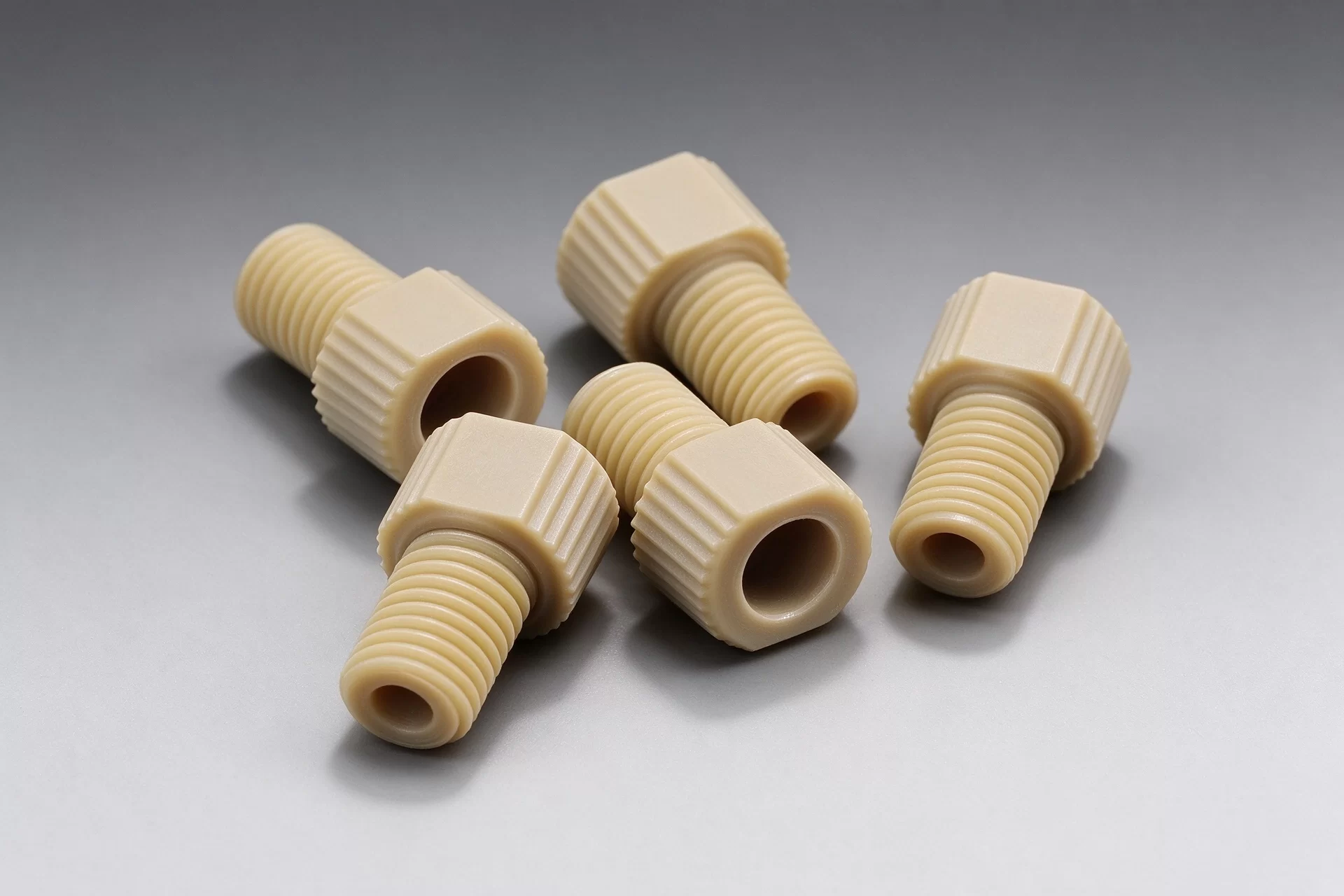
Fluid-Handling Blocks & Connectors
Milled PEEK manifold blocks and turned connectors integrate fluid paths in lab and diagnostic equipment. Port alignment, bore geometry and seal grooves ensure proper fit. Wetted surfaces require grade, chemical compatibility and finish verification.
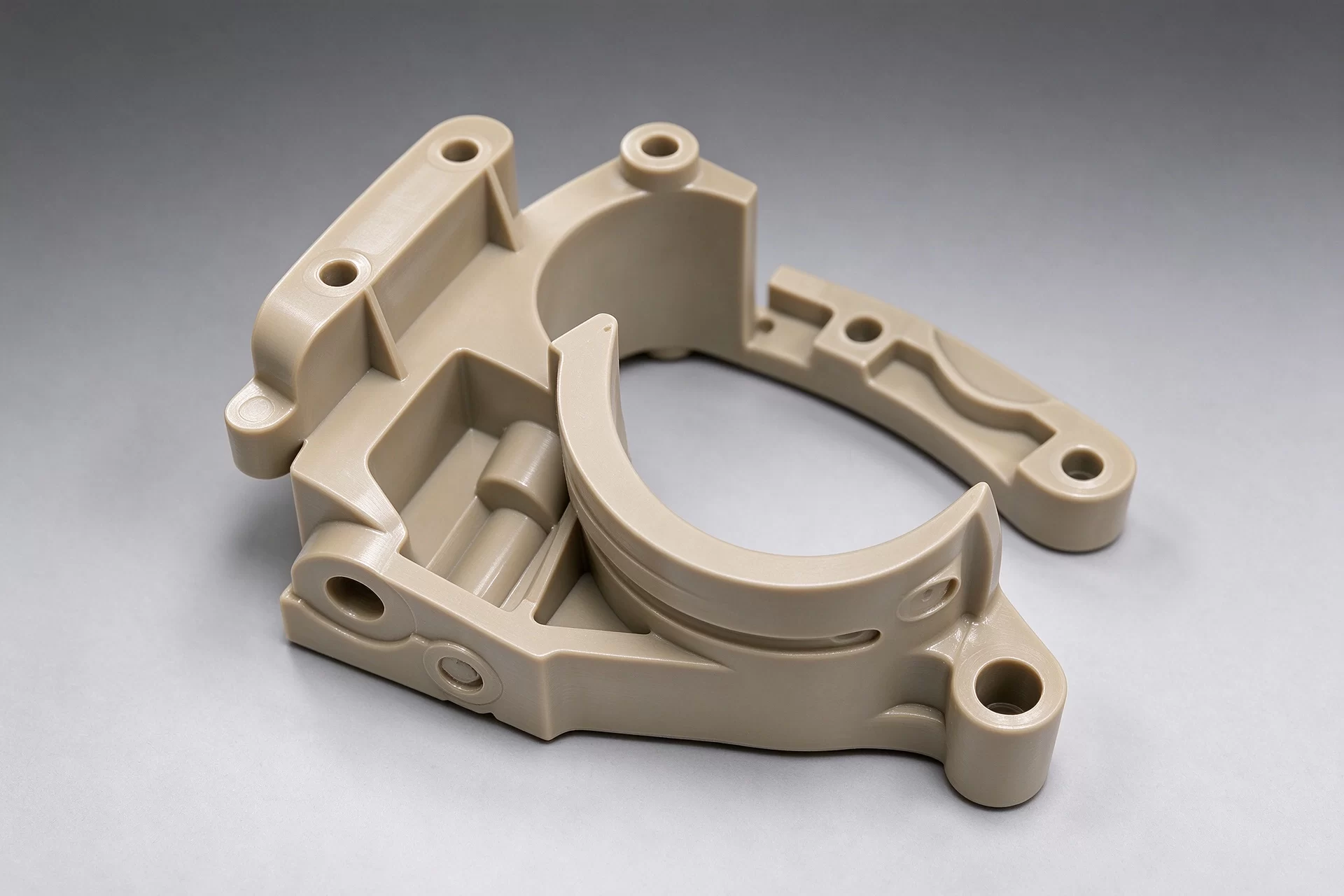
Fixtures, Guides & Insulating Supports
PEI fixtures and insulating supports position sensors and components. Reference faces, hole patterns, thermal exposure and repeated loading guide machining and material selection.
Fähigkeit
CNC Milling, Turning & Equipment Capacity
Great Plastics machines engineering plastics from sheet, rod and tube stock. Your part geometry determines the equipment route; critical feature relationships determine the setups.
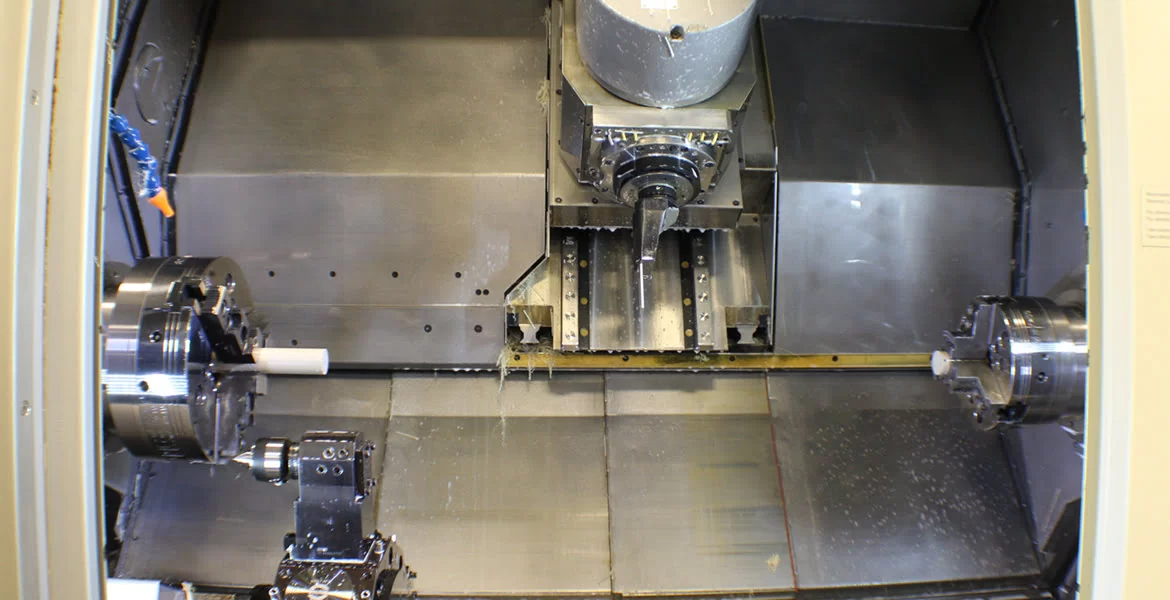
CNC-Fräsen
Three-axis milling produces pockets, slots, mounting faces and intersecting holes. A nominal 1500 × 800 × 500 mm envelope supports complex housings, subject to fixture clearance and tool reach. Deep cavities require suitable internal radii to match cutter geometry.
CNC-Drehen
CNC turning produces sleeves, spacers, stepped bores, grooves and threads. Nominal capacity is Ø431 × 990 mm, subject to chucking and stock limits. Long, thin sections require proper support to control deflection and clamping distortion.
Turn-Mill Features
Turn-mill equipment combines cylindrical features, flats, radial holes and off-axis details in one setup. Fewer transfers help maintain alignment between bores, outer diameters and secondary features, subject to tooling and access limits.
Die Maschinenkonturen stellen keine garantierten Abmessungen des Fertigteils dar. Material, Ausgangsform, Werkstückspannung und Zerspanungszugang bestimmen die realisierbaren Abmessungen Ihrer Zeichnung. Möglichkeiten der CNC-Bearbeitung von Kunststoffen
Feature Analysis
Complex Features That Control the Fit
Great Plastics reviews locating and sealing interfaces against your drawing, grade and measurement conditions. Drawing-based dimensional reports are available for agreed features.
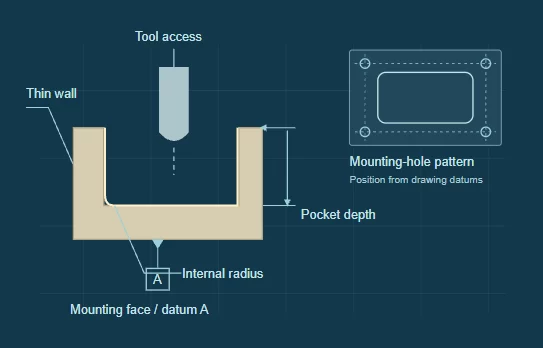
Deep Pockets & Thin Walls
For a milled PEI instrument housing, a mounting-face datum connects pocket depth and hole-pattern position to the assembly. These relationships define the features for dimensional acceptance. Tool reach limits pocket depth; internal radii limit corner geometry. Thin walls can deflect under clamping and move after release. Balanced material removal and supported workholding help control shape.
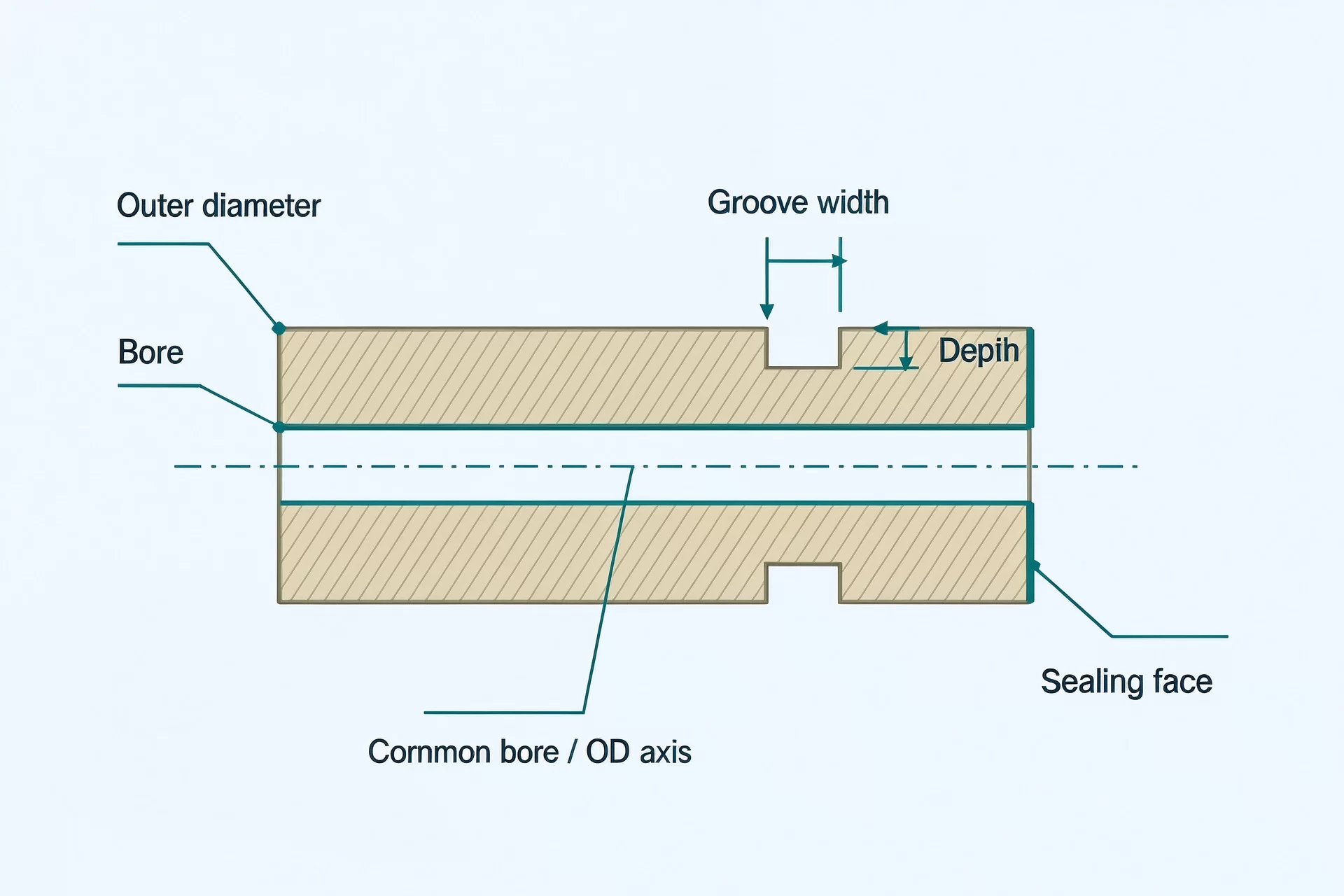
Concentric Bores & Sealing Grooves
For a turned PEEK connector, the bore, outside diameter and seal groove share a drawing-defined common axis. Groove width and depth locate the seal; runout relates the outer sealing surface to the bore. Sealing-face finish is a separate requirement. Machining heat, residual stress and moisture can change dimensions after cutting, so acceptance needs an agreed inspection state.
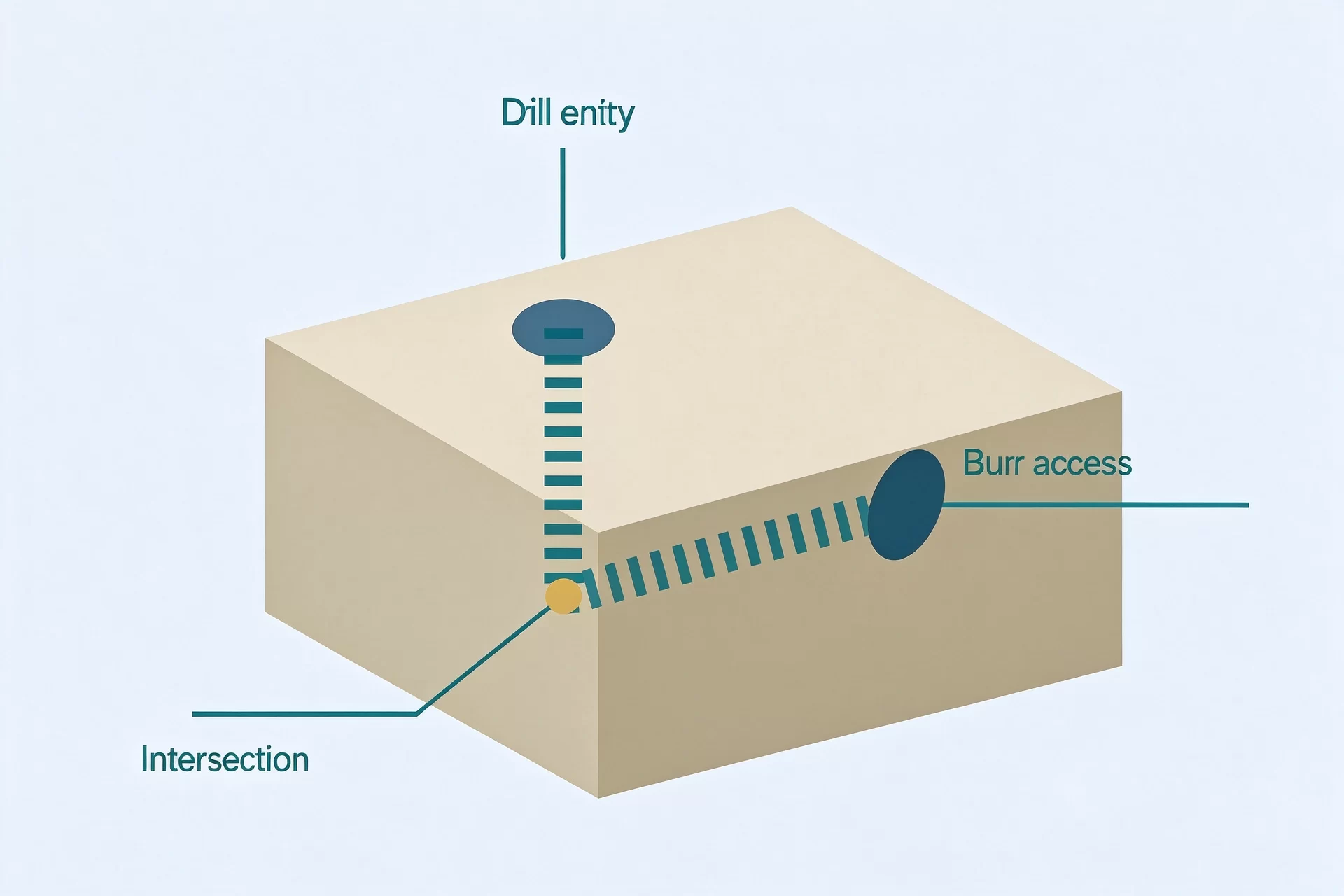
Small Ports & Cross-Drilled Passages
A milled PEEK manifold links port positions to the mating assembly and cross-bore intersections to the internal flow path. Accessible intersections allow edge condition and deburring verification to be agreed alongside bore diameter and location. Hidden edges can retain burrs; an enclosed channel may require a split design or another route. Dimensional acceptance alone does not verify fluid performance or cleanliness.
Materialauswahl
Engineering Plastics for Your Medical Equipment
Plastics used in medical devices and equipment must match the actual contact, load and exposure. The following material families serve different component duties. Exact grade, fillers and documentation determine the options for your project.
| Material | Passgenauigkeit der Bauteile | Notenwahl und Grenzen |
|---|---|---|
| PEEK | Instrument bodies, connectors and loaded equipment parts. | Unfilled, glass-filled, carbon-filled and bearing/PTFE grades differ in stiffness, wear and electrical behavior. Strong oxidizers need specific compatibility evidence. Medical-use documentation must match the exact grade. |
| PEI | Diagnostic housings, insulating supports and precision fixtures. | Unfilled, glass-filled and specialty grades offer different stiffness and finish. Cleaner compatibility and environmental stress cracking can limit exposed parts. A specialty grade still needs its own documentation. |
| PPS | Equipment guides, supports and selected fluid-handling parts. | Unfilled, reinforced and wear-modified grades differ. Thin edges and notches need care. Compatibility depends on formulation, chemical concentration, temperature and exposure time. |
| PAI | Loaded bushings and wear parts within equipment. | Moisture conditioning affects dimensions. Hot water, steam and amines need particular review. PAI is not a default choice for repeatedly sterilized components. |
| PI | Specialized hot supports, insulating spacers and wear parts. | Grade, atmosphere and load govern suitability. Moisture and hot-water exposure can change performance. Evaluate these equipment duties separately from patient-contact uses. |
Carbon-filled grades may be electrically conductive. A material datasheet does not qualify a finished medical device or establish resistance to every sterilization cycle.
Dienstleistungen
Manufacturing Services for Medical Products
| Profitieren Sie bei der Bearbeitung von derselben Geschwindigkeit, Präzision und Zuverlässigkeit, die Sie von Great Plastics gewohnt sind, und erschließen Sie sich über unser Fertigungsnetzwerk gleichzeitig fortschrittliche Bearbeitungsmöglichkeiten wie engere Toleranzen und Mengenrabatte. Mehr erfahren→ |
|
 |
| Erhalten Sie innerhalb weniger Tage kostengünstige, hochwertige Formteile und Brückenwerkzeuge. Mit unserer kostenlosen Beratung zur Formbarkeit lassen sich der Konstruktions- und Formungsprozess erheblich beschleunigen, sodass Sie Zeit und Geld sparen. Mehr erfahren→ |
|
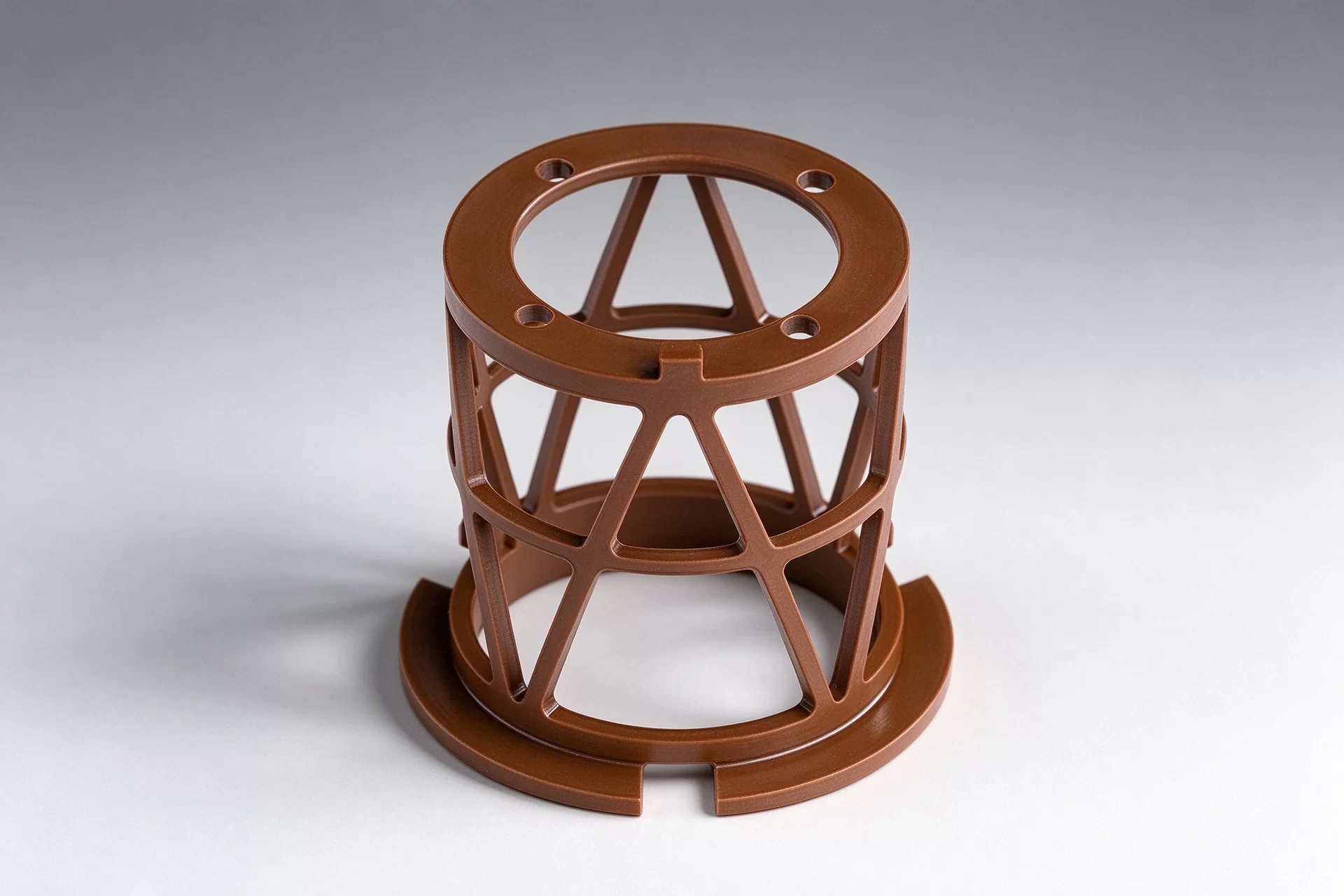 |
| Sie suchen hochwertige Bauteile und Fachwissen im Bereich der additiven Fertigung aus einer Hand? Wählen Sie aus vier verschiedenen Technologien der additiven Fertigung für kostengünstiges Prototyping und hochpräzise, reproduzierbare Serienteile. Mehr erfahren→ |
|
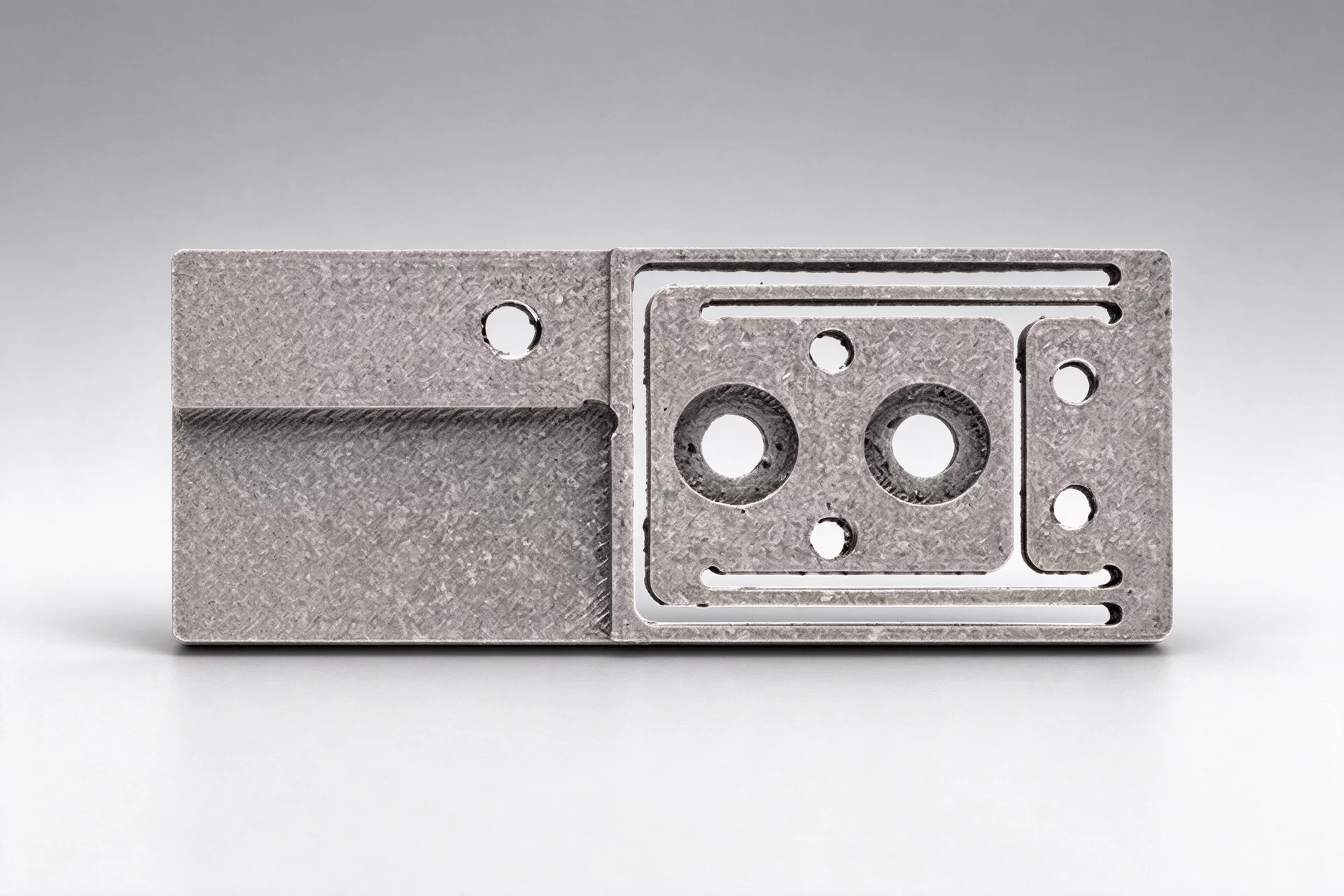 |
Wie ein Projekt voranschreitet
Vom Prototyp zur Serienfertigung
Great Plastics supplies machined prototypes, small batches and repeat orders. The production handoff connects your prototype to the specified drawing revision, grade and critical features.
Prototypenentwicklung und Anwendungsvalidierung
Prüfen Sie die Zeichnung, das Material und die kritischen Merkmale. Testen Sie die bearbeiteten Prototypen unter realen Betriebsbedingungen auf Passgenauigkeit und Leistung.
Kleinserienfertigung
Verwenden Sie das freigegebene Muster, die geänderte Zeichnung, die Materialgüte und die Maßangaben als Produktionsvorgaben.
Wiederholungslieferung
Die genehmigten Anforderungen an Werkstoffe, Zeichnungen und Prüfungen sind einzuhalten. Änderungen an der Geometrie, den Füllstoffen oder den Betriebsbedingungen sind erneut zu validieren.

 English
 French
 German
 Russian