GP
Great PlasticsEngineering Materials & Custom Parts
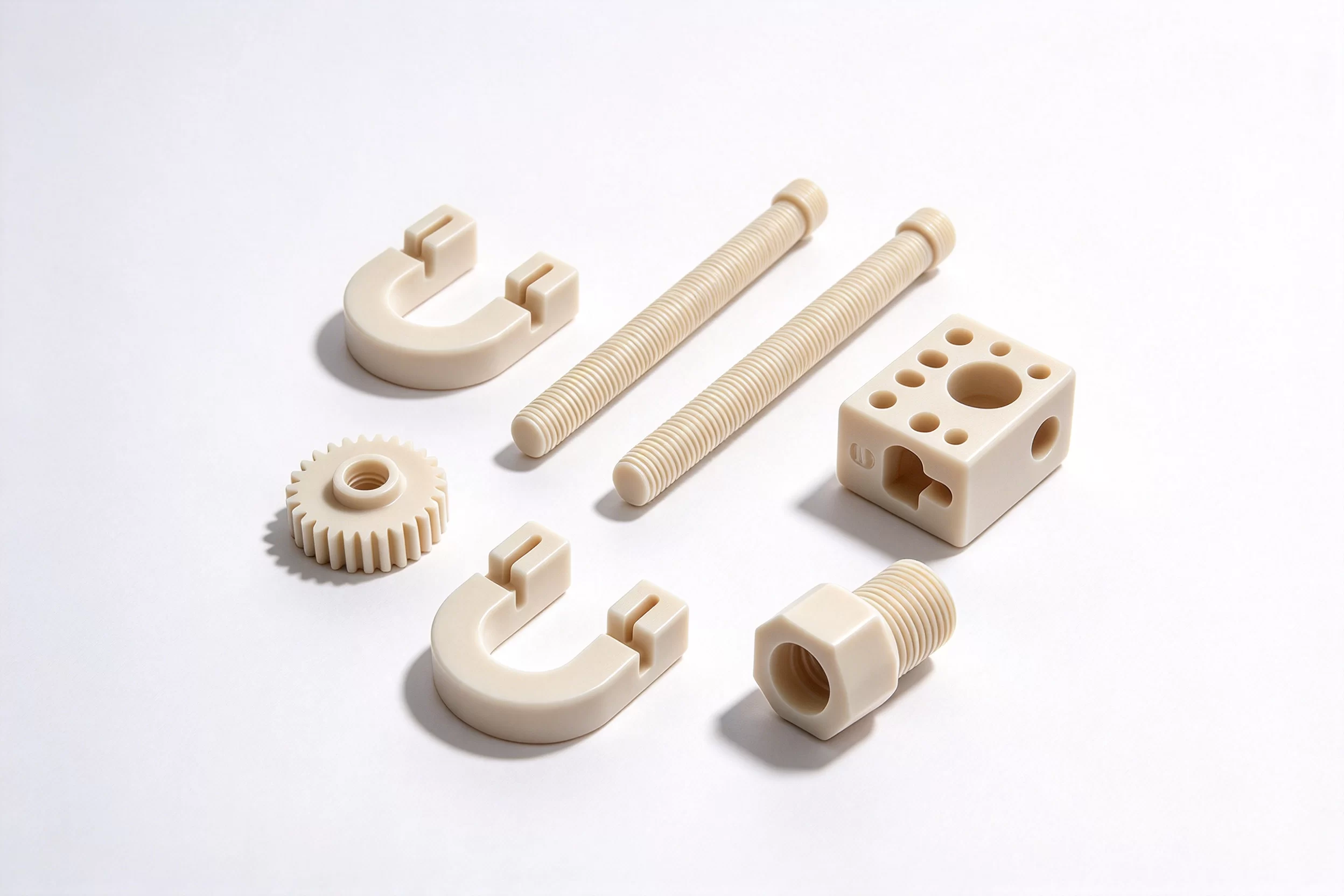
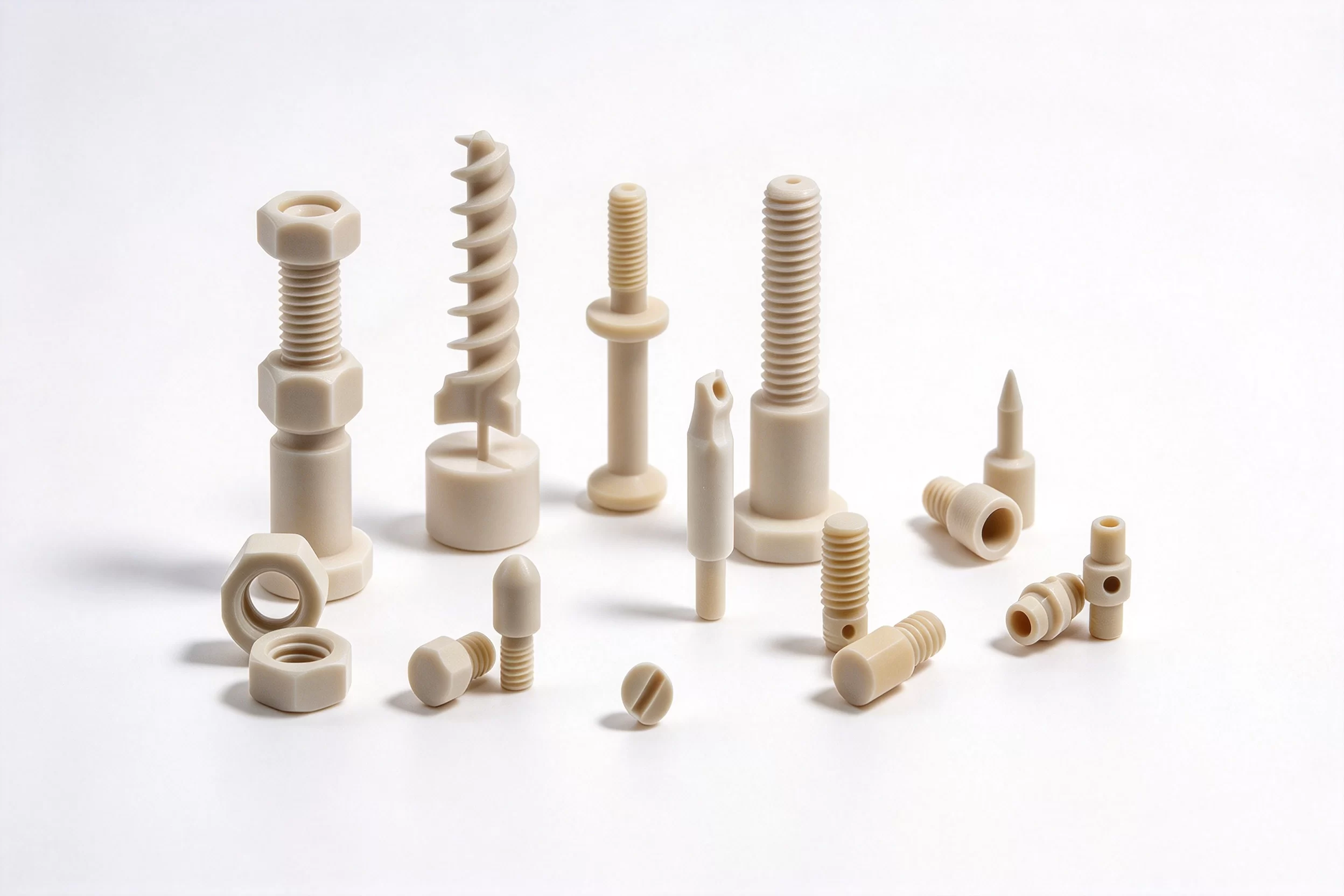
Custom plastic parts
Custom plastic parts from drawings, material requirements and production goals.
Great Plastics helps buyers turn drawings, samples and application requirements into quote-ready engineering plastic parts,
including machined prototypes, replacement parts, stock-shape components and molded production parts.
Short answer
A reliable custom plastic part starts with the drawing, the environment and the right manufacturing route.
The same geometry can require very different material and process choices depending on heat, chemicals, load, wear, tolerance, surface
finish, quantity and lead time. Great Plastics reviews these inputs before recommending CNC machining, stock-shape processing, molding
or a staged prototype-to-production path.
Process choice
Choose machining, molding or stock-shape processing before the quote is finalized.
| Manufacturing route | Best fit | What changes the quote |
|---|---|---|
| CNC machined plastic parts | Prototypes, replacement parts, precision features, lower volumes and engineering plastics such as PEEK, PPS, PEI, PAI, PI, POM and Nylon. | Material grade, stock form, tolerance, wall thickness, flatness, burr control, inspection and material removal. |
| Custom molded plastic parts | Repeat production where quantity, geometry and tooling budget justify injection molding. | Tooling complexity, resin choice, shrinkage, draft, wall thickness, gate location, finish and validation requirements. |
| Cut-to-size and stock-shape parts | Simple plates, blanks, rods, tubes, spacers and machining-ready stock where fast preparation matters. | Sheet/rod/tube size, cut tolerance, edge finish, protective film, packaging and downstream machining allowance. |
| Prototype to production path | Projects that need early machined parts before the design is stable enough for tooling. | Prototype quantity, expected annual volume, design-change risk, first-article needs and target production method. |
Quote path
Start with what matters most for the part.
| Buyer situation | Recommended route | What to send first |
|---|---|---|
| Prototype or one-off replacement part | CNC machining from engineering plastic sheet, rod, tube or plate. | 2D drawing, 3D model or sample photos with dimensions and tolerance. |
| Recurring precision plastic component | Machining review, first-article inspection plan and material stability check. | Critical dimensions, annual volume, inspection needs and application environment. |
| Higher-volume custom molded part | Injection molding feasibility review before tooling decisions. | 3D model, target material, wall thickness, expected volume and surface requirements. |
| Material is not finalized | Material selection review before quote. | Temperature, chemicals, load, wear, electrical needs and cost target. |
| Existing metal part needs replacement | Engineering plastic comparison and design-for-plastic review. | Function, load, mating surface, wear condition and failure history. |
Part types
Common custom plastic parts Great Plastics can help evaluate.
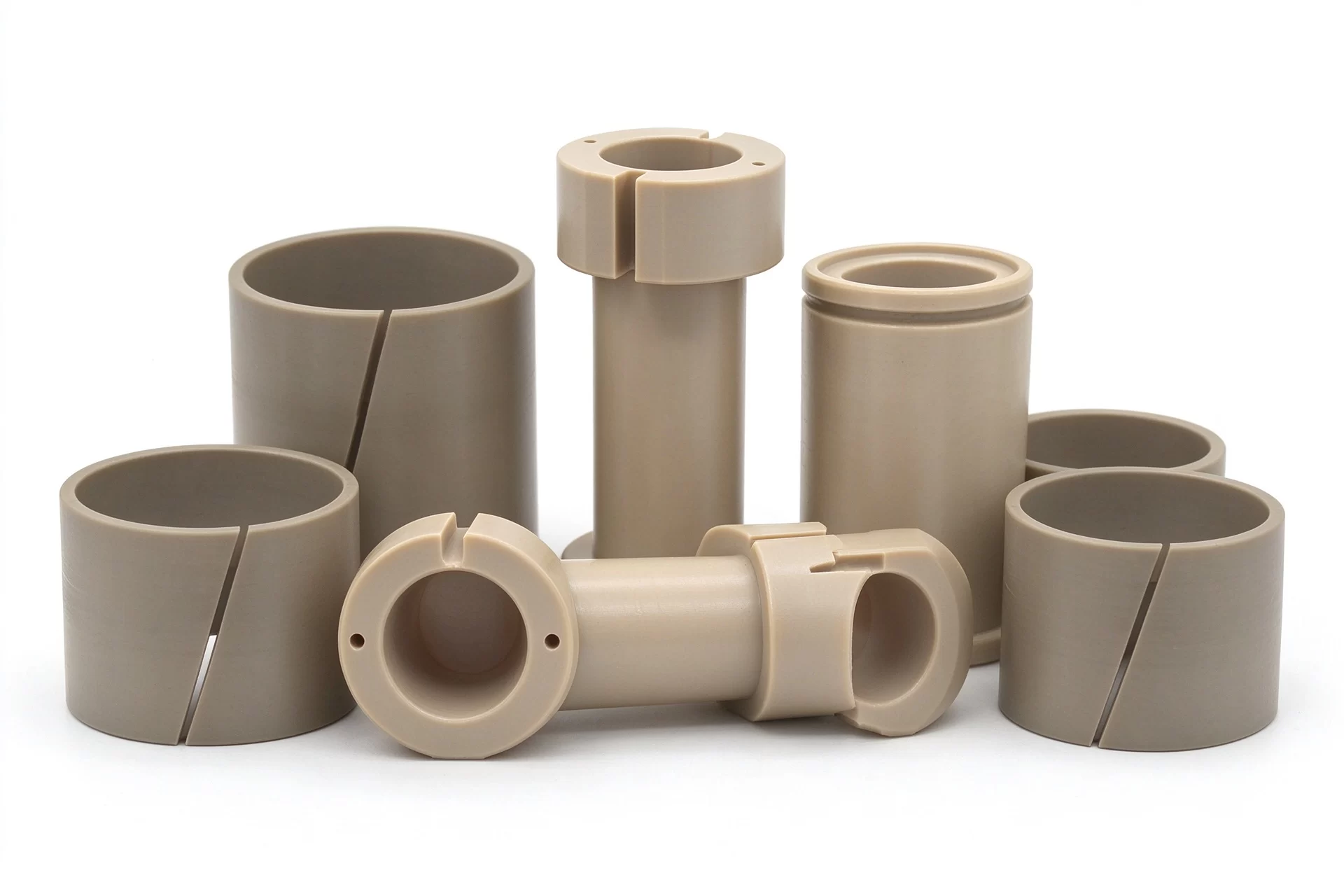
Bushings and bearings
Review load, speed, mating surface, lubrication, friction, wear grade and tolerance stack-up.
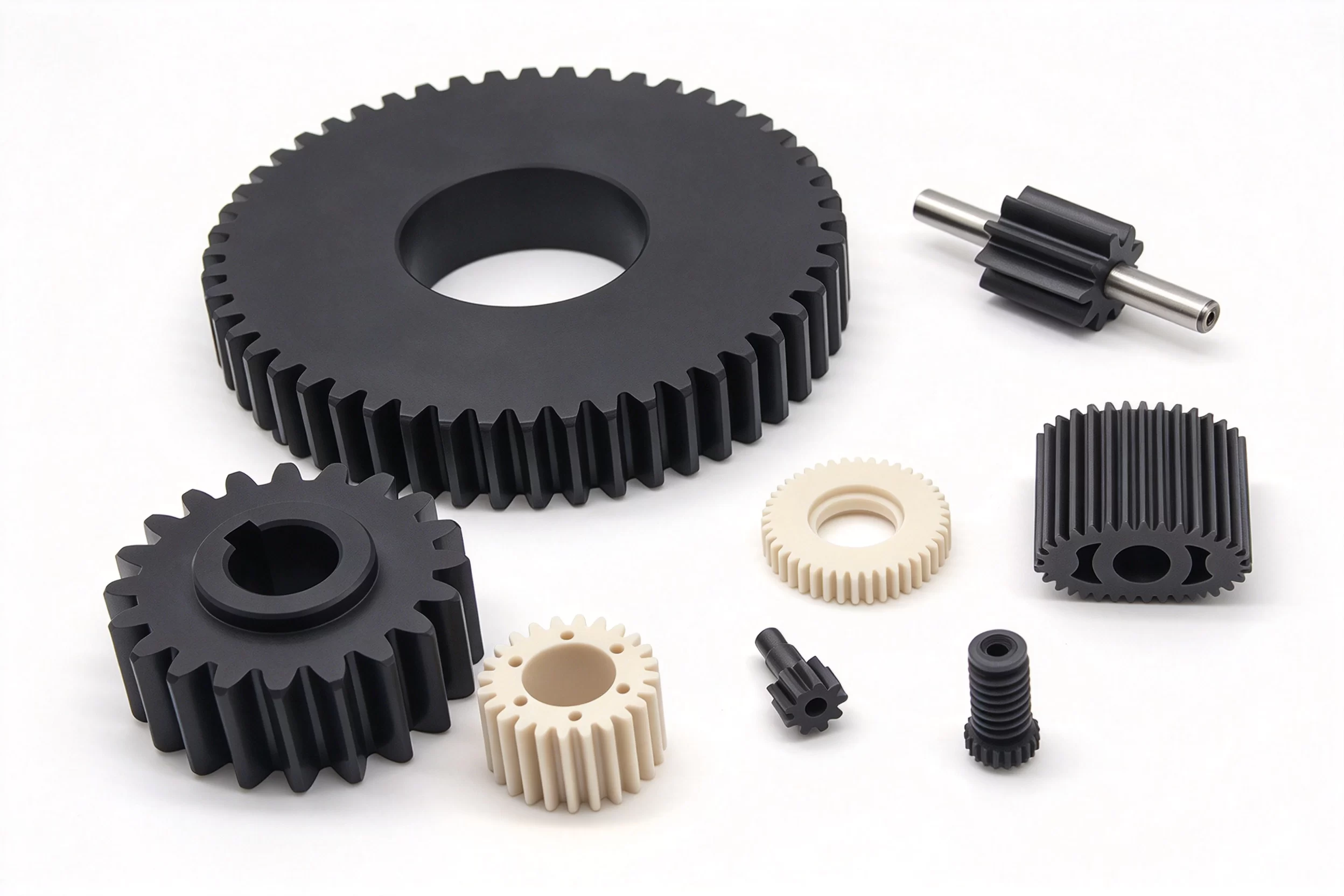
Gears, rollers and guides
Check wear, dimensional stability, noise, moisture, impact and whether filled grades are needed.
Valve, pump and fluid parts
Match material to chemical concentration, temperature, pressure, sealing surfaces and creep risk.
Electrical insulators and spacers
Confirm dielectric behavior, ESD, flame needs, heat exposure and assembly constraints.
Fixtures and tooling components
Balance stiffness, flatness, machinability, temperature, cleaning chemistry and repeat use.
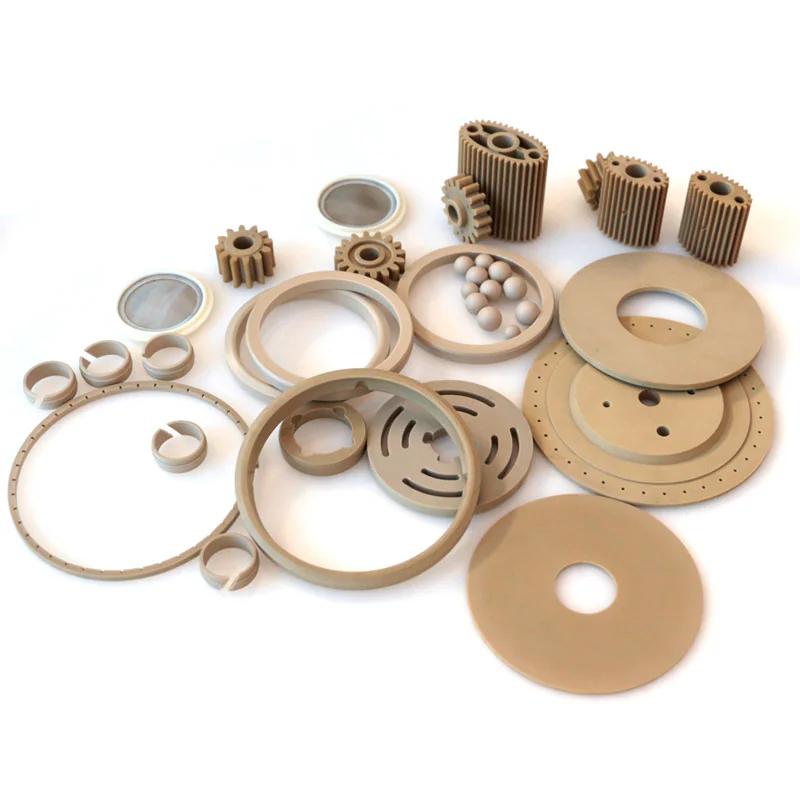
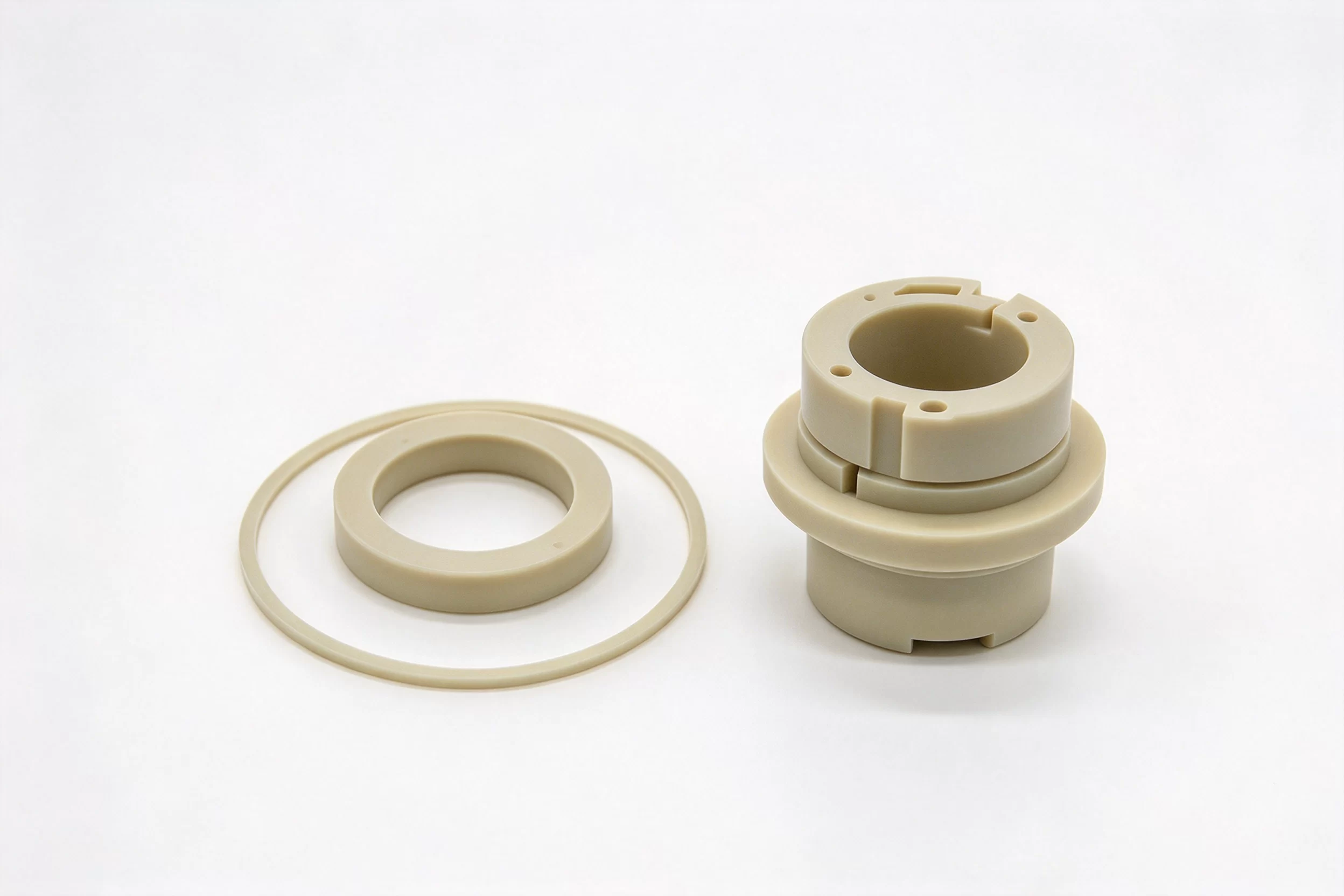
Plates, rings and precision profiles
Review stock shape, material removal, flatness, feature orientation and inspection requirements.
Manufacturing route
Choose the process before the quote locks in cost and risk.
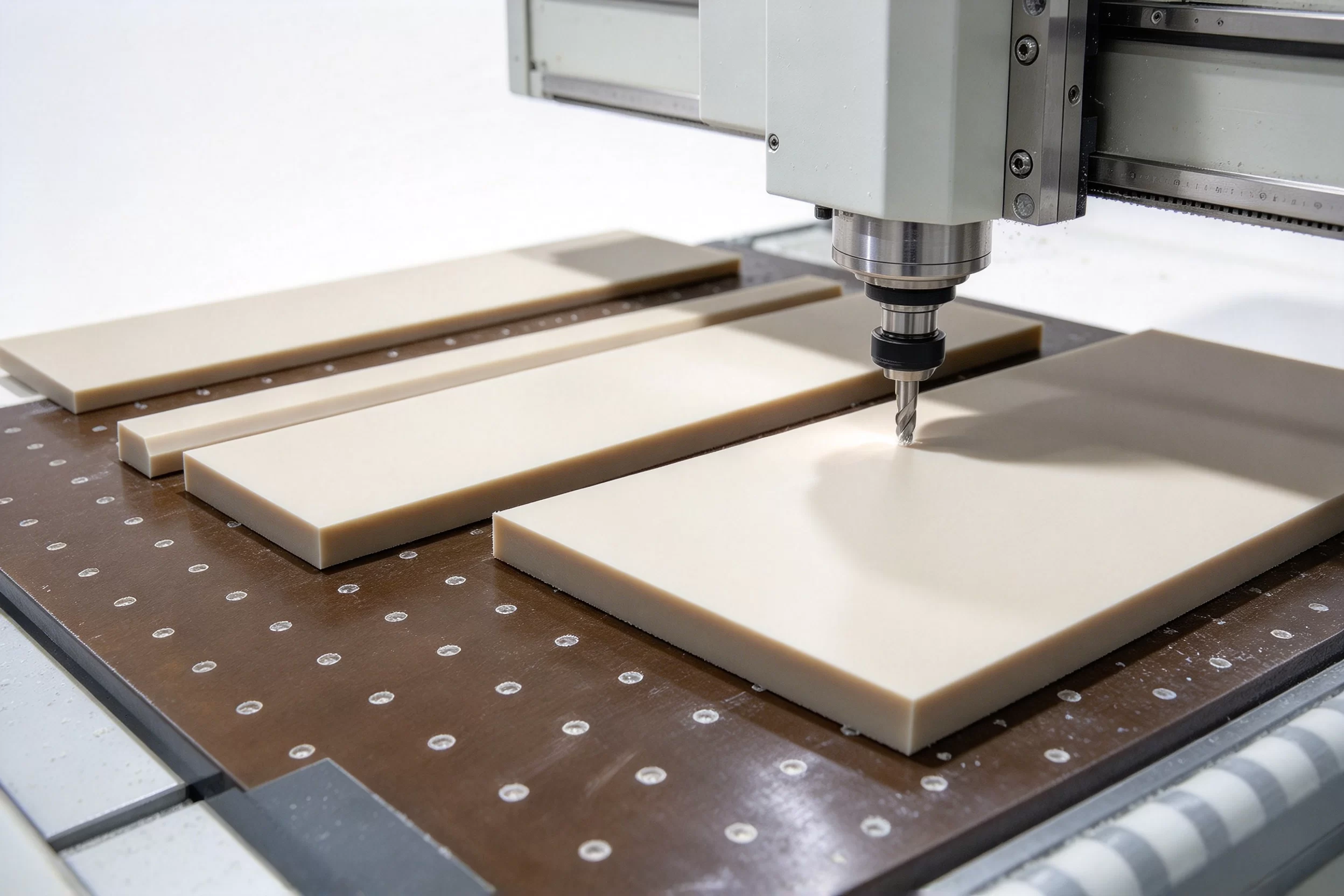
CNC plastic machining
Best for prototypes, replacement parts, tight features and low-to-medium quantities. Review material stress, burrs, thin walls, flatness and inspection.
Stock-shape parts
Use sheet, rod, tube, plate and cut blanks when a part can be made quickly from semi-finished engineering plastic stock.
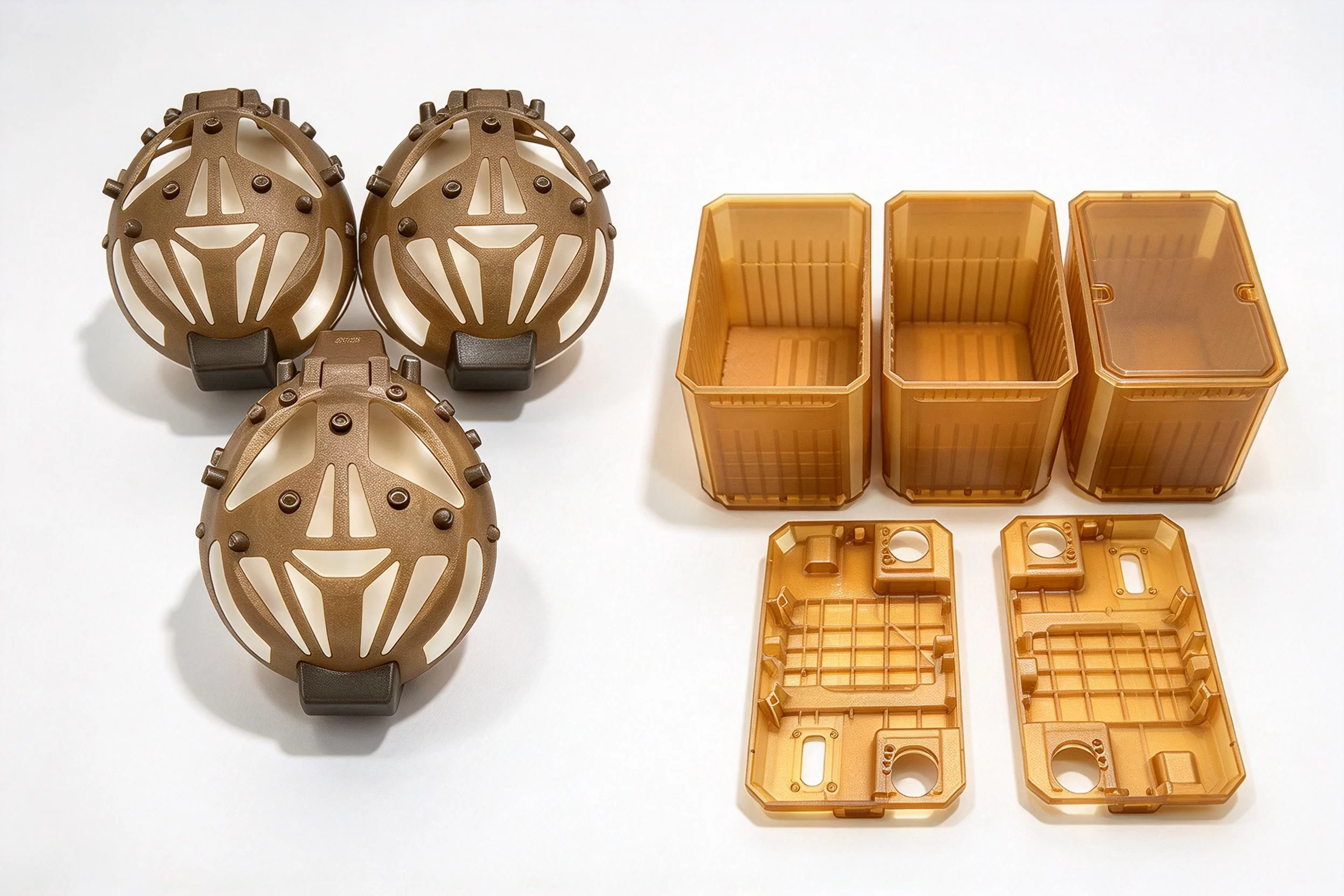
Molded production parts
Consider molding when volume, geometry and tooling investment make sense. Review wall thickness, draft, shrinkage, gate location and material flow.
Material selection
Match the plastic to the failure mode, not just the part name.
| Part requirement | Materials to compare | Risk if ignored |
|---|---|---|
| High heat and chemical exposure | PEEK, PPS, PI, PTFE, PVDF | Softening, swelling, cracking, chemical attack or loss of tolerance. |
| Wear, friction and bearing load | PAI, PEEK, POM, Nylon, filled PTFE, wear grades | Fast wear, seizure, creep or unstable fit. |
| Electrical insulation or ESD | PEI, PEEK, PPS, PI, ESD grades | Unsafe insulation, static issues or wrong material documentation. |
| Food, medical or lab equipment | PEEK, PEI, PPSU, POM, PTFE, specified compliant grades | Incorrect grade, cleaning failure or missing documentation. |
| Cost-sensitive general parts | POM, Nylon, PC, PET, PP, UHMW-PE | Over-specifying high-performance plastics and raising part cost unnecessarily. |
Drawing review
Before quoting, separate critical features from nice-to-have tolerances.
Plastic parts move, expand, absorb moisture and respond to machining stress differently from metal. A quote is more reliable when the
drawing identifies fit, sealing, sliding and inspection-critical features.
- Mark critical dimensions, mating faces, sealing surfaces and cosmetic surfaces.
- Confirm if first-article inspection, material certificates or special packaging are needed.
- Share the operating environment, not only the material name.
- Review thin walls, deep pockets, sharp corners and press fits before production.
Application matrix
Custom plastic parts by application environment.
| Industry / use | Typical custom parts | Quote review focus |
|---|---|---|
| Semiconductor and electronics | Fixtures, rings, insulators, carriers, spacers and precision plates. | Cleanliness, ESD, dimensional stability, chemistry and inspection. |
| Chemical and fluid handling | Valve seats, seals, manifolds, pump parts, bushings and wear components. | Chemical concentration, temperature, pressure and sealing surfaces. |
| Industrial machinery | Gears, rollers, guides, wear pads, guards, bushings and replacement parts. | Load, speed, mating surface, lubrication, quantity and failure history. |
| Medical, lab and food equipment | Instrument parts, trays, guides, housings, spacers and processing parts. | Cleaning method, grade documentation, finish, inspection and packaging. |
Related pages
Move from part need to material and process choice.
FAQ
Questions buyers ask before ordering custom plastic parts.
What are custom plastic parts?
Custom plastic parts are components made to a customer drawing, model, sample or functional requirement rather than standard catalog dimensions.
Can custom plastic parts be quoted from a drawing?
Yes. A 2D drawing or 3D model helps review material, tolerance, quantity, process route, inspection and lead time before quoting.
Should custom plastic parts be machined or molded?
Machining is often practical for prototypes, replacement parts and lower volumes. Molding becomes practical when geometry, volume and tooling budget justify it.
What materials are used for custom plastic parts?
Common options include PEEK, PPS, PEI, PAI, PI, PTFE, PVDF, POM, Nylon, PC, PET and other engineering plastics. The correct choice depends on the operating environment.
How can I reduce custom part quote delays?
Send the drawing, 3D model, material target, quantity, tolerance, application environment, finish, inspection needs and lead time in the first RFQ.
What information is needed for a custom plastic parts RFQ?
Send drawing or 3D model, material or performance target, dimensions, tolerance, quantity, operating environment, surface finish, inspection needs and target lead time.
RFQ checklist
Ready to quote custom plastic parts?
Include drawing or 3D model, material or performance target, dimensions, tolerance, quantity, operating temperature, chemical exposure, load, surface finish, inspection needs and lead time.