
Custom Plastic Injection Molding
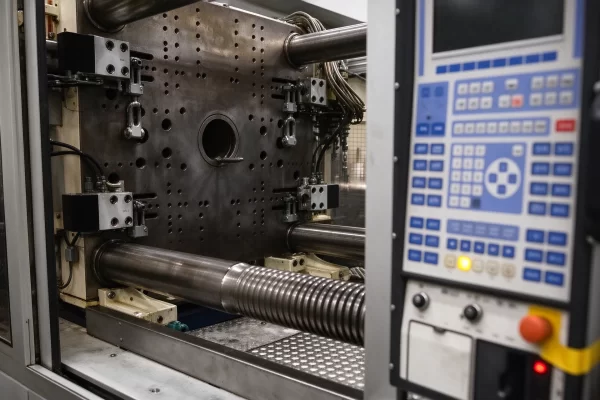
Great Plastics provides exceptional and superior custom plastic injection molding services to our clients from various industries. We have in-house capabilities and years of experience, making us a trusted service provider of plastic injection molding.
With our skilled and certified staff, we will follow your project’s specific requirements and preferences. We understand how each industry has different needs, especially with its products. But with our in-depth knowledge, we will give you top-tier quality plastic injection molding service.
Capabilities & Services
Injection Molding Capabilities & Services
From concept to completion, we provide comprehensive plastic injection molding solutions tailored to your project requirements.
Materials we work
Materials We Work With
Great Plastics works with five high-performance engineering plastics: PEEK, PPS, PI, PAI and PEI. Material selection starts with the operating environment and functional requirements, not a single headline property. Each material below notes when it is worth considering, which grade and fill-system factors affect the choice, and what must be confirmed before a manufacturing route is fixed.
Process
Our Injection Molding Process
From initial design review to final part delivery, we ensure quality and precision at every step.






Design Review
Design for Manufacturability and Tooling Review
A component designed for machining may require changes before it is suitable for injection molding. For high-performance materials, the review considers how the resin flows into the mold, how the part cools and shrinks, and how the finished component releases from the tooling — before tooling commitments are made.
Significant wall-thickness variations can contribute to uneven cooling, sink marks, voids and warpage. Review thick sections, abrupt transitions and unnecessary solid mass before finalizing the part design. Uniform wall thickness is a useful starting principle, but the appropriate geometry depends on the resin, structural requirements and part configuration.
Draft angles help the molded part release from the mold. Required draft depends on the depth of the feature, surface texture, resin, mold design and other geometry constraints. Deep walls, textured surfaces and complex cores may require additional review.
Ribs can improve stiffness without adding as much material as a solid section. Bosses and mounting features must be designed around wall thickness, support, shrinkage risk and assembly loads. These features should be evaluated as part of the complete component rather than in isolation.
Gate location influences resin flow, weld-line positions, visible marks and how the cavity fills. Identify critical functional surfaces and cosmetic areas before finalizing the mold design. The appropriate gating strategy depends on the part geometry, resin and tooling configuration.
Resin shrinkage and cooling behavior affect finished-part dimensions. Reinforcement, geometry, gate position and process conditions can also influence dimensional variation. Identify critical dimensions and functional interfaces on the drawing. Avoid specifying unnecessarily tight tolerances on non-critical features, and confirm achievable tolerances during design and tooling review.
Metal inserts, threaded features, machining, assembly and other finishing operations may affect tooling complexity and production cost. Include these requirements in the initial RFQ rather than adding them after the mold design has been established.
This design and tooling review is part of the pre-quote engineering evaluation for each project. It identifies molding risks early, while design changes can still be considered before tooling commitments are made.
Project Route
Choose the Right Manufacturing Route
Not every project is ready for injection molding. If the design is still changing, CNC machining or 3D printing may be worth evaluating before tooling begins. For repeat production, material selection, part geometry and acceptance criteria should be established before the mold is finalized.
| Factor | Injection Molding | CNC Plastic Machining | 3D Printing |
|---|---|---|---|
| Initial investment | Requires mold tooling | No mold tooling required | No mold tooling required |
| Best suited for | Stable designs and repeat production | Prototypes, precision parts and low-volume production | Prototypes and suitable complex geometries |
| Design changes | May require mold modifications | Usually easier to accommodate | Usually easier to accommodate |
| Design constraints | Material flow, draft angles, ejection and shrinkage | Tool access, part geometry and stock material availability | Build orientation, process limitations and post-processing |
| Unit cost | May decrease with higher production volumes | Depends on machining time, material use and part complexity | Depends on material, build time and finishing |
| Key decision factor | Tooling investment versus expected production volume | Required tolerances, geometry and material availability | Functional requirements, material properties and process suitability |
Not sure which route fits your project? Send your drawing, target material and estimated quantity for a manufacturing review.
Premium Surface
Quality Inspections and Finishing Options for Custom Molded Parts
Depending on your application’s requirements, you can choose from the following when requesting an injection molding quote.
Quality Inspections available for on-demand manufacturing orders
✓ Designing for Manufacturability Feedback (DFM)
✓ Scientific molding process development report
✓ In-process CMM inspection and machine monitoring
✓ First article inspection (FAI) and process capability report with GD&T
Post-Processing
✓ Mold Texturing (Mold Tech Surface Finishes)
✓ Threaded Inserts
✓ Pad Printing
✓ Laser Engraving
✓ Component Assembly
Technical & Quality
Technical Specifications & Quality Standards
Dimensional Tolerances
| Specification | Typical Value |
|---|---|
| Standard Tolerance | ±0.1 mm (±0.004″) |
| Tight Tolerance (CNC post-processing) | ±0.03 mm (±0.0012″) |
| Wall Thickness Range | 0.5 mm–10 mm |
| Draft Angle | 1°–5° (design dependent) |
