GP
Great PlasticsEngineering Materials & Custom Parts
Application Guides
Engineering plastic applications guide for part-level material decisions.
Use this application guide to connect part function, service environment, material options and RFQ details before choosing an engineering plastic for a real component.
Short answer
Application selection starts with what the part must do.
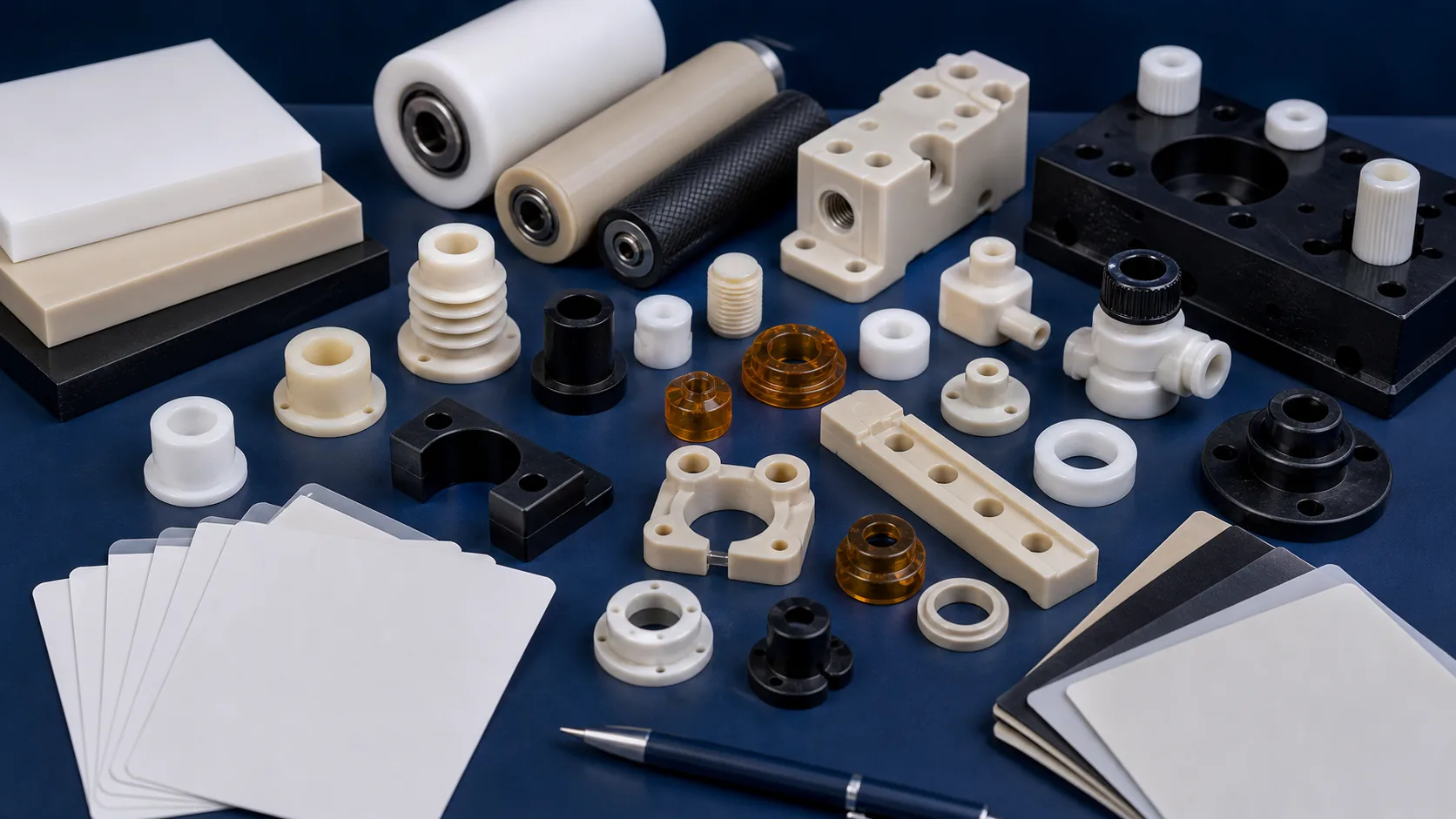
Engineering plastics are used when a part needs more than a basic shape. Buyers usually need lower friction, lower weight, chemical resistance, electrical insulation, dimensional stability, noise reduction or easier replacement than metal can provide. The right material depends on the application details: sliding or static use, load, fluid exposure, temperature, tolerance, mating surface, cleaning method and quantity.
Application matrix
Common engineering plastic applications and material directions.
| Application | Typical part examples | Material directions | Key RFQ questions |
|---|---|---|---|
| Wear and motion | Bushings, rollers, wear strips, guides, gears | POM, nylon, UHMW-PE, PTFE, PEEK, filled grades | Load, speed, lubrication, mating surface, moisture |
| Chemical and fluid handling | Valve seats, seals, manifolds, pump parts, spacers | PTFE, PVDF, PEEK, PPS, PP, PE, PCTFE | Fluid, concentration, pressure, temperature, sealing face |
| Electrical and thermal support | Insulators, carriers, connector parts, support plates | PEI, PEEK, PI, PPS, acetal, laminates | Voltage, heat, flame rating, stability, cleanliness |
| Precision fixtures and tooling | Nests, jigs, spacers, test fixtures, locating plates | PEEK, PPS, PEI, PAI, acetal, glass-filled grades | Flatness, tolerance, repeated use, surface finish, inspection |
| Metal replacement | Lightweight brackets, guards, sleeves, wear blocks | Nylon, POM, PEEK, PEI, PPS, fiber-filled plastics | Original failure, load path, thread design, wall thickness |
Part scenarios
Choose the guide path by part function.
Bushings and sliding parts
Review friction, wear rate, water absorption and clearance. Acetal, nylon, UHMW-PE, PTFE and filled PEEK are common starting points depending on load and environment.
Valve seats and sealing parts
Fluid compatibility, pressure, temperature and sealing surface quality drive the material choice. PTFE, PVDF, PEEK and PPS are often compared for demanding fluid service.
Insulators and electrical supports
Insulating parts need more than dielectric strength. Heat, flame behavior, creep, machining burrs and dimensional movement can all affect assembly reliability.
Fixtures, nests and tooling
Fixture materials should hold shape during repeated use while protecting finished parts. Machining strategy and inspection points are part of the material decision.
Custom replacement parts
Replacement projects work best when the old part failure is named clearly: wear, corrosion, swelling, cracking, heat distortion, noise or broken threads.
Prototype to production parts
Prototype material choices should consider the future process. CNC machining, 3D printing, cutting and injection molding each change geometry and material options.
Failure causes
Application mistakes that make plastic parts fail early.
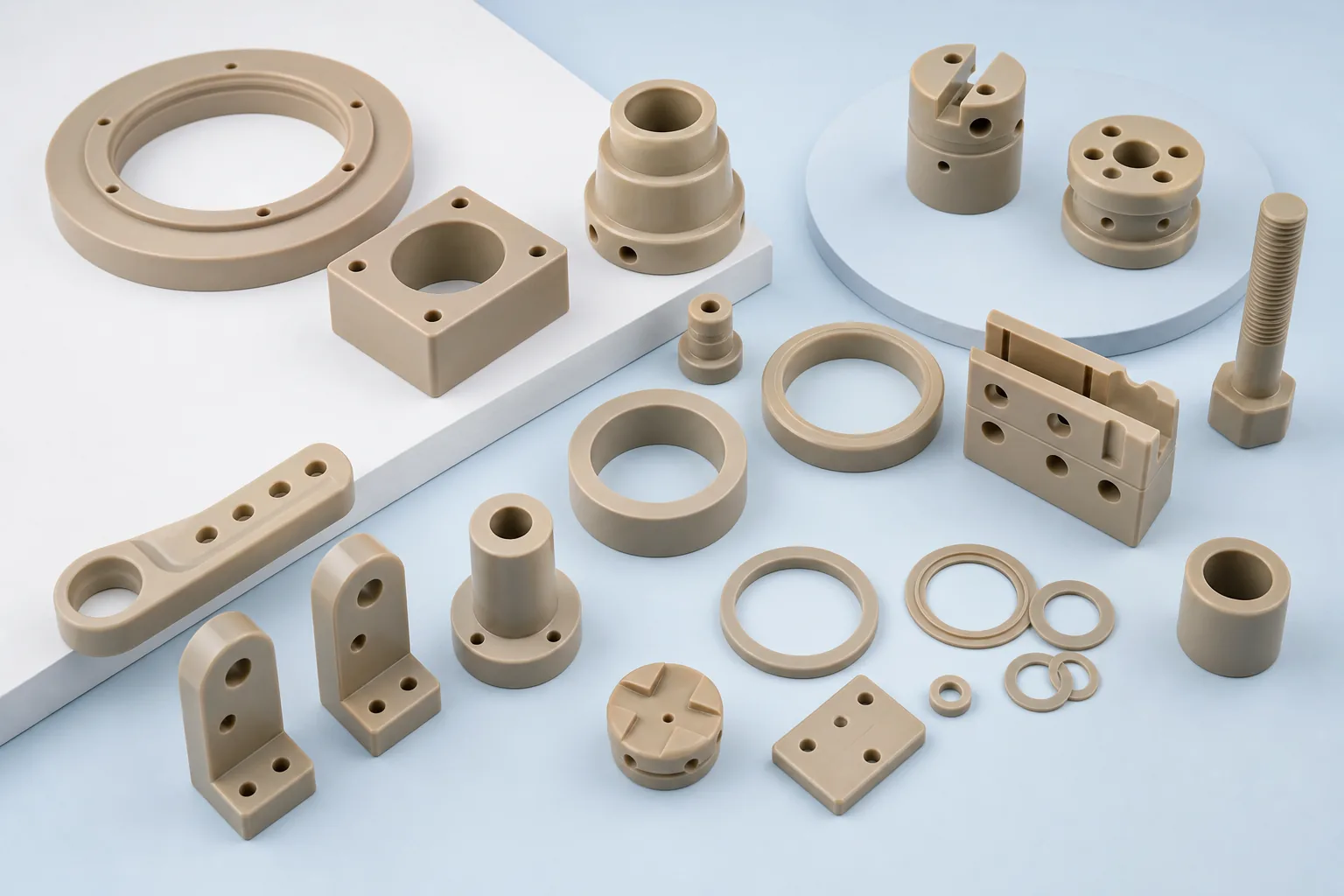
The part is selected by material name only. A resin family can include many grades, fillers and processing routes with different wear, heat and machining behavior.
The drawing copies a metal design. Sharp corners, deep threads, thin walls and unrealistic tolerances can create stress or machining problems in plastic.
The environment is incomplete. Cleaning fluids, humidity, intermittent heat and mating material can matter as much as the main operating condition.
The quote package hides the real function. A supplier can quote geometry faster when the part function, failure history and critical dimensions are visible.
Selection table
Translate the application problem into a material shortlist.
| Application need | First material families to review | Design note | Useful next page |
|---|---|---|---|
| Low-friction motion | POM, nylon, PTFE, UHMW-PE, PEEK | Check clearance, lubrication, moisture and mating surface. | Material selection tool |
| Hot service environment | PEEK, PPS, PEI, PI, PAI | Check load at temperature, not temperature alone. | PEEK plastic |
| Chemical exposure | PTFE, PVDF, PEEK, PPS, PP, PE | List all fluids, concentration, temperature and cleaning agents. | Material datasheets |
| Tight machined tolerance | PEEK, PPS, PEI, PAI, acetal, filled grades | Mark critical dimensions and inspection method. | Plastic machining guide |
Drawing to RFQ
Make the application clear before requesting a quote.
Describe the part function
Tell whether the part slides, seals, insulates, supports, locates, protects or replaces metal.
Define the environment
List temperature, fluids, pressure, load, speed, humidity, mating materials and cleaning exposure.
Mark critical features
Separate fit-critical dimensions from general geometry. Add surface finish, flatness and thread notes where needed.
Choose a manufacturing route
Compare CNC machining, cutting, 3D printing or injection molding based on quantity, geometry and material.
RFQ checklist
Application details to include with the drawing.
- Part function: sliding, sealing, insulating, spacing, guiding, locating or replacing metal.
- Drawing package: 2D drawing, 3D model, sample photos or marked critical dimensions.
- Material direction: preferred material, acceptable alternatives or materials to avoid.
- Operating environment: heat, fluid, load, speed, pressure, humidity and mating surface.
- Commercial details: prototype quantity, production quantity, lead-time target and packaging needs.
- Quality needs: inspection points, traceability, certificates or documentation requested by the project.
FAQ
Questions about engineering plastic applications.
What are common engineering plastic applications?
Common applications include bushings, rollers, wear strips, valve seats, seals, insulators, spacers, fixtures, guides, prototypes and replacement parts.
How do I choose a plastic for an application?
Start with the part function, operating environment, load, temperature, chemical exposure, movement, tolerance and expected production quantity.
Which engineering plastics are used for wear parts?
Acetal, nylon, UHMW-PE, PTFE, PEEK and filled grades are often reviewed for wear parts depending on load, speed, moisture and mating surface.
Can metal parts be replaced with engineering plastic?
Many metal parts can be redesigned in plastic when weight, corrosion, noise, friction or electrical insulation matters, but geometry, tolerance and load must be reviewed together.
What should an application RFQ include?
Include a drawing or 3D model, part function, material preference, operating environment, dimensions, tolerance, quantity, surface finish and lead-time target.
Related pages
Continue the application review.
Guide to RFQ
Ready to review a real engineering plastic application?
Send the drawing, application function, material target, operating environment, quantity, tolerance, finish and lead-time target.