
Plastic injection molding
Review injection molding before committing to tooling for custom plastic parts.
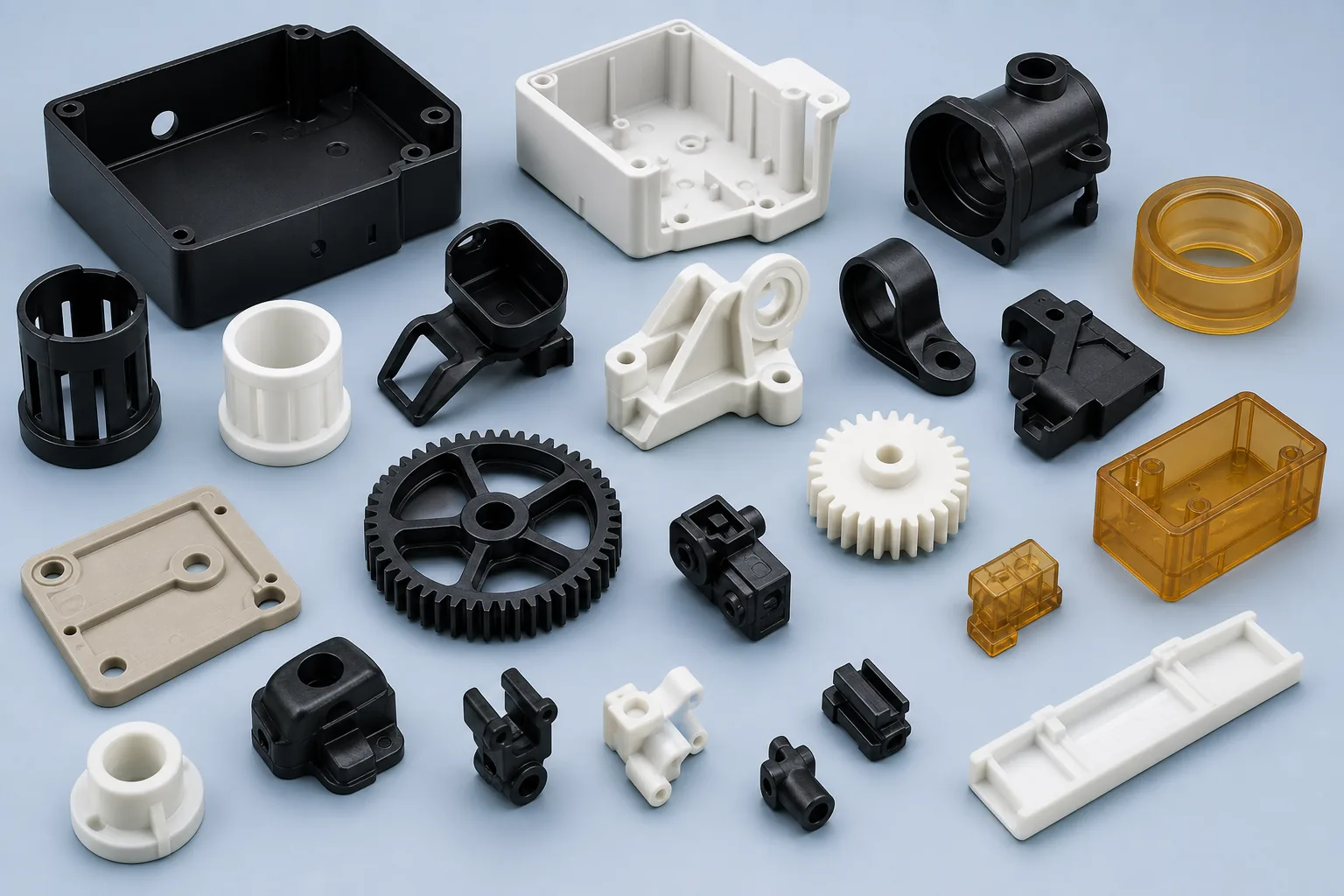
Great Plastics reviews plastic injection molding requests around resin choice, tooling readiness, DFM risk, quantity, surface expectations, inserts, inspection and production transition. Send CAD, drawings, resin targets and project stage before tooling decisions are locked.
Short answer
Injection molding should start with DFM, resin behavior and volume confidence.
Tooling can make a plastic part repeatable, but it also locks in geometry, gate and parting decisions. Wall thickness, draft, ribs, bosses, resin shrinkage, inserts, texture, inspection dimensions and sample approval must be reviewed before the quote is treated as production-ready.
RFQ review points
Check the tooling decision before the mold is quoted.
Part maturity
Confirm whether the design is concept, prototype, validation, bridge or production release.
Resin target
Review Nylon, POM, PC/ABS, PPS, PEI, PEEK or filled resin behavior against service conditions.
DFM risk
Wall thickness, draft, radii, bosses, ribs, gate location and sink/warp risk need early review.
Tooling context
Clarify expected quantity, sample needs, insert molding, secondary operations and inspection acceptance.
RFQ inputs
Send CAD, 2D drawing, resin target, quantity, surface finish, critical dimensions and project stage.
Route selection
Match the molding route to the project stage.
| Project stage | Molding review focus | RFQ note |
|---|---|---|
| Prototype before tooling | Compare 3D printing or CNC machining | Use prototypes to confirm fit and function before mold cost is committed. |
| DFM-ready molded part | Tooling, resin and tolerance review | Send CAD, drawing, resin target, annual volume and critical dimensions. |
| High-performance resin | PEEK, PPS, PEI or filled material review | Check processing, shrinkage, temperature, chemical and cost expectations. |
| Repeat production | Sampling, inspection and packaging plan | Define first article, acceptance dimensions, labeling and repeat-order expectations. |
Workflow
From RFQ review to the next production decision.
- Send CAD, drawing, resin target and production stage.
- Review part geometry, DFM risk, resin behavior, inserts, surface and tooling assumptions.
- Compare machining or printing when the design is not ready for tooling.
- Quote the molding route with sample, inspection and production assumptions.
- Use sample feedback before production release or repeat-order planning.
RFQ checklist
Send the details that make the quote useful.
- 2D drawing, 3D model or sample photo
- Material name, grade or target performance
- Quantity, project stage and repeat-order expectation
- Critical dimensions, finish, inspection and packaging needs
- Operating temperature, chemicals, load, wear or electrical requirements
FAQ
