Performance Guides

Engineering plastic performance guides for practical material decisions.

Compare the service conditions that matter before choosing a plastic: heat, wear, chemicals, moisture, electrical insulation, dimensional stability, machining behavior and RFQ risk.

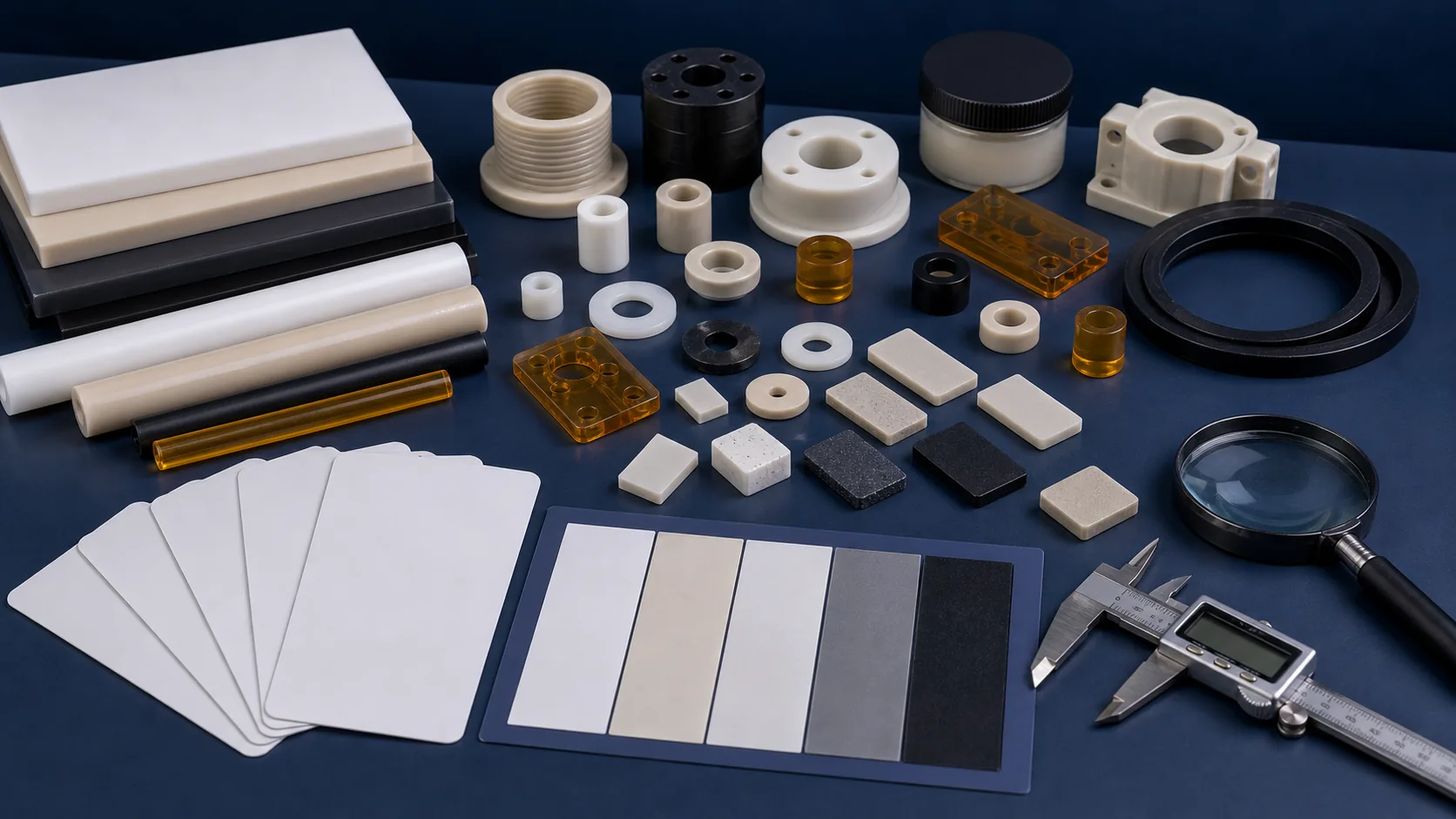
Engineering plastic samples and clean comparison cards arranged on a blue gray desk

Short answer

Performance selection starts with the failure mode, not the plastic name.

An engineering plastic can look suitable on a datasheet and still fail in a real assembly if the wrong performance question is asked. A sliding bearing needs load, speed and mating-surface details. A wet chemical component needs fluid concentration, temperature and cleaning exposure. A tight-tolerance semiconductor or aerospace part needs dimensional movement, moisture pickup and machining stress considered before the drawing is quoted.

Performance map

Use this table to choose the right guide path.

Performance question Common material directions Where it matters RFQ details to prepare
Heat resistance PEEK, PPS, PEI, PI, PAI, PTFE Hot fixtures, insulation parts, pump components, aerospace hardware Continuous temperature, peak temperature, load, exposure time
Wear and friction POM, nylon, UHMW-PE, PTFE, PEEK, filled grades Bushings, rollers, guides, wear strips, sliding plates Load, speed, mating material, lubrication, cycle life
Chemical resistance PTFE, PVDF, PEEK, PPS, PP, PE, PCTFE Valve seats, seals, tanks, wafer handling, process equipment Chemical list, concentration, temperature, cleaning agents
Electrical insulation PEI, PEEK, PI, PPS, acetal, phenolic laminates Connectors, test fixtures, insulating plates, electronic tooling Voltage, dielectric need, temperature, flame rating target
Dimensional stability PEEK, PPS, PEI, PAI, glass-filled grades Precision machined parts, fixtures, instrument parts, spacers Critical dimensions, tolerance, flatness, humidity, post-machining needs

Application scenarios

Match the performance problem to the part environment.

Moving parts with wear risk

Guides, bushings and rollers often need a balanced material choice rather than the highest strength plastic. Coefficient of friction, water absorption, debris, lubrication and contact pressure all change the result.

Custom plastic parts

High-temperature components

PEEK, PPS, PEI, PI and PAI are often compared when metal replacement, thermal insulation or continuous heat exposure is the driver. Mechanical load at temperature is as important as the temperature number.

PEEK plastic

Chemical and wet process parts

Fluid exposure can point toward fluoropolymers, PPS, PEEK or commodity chemical-resistant plastics depending on concentration, temperature and mechanical demand.

Chemical processing plastics

Precision machined plastic parts

When tolerance, flatness and threaded features matter, performance includes machinability, stress relief, burr control and inspection method.

CNC plastic machining

Electrical and semiconductor support

Insulating parts, fixtures and handling components need performance thinking around dielectric behavior, cleanliness, thermal movement and surface finish.

Semiconductor plastics

Material substitution projects

Replacing metal, rubber, ceramic or another plastic works best when the original failure is named clearly: heat, wear, corrosion, weight, noise, moisture or cost.

Material selection tool

Engineering plastic sample pieces arranged for property comparison

Failure patterns

Common reasons a selected plastic underperforms.

Temperature is specified without load. A continuous use temperature alone does not show creep, deformation or strength retention under assembly stress.

Chemical exposure is incomplete. Cleaning agents, mixed fluids, concentration and elevated temperature can matter more than the main chemical name.

Moisture movement is ignored. Nylon, acetal and other plastics can change dimensions enough to affect fit, clearance or flatness.

Tolerance is copied from metal drawings. Plastic machining needs geometry, wall thickness, stress relief and inspection planning that match the material.

Selection logic

When to move from performance reading to a material shortlist.

If the buyer says… Ask next Useful internal link
“The part gets too hot.” What temperature, for how long, under what load? PPS plastic and PEEK plastic
“The part wears out quickly.” What slides against it, at what speed and pressure? Plastic part design guide
“The old plastic swelled or cracked.” Which fluids, cleaners and temperatures touched the part? Material datasheets
“The tolerance is hard to hold.” Which dimensions are critical, and how will they be inspected? Plastic machining guide

RFQ path

Turn a performance requirement into quote-ready information.

01

Define the service condition

List temperature, load, chemicals, moisture, friction, electrical need, cleaning exposure and expected life.

02

Mark the drawing priorities

Separate critical dimensions from non-critical features. Add flatness, surface finish and inspection notes where they affect fit.

03

Shortlist materials

Compare high-performance plastics with practical alternatives so the quote can balance performance, cost and manufacturability.

04

Send the RFQ package

Include drawing or 3D model, material preference, quantity, tolerance, finish, quality documents and lead-time target.

RFQ checklist

Details that make performance-driven quotes easier to evaluate.

  • Drawing or model: 2D drawing, 3D model or sample dimensions.
  • Performance driver: Heat, wear, chemical, electrical, dimensional or mixed requirement.
  • Operating environment: Temperature range, fluids, humidity, mating surfaces and load.
  • Material target: Preferred resin, acceptable substitutes or materials to avoid.
  • Quantity and schedule: Prototype, replacement order or production demand.
  • Inspection needs: Critical dimensions, certificates, traceability or quality documents requested.

FAQ

Questions about engineering plastic performance.

What does engineering plastic performance mean?

Engineering plastic performance describes how a plastic behaves under real service conditions such as heat, load, friction, chemicals, moisture, electricity and machining stress.

Which performance factor should be checked first?

Start with the factor most likely to make the part fail: temperature for hot environments, wear for moving parts, chemicals for wet process systems, insulation for electrical components and dimensional stability for tight-tolerance parts.

Can one plastic solve every performance requirement?

Usually not. High-performance plastics are selected by balancing heat resistance, mechanical strength, chemical exposure, machinability, availability and budget.

How do performance guides help with a plastic part RFQ?

They help define the operating environment, critical dimensions, material candidates, inspection needs and drawings that make a quote easier to evaluate.

Should I choose the highest-performance plastic by default?

Not always. PEEK, PI and PAI can be excellent in demanding environments, but PPS, PEI, acetal, nylon, PTFE, PVDF or UHMW-PE may be more practical when the requirement is narrower.

Related pages

Continue the performance review.

Guide to RFQ

Need help matching performance requirements to a plastic part?

Send the drawing, material target, operating environment, quantity, tolerance and quality document needs so Great Plastics can review the project path.

Request engineering review

Great Plastics engineering plastics sourcing and custom parts support.

Request RFQ