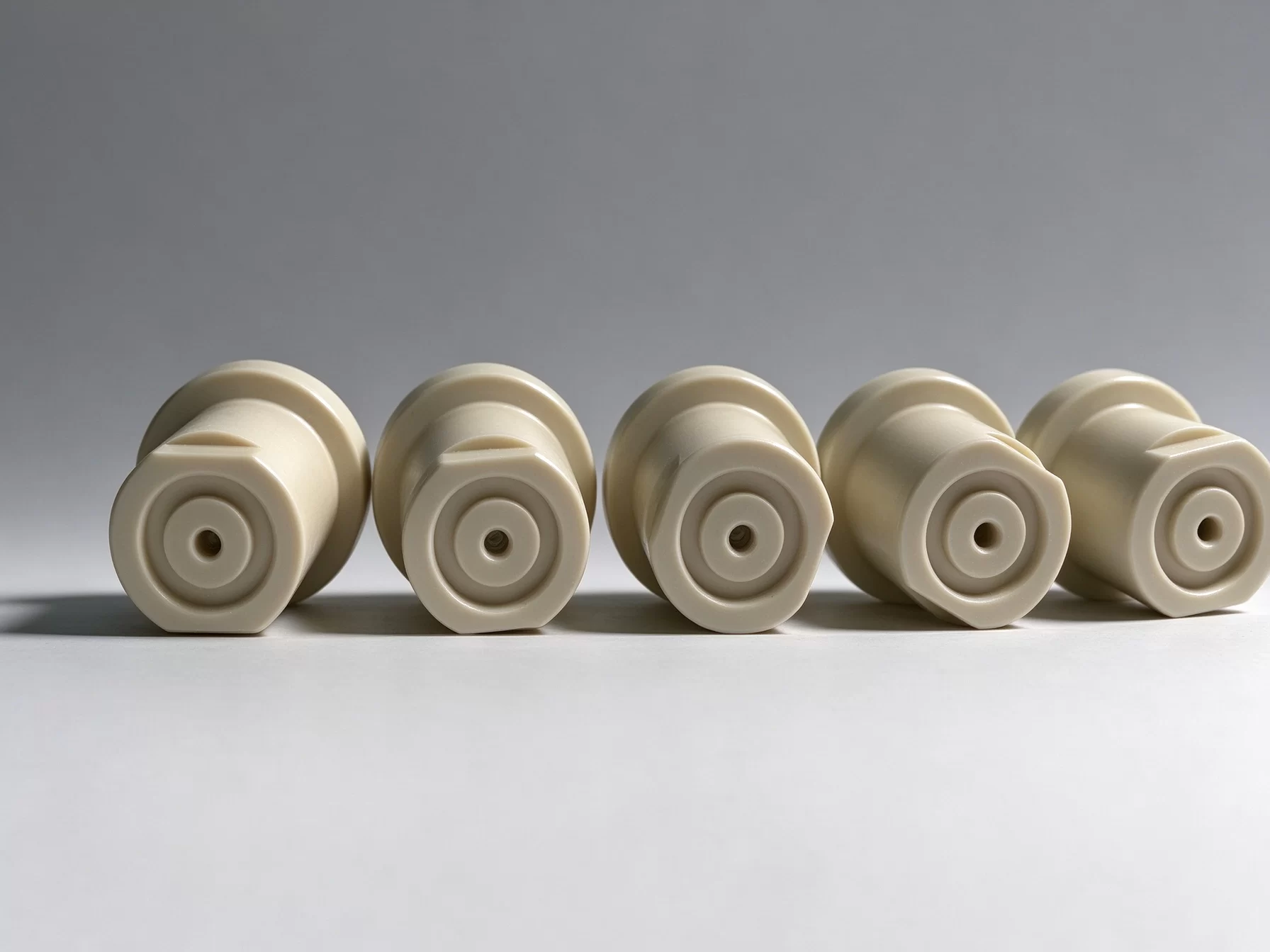
Engineering plastic rod
Engineering plastic rod for turned parts, bushings and machined round components.
Compare PEEK, PPS, POM, nylon, PTFE and other engineering plastic rods for machinable round bar, bushings, rollers, spacers and turned parts. Define diameter, length, bore, concentricity, tolerance, drawing details and operating environment before RFQ.

Short answer
Rod stock is usually selected when the final part is round, bored or turned.
Engineering plastic rod is the starting form for bushings, rollers, spacers, wheels, sleeves, pins and precision turned parts. The quote should connect material, rod diameter, finished OD/ID, concentricity, wall thickness and operating load. If the bore is large, compare engineering plastic tube; if the part is flat, compare engineering plastic sheet.
Material route
Choose rod material by the load, wear and environment.
| Rod material family | Best first-fit reason | Common turned parts | RFQ note |
|---|---|---|---|
| PEEK rod | High temperature, strength, chemical resistance and dimensional stability. | Bushings, rollers, seals, spacers, insulators, semiconductor parts. | Define grade, diameter, bore, temperature, chemicals and tolerance. |
| PPS rod | Chemical resistance, heat stability and electrical insulation in machined round parts. | Pump parts, electrical spacers, bushings, precision sleeves. | Send temperature, chemical exposure, diameter and concentricity needs. |
| PEI / PSU / PPSU rod | Electrical insulation, sterilization or dimensional stability with good machinability. | Insulators, medical fixtures, spacers, housings, sleeves. | Define cleaning, steam, transparency, tolerance and documentation needs. |
| POM / Acetal rod | Machinability, low friction, dimensional control and cost-effective mechanical parts. | Rollers, wheels, gears, bushings, guide parts, wear components. | Define moisture, sliding contact, bore tolerance and quantity. |
| Nylon / PA rod | Toughness, wear, impact resistance and larger mechanical parts where moisture can be managed. | Rollers, wheels, bushings, guide rollers, wear pins. | Send humidity, load, speed, impact and final dimension requirements. |
| PTFE / PVDF rod | Low friction, chemical resistance or fluid-system compatibility. | Valve seats, seals, spacers, chemical sleeves, low-friction bushings. | Define chemical, pressure, temperature, creep and deformation limits. |
Rod specification
Translate round-part drawings into rod-stock requirements.
| Specification | Why it matters | Useful detail |
|---|---|---|
| Rod diameter | Diameter controls stock choice, material yield, turning time and machining allowance. | Starting diameter, finished OD, cleanup allowance and quantity. |
| Bore or ID | Large bores can make tube stock more efficient than solid rod. | Finished ID, wall thickness, bore tolerance, concentricity and length. |
| Length | Length affects deflection, turning support, cut allowance and packing. | Finished length, cut length, facing allowance and long-part support. |
| Concentricity | Critical for bushings, rollers, wheels and rotating parts. | OD-to-ID concentricity, runout target, datum and inspection method. |
| Surface finish | Sliding, sealing and rotating parts may need controlled finish. | Turned finish, polished OD, groove finish, mating surface and lubrication. |
| Operating condition | Load, speed, temperature and chemicals decide resin and grade. | PV condition, duty cycle, temperature, chemical exposure and mating material. |
Manufacturing route
Decide whether the part starts as rod, tube or custom machined stock.
Design risks
Watch the rod conditions that change machinability and part stability.
| Risk | Where it appears | How to reduce it in the RFQ |
|---|---|---|
| Bore drift | Long bushings, soft materials, thin walls and low-stiffness grades. | Define bore tolerance, wall thickness, length-to-diameter ratio and inspection method. |
| Concentricity loss | Rollers, sleeves, bearings and parts with OD/ID alignment requirements. | Define datum, OD-to-ID concentricity, runout and machining sequence needs. |
| Creep or deformation | PTFE, PE, Nylon or loaded plastic bushings under heat or pressure. | Define load, speed, temperature, contact area, time under load and mating surface. |
| Moisture growth | Nylon and other moisture-sensitive rod materials. | Define humidity, fluid exposure and final inspection condition. |
| Tooling and chip control | Filled, abrasive or high-temperature rods such as glass-filled PEEK, PAI and PI. | Send grade, feature details, surface finish, edge quality and quantity. |
Applications
Common engineering plastic rod applications.
| Application | Likely rod materials | Design check |
|---|---|---|
| Bushings and sleeves | POM, Nylon, PTFE, PEEK, PAI | Bore tolerance, load, speed, PV, lubrication and wall thickness. |
| Rollers and wheels | POM, Nylon, PET, PEEK, filled grades | OD, concentricity, shaft fit, wear, impact and surface finish. |
| Electrical and thermal spacers | PEI, PPS, PEEK, PI, PTFE | Dielectric requirement, temperature, length tolerance and creep. |
| Chemical valve and seal parts | PTFE, PVDF, PPS, PEEK | Chemical concentration, pressure, seal surface and deformation risk. |
| Precision turned components | POM, PEEK, PPS, PEI, PAI, PI | Feature size, runout, surface finish, tool wear and inspection method. |
Related routes
Move from rod selection to the right quote path.
RFQ checklist
Send the rod details that prevent quote rework.
| RFQ input | Why it matters | Example |
|---|---|---|
| Material or performance target | Allows rod material to be selected for heat, wear, chemicals, electrical or cost constraints. | PEEK rod, POM rod, PTFE rod, Nylon rod or unknown material for a bushing. |
| Rod diameter and length | Controls stock choice, machining allowance, setup and material yield. | Starting OD 50 mm, finished OD 46 mm, length 80 mm, quantity 100. |
| Drawing or STEP file | Defines OD, ID, grooves, shoulders, threads, slots and inspection scope. | PDF drawing, STEP model, bore table and critical dimensions. |
| Tolerance and concentricity | Separates simple turned parts from precision rotating or bearing components. | OD/ID tolerance, concentricity, runout, surface finish and datum. |
| Operating environment | Connects rod choice to load, speed, friction, chemicals and temperature. | PV condition, mating material, lubricant, chemical exposure and target lead time. |
FAQ
Questions buyers ask before ordering engineering plastic rod.
Engineering plastic rod RFQ
Send rod diameter, drawing and service condition for turned part review.
A practical rod quote starts with material, diameter, finished OD/ID and service condition. Add drawing details when the part needs bore control, concentricity, grooves, shoulders or surface finish.
- Material or performance target
- Rod diameter, length and quantity
- Drawing, OD/ID, grooves and tolerances
- Load, speed, temperature and mating surface