
Engineering plastic 3D printing
Plan functional 3D printed plastic parts before material and tolerance risks become expensive.
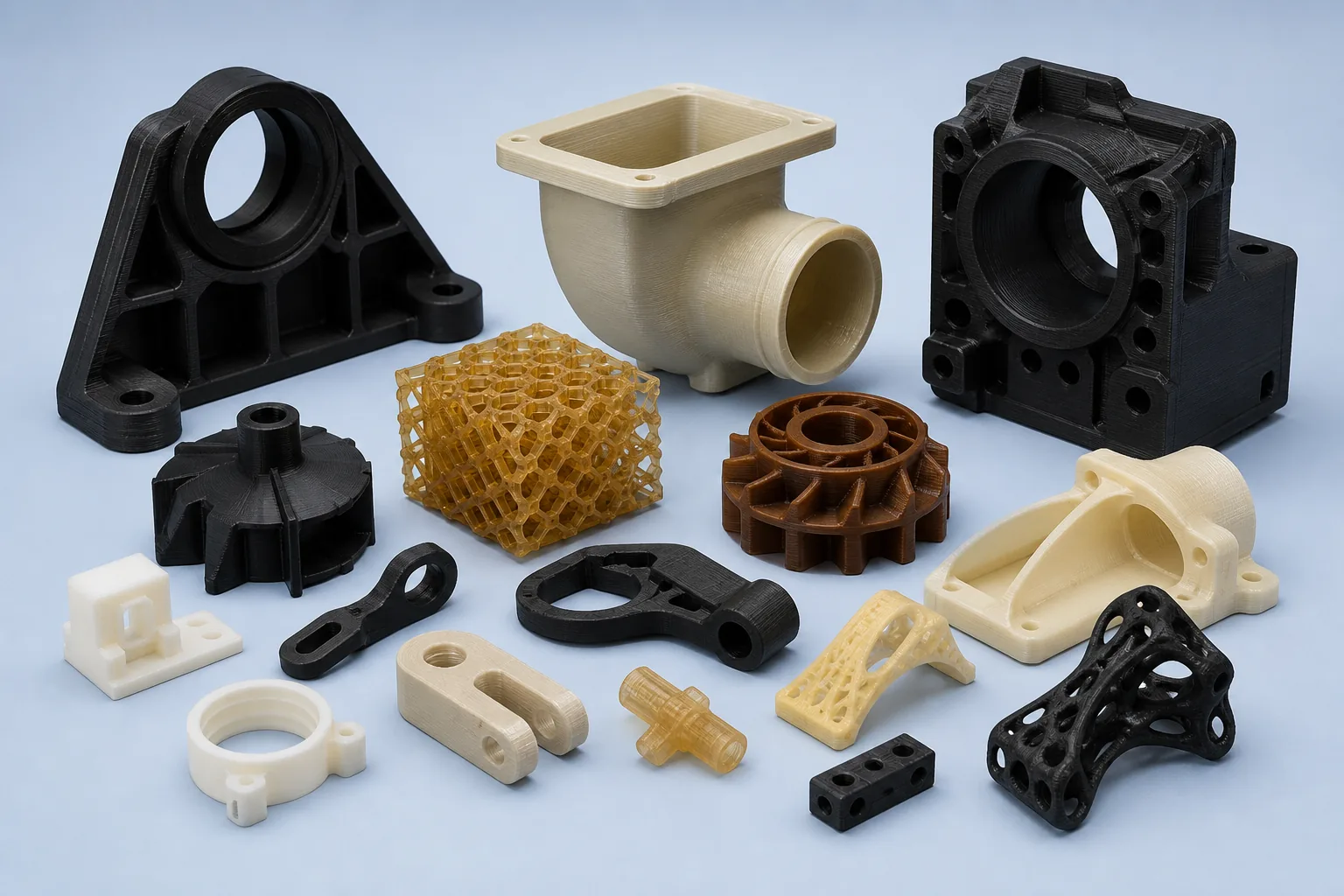
Use engineering plastic 3D printing when the part must prove fit, shape, airflow, assembly, thermal behavior or functional risk before tooling or machining is fixed. Great Plastics reviews the material target, print route, geometry, quantity, tolerance needs and post-process expectations before quoting.
Short answer
Engineering plastic 3D printing is useful when the printed part must answer a real design question.
PEEK, PEI, Nylon, PC and filled engineering plastics can be useful for functional prototypes and selected end-use parts, but printing should not be treated as a shortcut around material behavior. Layer direction, heat exposure, chemical contact, wall thickness, holes, threads and surface expectations must be reviewed before the quote is final.
RFQ review points
Review the print route before the CAD file becomes a quote.
Material target
PEEK, PEI, Nylon, PC, filled grades or a performance requirement tied to heat, wear, chemicals or insulation.
Geometry risk
Thin walls, holes, inserts, unsupported features, build orientation and support removal affect part quality.
Process fit
Compare FFF/FDM, SLS/MJF, SLA, CNC machining or molding when tolerance, finish or repeat demand changes.
Post-process needs
Define edge finish, drilling, tapping, sanding, annealing, inspection and packaging expectations early.
RFQ clarity
Send CAD, drawing, material target, quantity, critical features, environment and deadline assumptions.
Route selection
Match the 3D printing route to the part risk.
| Project need | Route often reviewed | RFQ note |
|---|---|---|
| Functional prototype | Engineering plastic 3D printing | Define what the part must prove: fit, heat, assembly, fluid path or handling. |
| High-temperature part | PEEK, PEI, PPSU or related materials | Review printability, chamber/process constraints, warpage and post-process expectations. |
| Tight bearing or sealing feature | CNC machining comparison | Machining may be better when tolerance, bore finish or flatness controls performance. |
| Pilot or repeat demand | Molding or machined repeat route | Use printing to validate geometry before committing to tooling or production assumptions. |
Workflow
From RFQ review to the next production decision.
- Send CAD, drawing or sample photo with the target application.
- Review material behavior, build orientation, wall thickness, critical features and process fit.
- Compare printing with CNC machining, cutting or molding when tolerance or repeat demand requires it.
- Confirm quote assumptions, inspection notes, finish and packaging requirements.
- Use feedback from the printed part to decide whether the next step is another print, machined part or tooling review.
RFQ checklist
Send the details that make the quote useful.
- 2D drawing, 3D model or sample photo
- Material name, grade or target performance
- Quantity, project stage and repeat-order expectation
- Critical dimensions, finish, inspection and packaging needs
- Operating temperature, chemicals, load, wear or electrical requirements
FAQ
