Sustainability Vision

Sustainable engineering plastics start with better material decisions.

Great Plastics approaches sustainability through practical engineering choices: longer part life, lighter components, efficient stock use, realistic tolerances and manufacturing routes that fit the project stage.

Design focus
Longer service life and fewer replacements
Material focus
Right grade, right form, right process
RFQ focus
Reduce rework with clear requirements
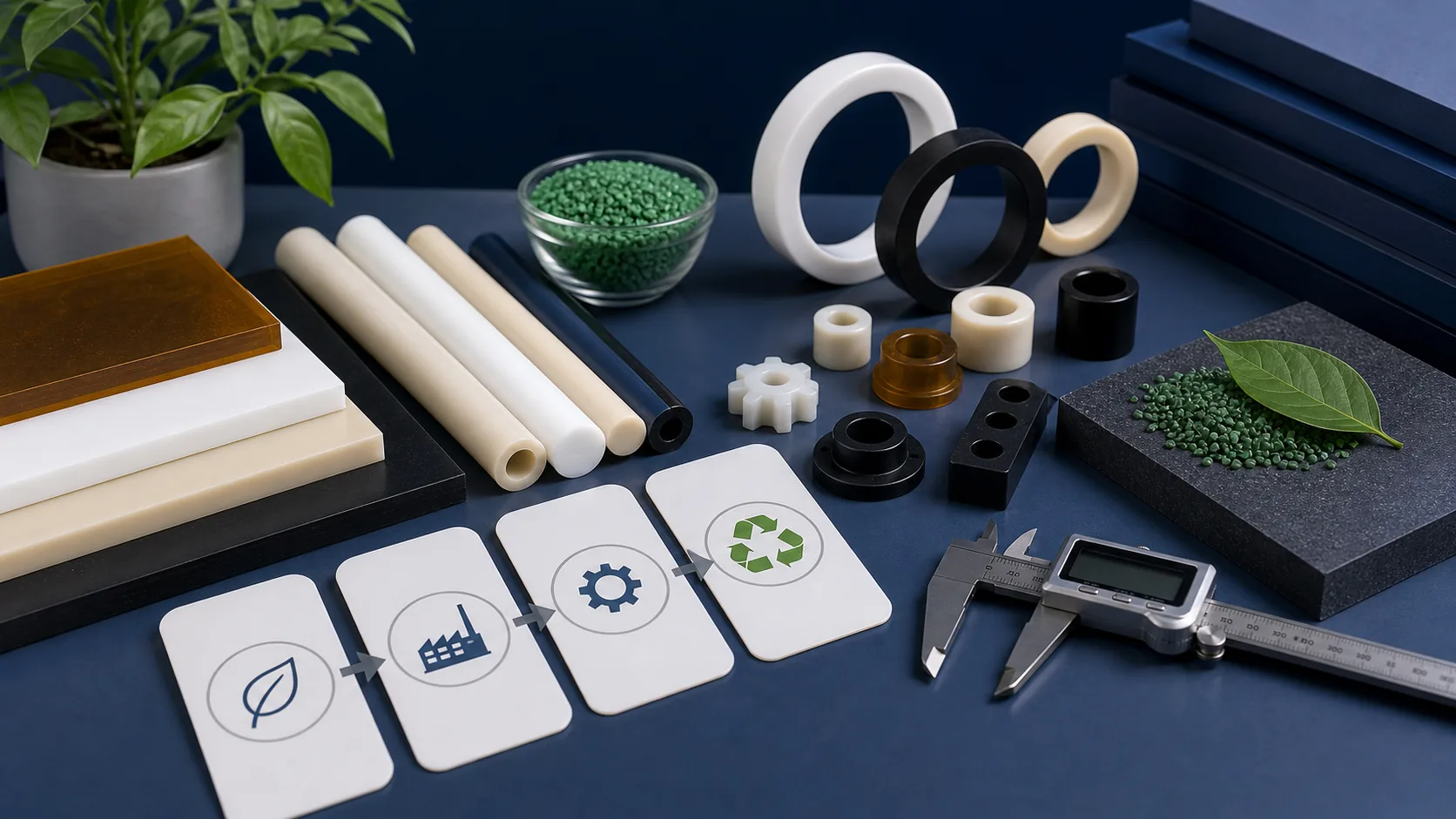
Engineering plastic stock shapes and lightweight machined parts arranged with blank lifecycle planning cards

Practical sustainability

The most responsible plastic choice is the one that fits the real job.

For engineering plastics, sustainability is not only about a material label. A well-chosen plastic can reduce weight, resist wear or corrosion, extend part life, simplify maintenance and avoid unnecessary replacements. The best decision starts with the operating environment and the drawing, not with a slogan.

Decision levers

How engineering plastics can support more efficient designs.

Longer service life

Choose wear, chemical, heat or dimensional stability only where the application truly needs it.

Lightweight parts

Replace heavier components when plastic can meet load, friction, insulation or corrosion requirements.

Material efficiency

Match stock shape, blank size and machining route to reduce unnecessary removal and rework.

Right-size performance

Avoid over-specifying PEEK, PI or PAI when PPS, POM, Nylon, PTFE or PVDF can meet the duty.

Repair and replacement

Use machined replacement parts when tooling is not practical or when equipment downtime is costly.

Clear RFQ inputs

Reduce scrap risk by sharing tolerance, surface, environment and quality expectations early.

Material strategy

Match sustainability goals to engineering decisions.

Goal Engineering question Useful review path
Extend part life What failure mode matters most: wear, heat, chemical attack, creep or impact? Material selection tool
Reduce part weight Can a plastic meet load, friction, insulation or corrosion needs with less mass? Automotive plastics
Reduce machining waste Can stock form, blank size or geometry be adjusted before production? CNC plastic machining
Avoid over-specification Which properties are required and which are only nice to have? Material properties
Improve repeatability Which dimensions, documents or packaging notes should be controlled? Quality and documents

Material choices

Use high-performance plastics only where the application earns them.

Material route When it supports efficiency When to compare alternatives
PEEK, PI, PAI Long life in high heat, wear, chemical or demanding mechanical service. When the environment is moderate or cost is the main constraint.
PPS or PEI Balanced heat, dimensional or chemical performance for many industrial parts. When wear, friction or extreme heat becomes the main failure mode.
POM, Nylon, PET or PC Practical engineering plastics for precision, wear, strength or impact in moderate environments. When moisture, heat or chemicals exceed the material’s useful range.
PTFE, PVDF or PP Chemical resistance, low friction or corrosion-related applications. When strength, stiffness or dimensional stability becomes critical.

Manufacturing choices

Process choice affects waste, cost and project risk.

01

CNC machining

Useful for prototypes, low-volume parts, replacement components and design validation before higher-volume production.

Review machining

02

Custom cutting

Cut-to-size sheets, rods or tubes can reduce handling and simplify the first production step.

Review cutting

03

Injection molding

Molding can reduce unit cost and scrap in repeat production when the design, volume and tooling plan are stable.

Review molding

FAQ

Questions buyers ask about sustainable engineering plastics.

What makes engineering plastics more sustainable in a part design?

A more sustainable engineering plastic decision usually improves service life, reduces weight, avoids over-specification, lowers scrap risk and fits the right manufacturing route for the part.

Can high-performance plastics reduce waste?

They can when the material extends part life, resists wear or chemicals, reduces replacement frequency, or allows a lighter design. The material still needs to match the real operating environment.

How can buyers avoid over-specifying plastic materials?

Start with temperature, load, chemicals, wear, electrical needs, dimensional stability and quantity. Then compare practical options before choosing a high-performance plastic.

Does CNC machining create more waste than molding?

Machining removes material from stock shapes, but it can reduce waste in prototypes and low-volume projects by avoiding tooling, design errors and unused molded inventory.

What RFQ details support material efficiency?

Send the drawing, target material, quantity, tolerance, operating environment, critical dimensions, surface finish, expected service life and any lightweighting or replacement goals.

Related pages

Continue the material efficiency review.

Sustainability RFQ

Share the part goal, not only the material name.

Include drawing, material target, duty cycle, failure concern, quantity, tolerance, operating environment, lightweighting goal, replacement issue and lead-time target.

Request material review

Great Plastics engineering plastics sourcing and custom parts support.

Request RFQ