Machinery Engineering Plastics

Machinery engineering plastics for wear, motion and precision parts.

Compare acetal, nylon, UHMW-PE, PTFE, PEEK, PPS and other engineering plastics for machine guides, rollers, bushings, wear strips, spacers, pads, fixtures and replacement components.

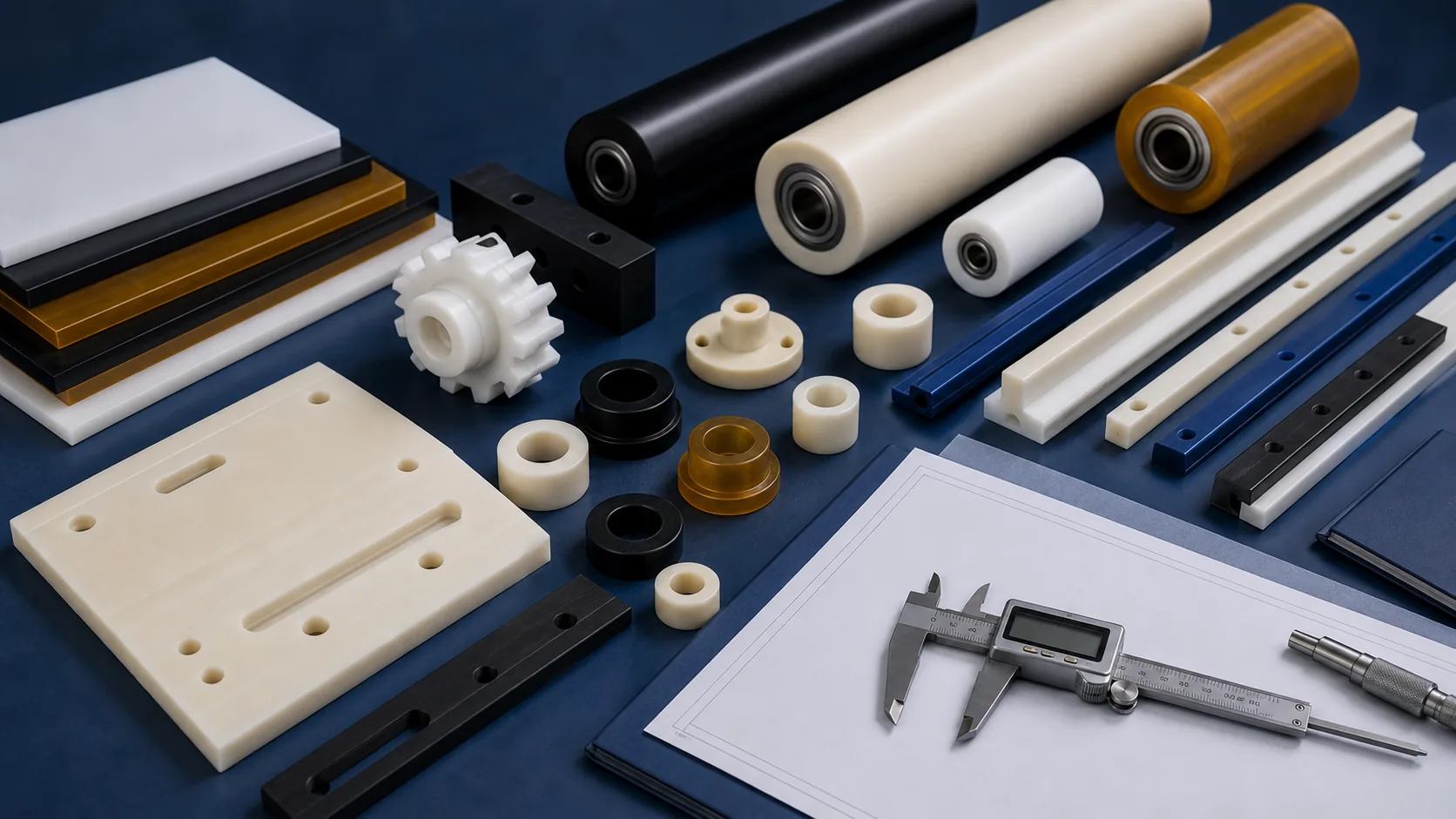
Machinery engineering plastic rollers bushings guides and wear strips on a blue gray desk

Short answer

Machinery plastic selection starts with load, motion and wear path.

Machinery engineering plastics are used where metal parts create noise, friction, corrosion, weight or maintenance problems. A useful material review starts with the part function: sliding, rotating, spacing, guiding, supporting, locating or replacing a worn component. Load, speed, mating material, moisture, lubrication, temperature and tolerance usually matter more than the material name alone.

Application matrix

Common machinery engineering plastics project types.

Project context Typical parts Material directions Review before quote
Conveying and automation Wear strips, chain guides, rollers, rails UHMW-PE, acetal, nylon, PTFE-filled grades Speed, friction, noise, debris, mounting and contact surface
Mechanical assemblies Bushings, spacers, washers, gears, sleeves Acetal, nylon, PEEK, PPS, filled grades Load, moisture, clearance, temperature, wear and dimensional fit
Machine maintenance Replacement parts from drawings, samples or worn parts Match existing material or upgrade by failure mode Original failure, sample wear, lead time, tolerance and quantity
Precision fixtures Jigs, plates, nests, locating pads, positioning parts Acetal, PEEK, PPS, PEI, glass-filled grades Flatness, repeatability, machinability, burr control and inspection points
Higher-temperature machinery Supports, guides, rollers, insulators, wear pads PEEK, PPS, PEI, PI, PAI Load at temperature, creep, chemical exposure and part thickness

Material choices

Materials commonly reviewed for machinery parts.

POM / Acetal

Useful for precision machined bushings, rollers, spacers, gears and guides where low friction and dimensional control matter.

Material selection

Nylon

Reviewed for tough wear parts and mechanical components, with moisture absorption and dimensional movement checked early.

Performance guides

UHMW-PE and PE materials

Common for low-friction liners, wear strips, chain guides and conveyor parts where impact and sliding behavior are priorities.

Plastic sheets

PTFE and filled grades

Considered for low friction and chemical exposure, while load, creep and wear surface design need careful review.

Other plastics

PEEK and PPS

Reviewed when machinery parts face higher heat, chemical exposure, strength requirements or dimensional stability needs.

Review PEEK

Stock shapes

Rods, sheets and tubes support cut blanks, machined bushings, rollers, spacers and emergency replacement work.

Product forms

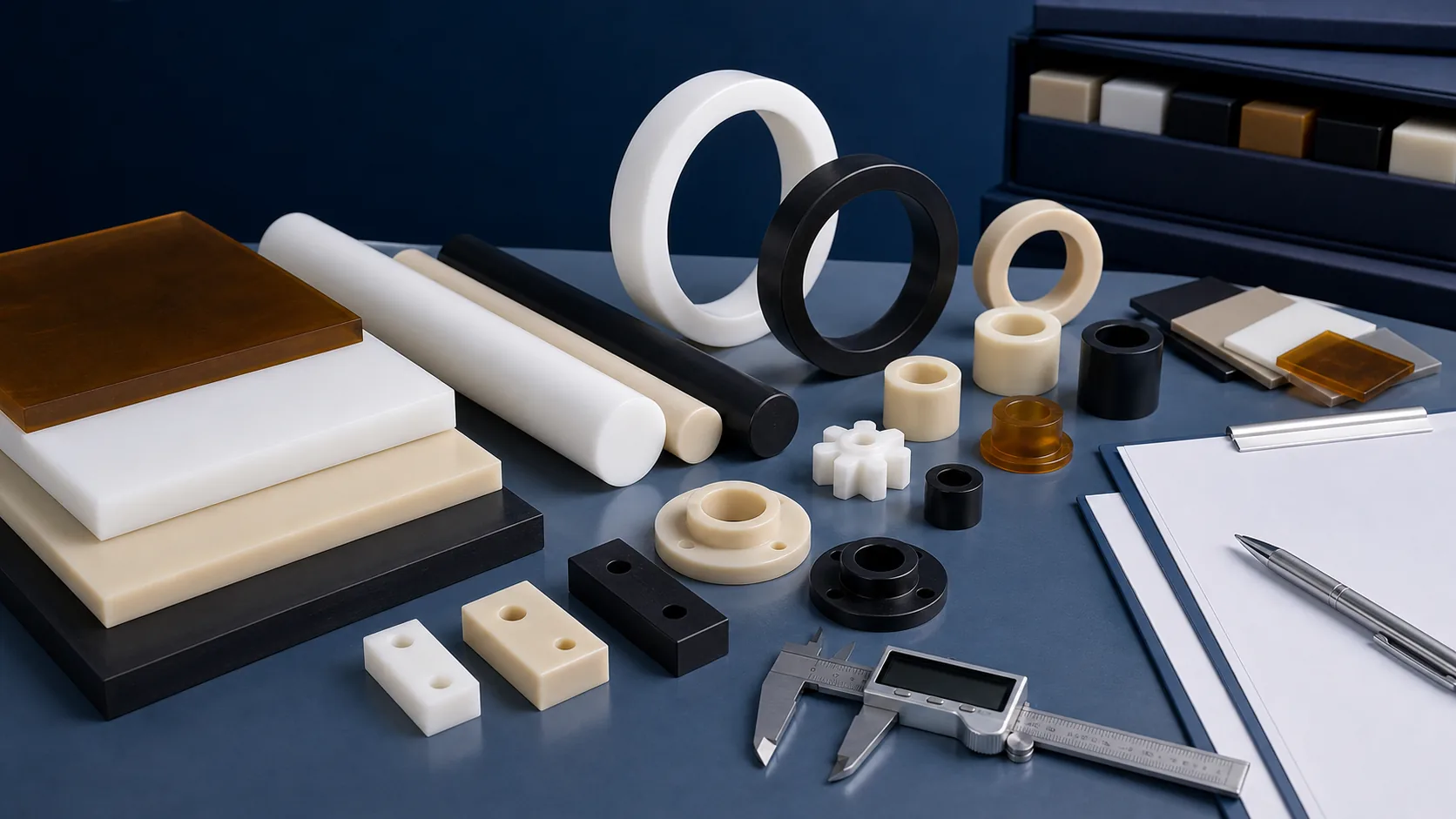
Machined plastic parts with inspection tools and a marked technical drawing

Failure causes

Why machinery plastic parts wear out or lose fit.

Load and speed are not provided together. A material that works under light sliding can overheat, creep or wear quickly when contact pressure increases.

Moisture movement is ignored. Nylon and some other plastics can change dimensions enough to affect clearance, fit and repeatability.

The worn sample is copied exactly. A used part may hide the original clearance, profile, flatness or contact surface needed for a better replacement.

Metal tolerances are copied without plastic review. Tight tolerances, sharp corners, press fits and thin walls can raise machining stress and part distortion.

Selection path

Translate machinery requirements into material and process choices.

Requirement Practical material direction Manufacturing note Useful next page
Low-friction guide or wear strip UHMW-PE, acetal, nylon, PTFE-filled grades Check contact length, mounting holes, sliding speed and debris. Plastic sheets
Bushing or roller Acetal, nylon, PEEK, filled PTFE, UHMW-PE Review shaft material, clearance, load, speed and lubrication. CNC plastic machining
Precision fixture component Acetal, PEEK, PPS, PEI, glass-filled grades Mark critical dimensions, flatness, burr-sensitive edges and inspection points. Design guide
Replacement part from sample Match material or upgrade by failure mode Send sample photos, wear notes, mating parts and desired lead time. Custom plastic parts

Manufacturing route

Choose the process that fits machinery part timing.

01

CNC machining

Useful for bushings, rollers, spacers, guide blocks, fixture parts and replacement components with defined tolerances.

CNC plastic machining

02

Cut blanks and stock forms

Sheets, rods and tubes can reduce waste and speed review for wear strips, pads, rollers and machined blanks.

Plastic rods

03

Repeat production planning

Use repeat machining, custom cutting, 3D printing or molding when geometry and quantity become stable.

Rapid manufacturing

RFQ checklist

Machinery project details to include with the drawing.

  • Drawing or sample: 2D drawing, 3D model, worn sample photos or marked critical dimensions.
  • Part function: sliding, rotating, spacing, guiding, supporting, locating or replacing a worn component.
  • Motion conditions: load, speed, mating material, lubrication, cycle frequency and debris exposure.
  • Environment: temperature, moisture, chemical exposure, washdown, outdoor use and cleaning method.
  • Material direction: current material, target resin, approved alternatives or known failure material.
  • Commercial details: quantity, lead time, surface finish, inspection points and packaging needs.

FAQ

Questions buyers ask about machinery engineering plastics.

Which plastics are commonly used for machinery wear parts?

Acetal, nylon, UHMW-PE, PTFE, PEEK, PPS and filled grades may be reviewed depending on load, speed, lubrication, moisture, temperature and mating surface.

What machinery applications use engineering plastic parts?

Common applications include wear strips, chain guides, rollers, bushings, spacers, washers, gears, pads, rails, fixtures and replacement parts.

How do I choose plastic for a bushing, roller or guide?

Start with load, speed, contact surface, lubrication, moisture, temperature, clearance, expected wear life and whether the part is machined from a drawing or copied from a sample.

Is CNC machining suitable for machinery replacement parts?

CNC machining is useful for replacement parts, prototypes, fixture components and low-volume batches when drawings, samples or marked critical dimensions are available.

What should a machinery plastics RFQ include?

Include drawing or model, part function, material target, load, speed, temperature, moisture, mating surface, tolerance, quantity, finish, inspection needs and lead time.

Related pages

Continue the machinery material review.

Industry RFQ

Send the machinery operating conditions with the drawing.

Include material target, load, speed, mating surface, part function, drawing or sample, quantity, tolerance, finish, inspection needs and lead-time target.

Request engineering review

Great Plastics engineering plastics sourcing and custom parts support.

Request RFQ